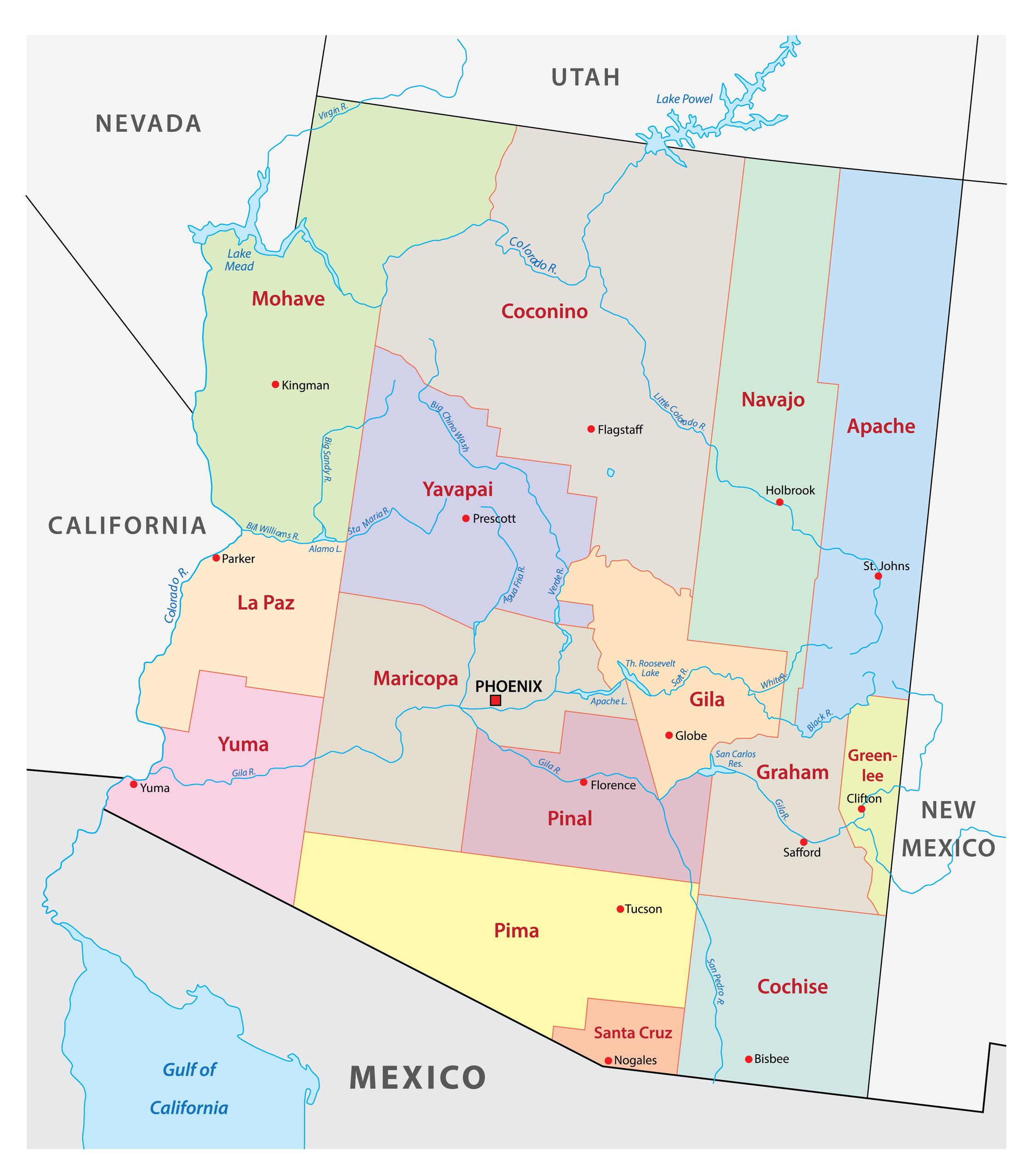
Most of Arizona stays on Mountain Standard Time year-round, meaning clocks don't shift forward or backward with the rest of the United States. Because of this unique choice, Arizona's relation to other time zones flips twice a year, which catches travelers and remote workers off guard.
If you're trying to figure out what time it is right now in the Copper State or wondering why your digital devices keep confusing your calendar invites, here's how the system actually works.
Arizona Time Zone Basics
Nearly the entire state of Arizona remains permanently locked on Mountain Standard Time (MST), which sits at UTC-7.
When Congress passed the Uniform Time Act of 1966, it allowed states to opt out of shifting their clocks forward in the spring. Arizona tried daylight saving time in 1967, but the state legislature quickly dropped it.
The primary reason is climate-related. In desert environments like Phoenix and Tucson, an extra hour of summer sunlight means air conditioners run longer during the hottest part of the evening, driving up energy bills. By refusing to move clocks forward, Arizona keeps its schedule aligned with cooler morning temperatures.
Winter Versus Summer Time Shifts
Because the rest of the country moves forward and backward while Arizona stays put, the time difference between Arizona and other regions changes depending on the season.
Winter Months (November to March)
During standard time, when the rest of the Mountain Time Zone is on Mountain Standard Time (MST), Arizona matches them completely.
- Phoenix, Denver, and Salt Lake City share the exact same time.
- Pacific Time (Los Angeles) is one hour behind Arizona.
- Eastern Time (New York) is two hours ahead of Arizona.
Summer Months (March to November)
When the rest of the country springs forward into Daylight Saving Time, Arizona keeps its clocks right where they are. This creates a peculiar optical illusion: Arizona effectively shares a time zone with the West Coast during the summer.
- Phoenix matches Pacific Daylight Time (PDT), meaning Los Angeles and Phoenix share the exact same clock time.
- Denver shifts to Mountain Daylight Time (MDT), making it one hour ahead of Arizona.
- Eastern Time becomes three hours ahead of Arizona.
You can verify official changes and current UTC offsets directly through the National Institute of Standards and Technology time portal.
The Major Exception: The Navajo Nation
If you assume the entire state ignores daylight saving time, you'll run into scheduling trouble in the northeastern corner.
The Navajo Nation spans across Arizona, New Mexico, and Utah. To keep business uniform across its entire tribal land, the Navajo Nation does observe Daylight Saving Time. When you cross into the Navajo reservation in northeastern Arizona during the summer, you'll need to push your watch forward by one hour.
To make matters more complicated, the Hopi Reservation is completely surrounded by the Navajo Nation. The Hopi Nation follows Arizona state rules and does not observe daylight saving time. Driving across northeastern Arizona in July can force you to change your clock multiple times within a short road trip. You can read more about tribal governance and jurisdiction through the U.S. Department of the Interior.
Common Mistakes to Avoid
Managing schedules across state lines requires attention to detail. Keep these pitfalls in mind:
- Trusting auto-settings blindly: Operating systems on phones and laptops handle Arizona well, but older software or cheap digital clocks often try to force a DST update. Always double-check manual calendar invites sent from out of state.
- Assuming uniform rules statewide: Never assume a business in northern Arizona operates on the same clock as Phoenix during the summer months if they reside on tribal land.
- Confusing MST and MDT labels: Meeting software often labels Mountain Time as MDT during the summer. Since Arizona stays on MST, your computer might miscalculate the math if you manually select an Arizona city versus a generic Mountain Time zone.
Frequently Asked Questions
Does all of Arizona stay on standard time?
No. While the vast majority of the state and the Hopi Nation stay on MST year-round, the Navajo Nation observes Daylight Saving Time.
Why does Arizona match California in the summer?
Arizona doesn't change its clocks, but Pacific Time zones move forward one hour. That shift brings Pacific Time (UTC-7) in line with Arizona's permanent Mountain Standard Time (UTC-7).
How does Arizona time affect remote work and meetings?
If you work with clients in New York or London, your offset changes twice a year even though your local time doesn't. A meeting scheduled for 9:00 AM Eastern will shift by one hour relative to your Arizona workday when the rest of the country changes clocks.
Does Hawaii share the same rule?
Yes. Hawaii also stays on standard time year-round due to its tropical location near the equator, where daylight hours don't vary enough to make clock-shifting useful.



