Understanding the atomic structure of noble gases helps chemistry students master electron shells, stability, and periodic trends. The argon Bohr model maps out how 18 electrons are distributed around a central nucleus, creating a stable configuration that explains why this gas rarely reacts with other elements.
Argon has an atomic number of 18, meaning a neutral atom contains 18 protons in its nucleus and 18 electrons orbiting outside it. These electrons occupy three distinct energy levels or shells. The first shell holds 2 electrons, the second holds 8, and the third and outermost valence shell holds the remaining 8 electrons, giving argon its classic 2, 8, 8 electron arrangement. Because this outer valence shell is completely filled, argon possesses an exceptional chemical stability known as an octet.
Anatomy of the Argon Atom
To construct or interpret the Bohr model for argon, you must look at both subatomic particles within the nucleus and the shells surrounding it. The most common isotope on Earth, argon-40, contains 18 protons and 22 neutrons packed tightly in the nucleus, resulting in an atomic mass of approximately 39.95 atomic mass units.
Orbiting this dense central core are three concentric rings, designated by quantum shell letters or numbers:
- The K Shell (n=1): The innermost ring closest to the nucleus, holding a maximum capacity of 2 electrons.
- The L Shell (n=2): The second ring outward, holding a full complement of 8 electrons.
- The M Shell (n=3): The valence or outermost ring for argon, containing 8 electrons which satisfy the octet rule.
This layered structure places argon in Period 3 of the periodic table because it uses three active electron shells. It also places argon in Group 18, the noble gases, sharing a column with helium, neon, krypton, xenon, and radon.
Step-by-Step Breakdown of Electron Shell Capacity
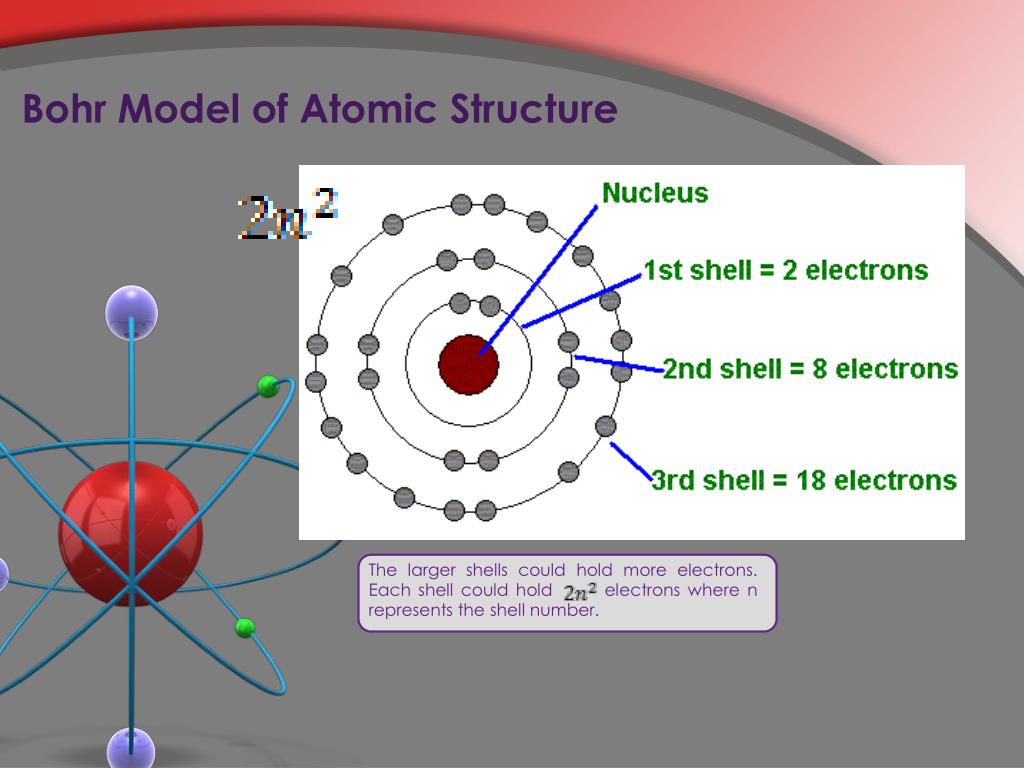
Electron filling follows strict quantum rules governed by maximum shell capacities, calculated using the formula $2n^2$, where $n$ represents the principal energy level.
For the first shell ($n=1$), the maximum capacity is $2(1)^2 = 2$ electrons. Argon fills this innermost energy level immediately with two electrons.
For the second shell ($n=2$), the capacity is $2(2)^2 = 8$ electrons. With 16 electrons remaining after filling the first shell, argon places 8 electrons into this second layer, completely satisfying its capacity.
For the third shell ($n=3$), the theoretical capacity using $2(3)^2$ is 18 electrons. However, because argon only has 18 total electrons, the remaining 8 electrons go into this third shell. Even though the third shell can theoretically hold more, reaching 8 valence electrons creates a stable, low-energy octet configuration that halts further shell expansion for a neutral ground-state atom.
Connecting the Bohr Model to Electron Configuration
While the Bohr model offers a visual map of concentric circles, modern chemistry pairs this with standard spectroscopic notation. For argon, the full electron configuration is $1s^2 2s^2 2p^6 3s^2 3p^6$.
You can cross-reference this notation directly with the Bohr model rings:
- The $1s^2$ term corresponds to the 2 electrons in the first shell.
- The $2s^2 2p^6$ terms combine for 8 electrons in the second shell.
- The $3s^2 3p^6$ terms combine for the 8 valence electrons in the third shell.
You can also write this in noble gas shorthand notation as $[Ne] 3s^2 3p^6$, using neon as the core reference. According to the National Institute of Standards and Technology (NIST), understanding these precise energy levels helps scientists predict atomic emission spectra when argon is excited by electrical current in lighting applications.
Why Inertness Follows Structure
Chemical reactivity is driven by an atom's drive to achieve a stable valence shell, typically requiring 8 valence electrons (the octet rule). Because argon's third shell already contains 8 electrons, it has zero tendency to gain, lose, or share electrons with other elements.
This lack of reactivity is why argon is classified as a noble gas. Under standard temperature and pressure conditions, it exists as a monatomic gas. Industries leverage this inertness extensively; for instance, the U.S. Department of Energy highlights how argon blankets high-temperature metallurgical processes and fills incandescent light bulbs to stop tungsten filaments from oxidizing.
Common Mistakes When Drawing Argon Models
Students often stumble when sketching or interpreting atomic models for period 3 elements. Avoiding these errors ensures accuracy in chemistry assignments:
- Overcrowding the inner shell: Drawing 3 or more electrons in the first ring violates the strict limit of 2.
- Miscounting total electrons: Forgetting that a neutral argon atom must balance its 18 protons with exactly 18 orbiting electrons.
- Confusing shell limits: Assuming the third shell must be completely filled to 18 electrons before an atom can be stable, ignoring the chemical stability provided by an octet of 8 valence electrons.
Frequently Asked Questions
Why does argon have three shells instead of two?
Argon has 18 electrons. Because the first shell holds 2 and the second holds 8, those two inner rings fill up completely after accommodating 10 electrons. The remaining 8 electrons must spill over into a third, outer energy level.
Are the electrons in argon's outer shell reactive?
No. An outer shell with 8 electrons represents a stable octet configuration. Because this energy state is stable, argon resists forming chemical bonds under normal conditions.
How do isotopes affect the argon Bohr model?
Isotopes like argon-36, argon-38, and argon-40 possess different numbers of neutrons in the nucleus. However, they all share 18 protons and 18 electrons, meaning their Bohr electron shells remain identical.
What is the difference between a Bohr model and a Lewis dot structure for argon?
A Bohr model illustrates all electron shells and inner core electrons concentrically around the nucleus. A Lewis dot structure simplifies this by displaying only the element symbol surrounded by its 8 valence electrons as dots, ignoring the inner filled shells.


