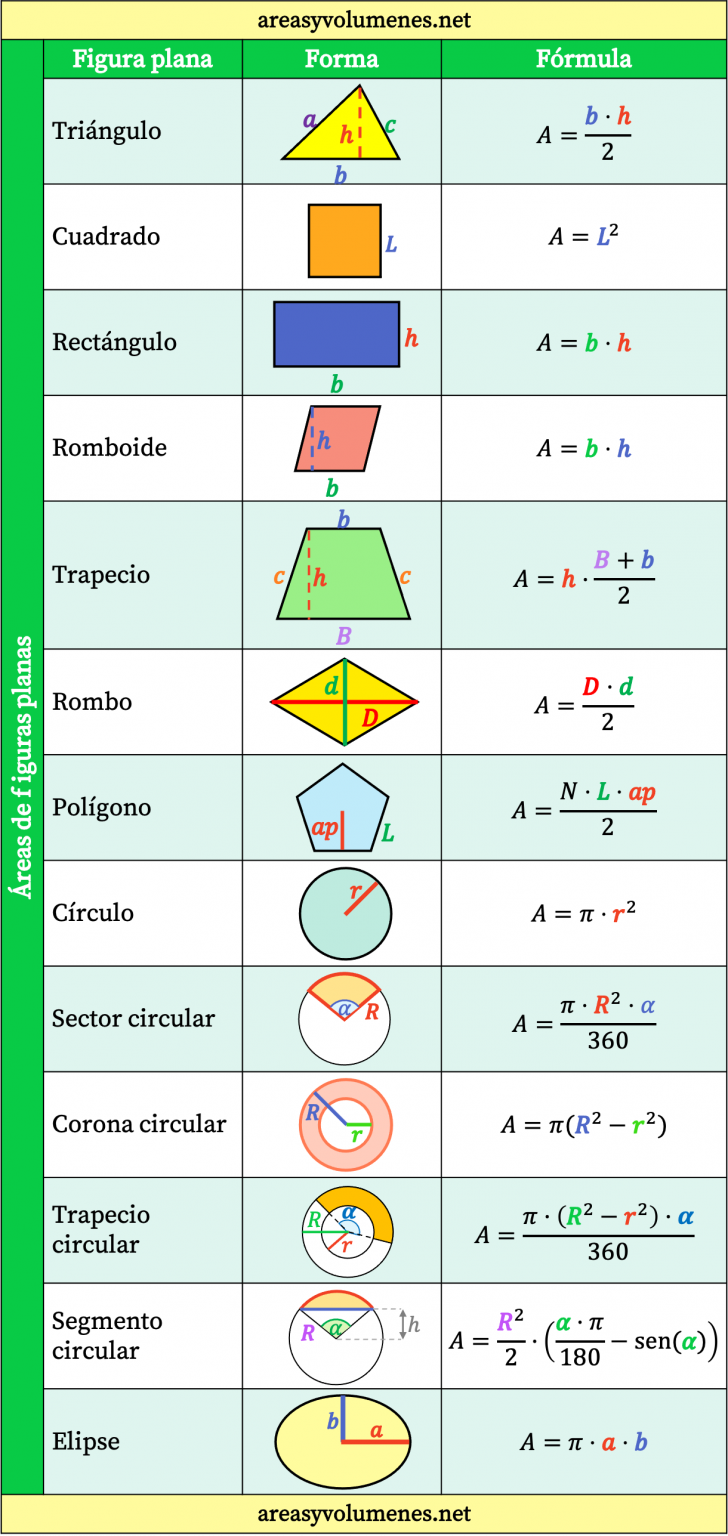
The area of a semicircle is exactly half the area of a full circle sharing the same radius, expressed algebraically as $A = \frac{1}{2}\pi r^2$. Whether you're designing a curved architectural garden bed or calculating material loads in civil engineering, finding the exact two-dimensional space enclosed by a half-circle requires precision.
Unlike full circles, a semicircle is uniquely bound by a curved arc spanning 180 degrees and a straight linear diameter. Mastering this calculation goes beyond plugging numbers into a basic equation; it requires understanding coordinate geometry, calculus integration, and how small measurement errors scale quadratically.
The Exact Mathematical Equation
The standard formula for the area of a semicircle uses the radius ($r$), which measures the distance from the midpoint of the flat base to any point on the curved boundary.
$$A = \frac{\pi r^2}{2}$$
If your blueprint provides the diameter ($d$) instead of the radius, you can save a conversion step by using the diameter-based variation. Because the radius is half the diameter ($r = \frac{d}{2}$), squaring it transforms the equation:
$$A = \frac{\pi (\frac{d}{2})^2}{2} = \frac{\pi \frac{d^2}{4}}{2} = \frac{\pi d^2}{8}$$
Both equations yield identical results. The choice depends entirely on whether your raw measurements originate from a radius or a diameter span. For official definitions of geometric constants, check out NIST Math Resources.
Geometric and Calculus Derivations
Mathematical formulas shouldn't just be memorized; their proofs validate why they work universally.
The Geometric Proof via Symmetry
A full circle possesses an area of $A_{circle} = \pi r^2$. Cutting that circle along any arbitrary diameter splits the shape into two congruent, identical halves. Because symmetry dictates that these halves share the total area equally, dividing the full circle's area by two produces the exact expression for a single semicircle.
The Definite Integral Proof
You can also prove this area using calculus by placing a semicircle on a Cartesian coordinate plane. The equation for a circle centered at the origin is $x^2 + y^2 = r^2$. Rearranging this to solve for the upper half-circle gives the function:
$$f(x) = \sqrt{r^2 - x^2}$$
To find the area underneath this curve from $-r$ to $r$, set up a definite integral:
$$A = \int_{-r}^{r} \sqrt{r^2 - x^2} , dx$$
Using trigonometric substitution (letting $x = r \sin\theta$), evaluating this definite integral across the interval yields:
$$A = \frac{1}{2}\pi r^2$$
This calculus approach proves that the geometric shortcut holds true under rigorous mathematical scrutiny.
Step-by-Step Calculation Examples
Let's walk through concrete examples using both radius and diameter inputs.
Example 1: Calculating with a Known Radius
Imagine you're designing a semicircular patio stone with a radius of $7$ meters.
- Square the radius value: $7^2 = 49$.
- Multiply by mathematical constant pi ($\pi \approx 3.14159$): $49 \times 3.14159 = 153.938$.
- Divide the product by two: $\frac{153.938}{2} = 76.97$ square meters.
Example 2: Calculating with a Known Diameter
Suppose a metal fabrication shop builds a plate featuring a semicircular cut-out with a diameter of $10$ centimeters.
- Convert the diameter to a radius by dividing by two: $10 / 2 = 5$ cm.
- Square that radius: $5^2 = 25$.
- Multiply by pi: $25 \times \pi \approx 78.54$.
- Divide by two to isolate the semicircle: $\frac{78.54}{2} = 39.27$ square centimeters.
For deeper insights into mathematical standards, you can review guidelines published by the National Council of Teachers of Mathematics.
Real-World Applications
Engineers, architects, and fabricators rely on this formula daily to manage resources and structural integrity.
- Structural Engineering: Vaulted archways, tunnels, and cross-sections of corrugated steel pipes often utilize semicircular geometries to distribute load evenly across stress points.
- Landscape Architecture: Designing circular flower beds, paved garden patios, or irrigation zones requires precise area computations to estimate soil volume, sod requirements, and mulch quantities accurately.
- Manufacturing and Industrial Design: Storage silos, pressure tanks, and end-caps feature hemispherical or semicircular heads. Calculating the exact surface area dictates material procurement costs and structural safety thresholds.
Common Mistakes to Avoid
Precision matters in geometry. Watch out for these frequent calculation errors:
- Confusing Area with Perimeter: The area measures two-dimensional space inside the boundary (in square units), whereas the perimeter calculates the total outer boundary length—which includes the straight flat base edge ($P = \pi r + 2r$). Mixing these up ruins material orders.
- Forgetting the Division Step: It's easy to calculate the area of a full circle ($\pi r^2$) out of habit and forget to divide by two. Always double-check your final step.
- Squaring the Diameter Directly: If you use the diameter formula variant, remember that the constant in the denominator is $8$ (not $4$), because squaring $\frac{d}{2}$ produces $\frac{d^2}{4}$, which is then halved.
Frequently Asked Questions
Is a semicircle's curved arc length used in the area formula?
No. The area formula depends strictly on the radius squared ($\pi r^2 / 2$). The arc length ($\pi r$) is only needed when calculating the perimeter or boundary distance.
How does changing the radius affect the total area?
Area scales quadratically. If you double the radius of a semicircle, the area doesn't just double—it quadruples, because $(2r)^2 = 4r^2$.
Can this formula be used for semi-ellipses?
No. A semi-ellipse uses a distinct formula ($A = \frac{1}{2}\pi ab$, where $a$ and $b$ represent semi-axes) because it lacks uniform radial symmetry. Applying a semicircle formula to an ellipse results in major sizing errors.



