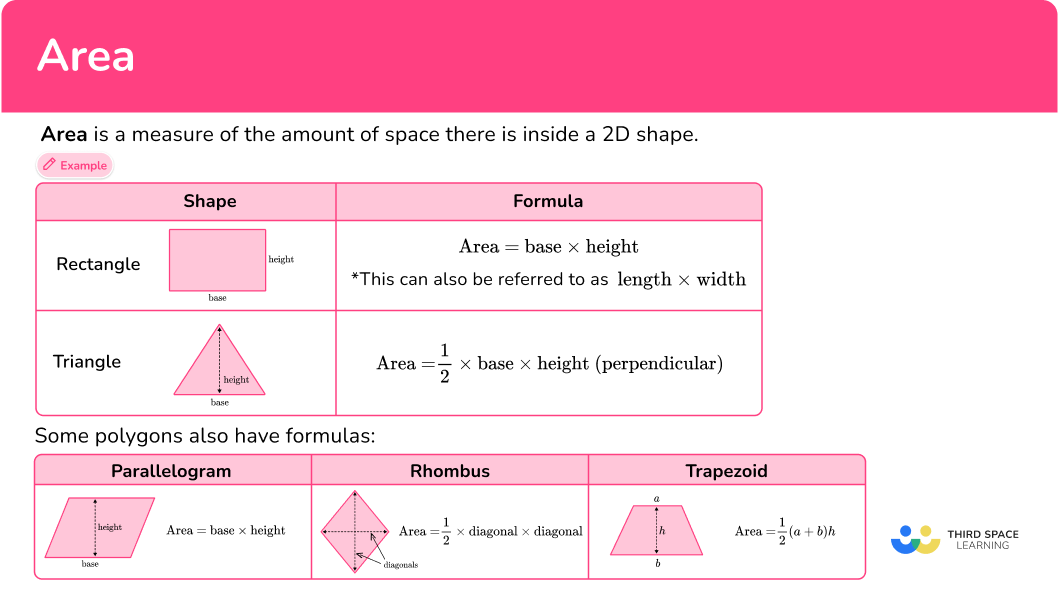
Finding the area of a hexagon depends entirely on whether the shape is regular, meaning all sides and interior angles are equal, or irregular. For a regular hexagon with side length $s$, the exact formula is $Area = \frac{3\sqrt{3}}{2} s^2$, which simplifies to approximately $2.598 s^2$. If you only know the distance from the center to a corner, known as the radius, or the distance to the flat side, known as the apothem, alternative calculations apply.
Understanding this polygon requires looking past standard squares and triangles. Hexagons appear naturally in honeycomb structures, crystal formations, and engineering designs because they maximize space efficiency with minimal boundary material. Calculating their surface dimensions is a fundamental geometry skill used in architecture, game design, and manufacturing.
Understanding the Structure of a Regular Hexagon
Before jumping into formulas, it helps to visualize what makes up this six-sided polygon. A regular hexagon is unique because it can be cleanly divided into six identical equilateral triangles.
- The sum of all interior angles equals 720 degrees.
- Each individual interior angle measures 120 degrees.
- The distance from the center to any vertex equals the side length itself.
Because of this symmetry, when you draw lines from the center of a regular hexagon to all six vertices, you form six triangles where every side is equal to the main side length $s$. Finding the area of just one of those triangles and multiplying it by six gives you the total area of the entire shape.
The Standard Formula for Regular Hexagons
When you know the length of a single side, calculating the surface space is straightforward. Let's break down the mathematical derivation so you aren't just memorizing a random string of numbers.
The area of a single equilateral triangle with side length $s$ is calculated using the standard triangle formula: $$Area_{triangle} = \frac{\sqrt{3}}{4} s^2$$
Since a regular hexagon consists of six of these identical triangles, you multiply that expression by six: $$Area = 6 \times \left( \frac{\sqrt{3}}{4} s^2 \right)$$
Simplifying the fraction $\frac{6\sqrt{3}}{4}$ down to $\frac{3\sqrt{3}}{2}$ gives you the standard formula: $$Area = \frac{3\sqrt{3}}{2} s^2$$
For practical calculations, $\frac{3\sqrt{3}}{2}$ evaluates to roughly $2.59807$. So, if your side length is $4$ units, you square $4$ to get $16$, and multiply that by $2.598$, yielding roughly $41.57$ square units.
Using the Apothem When Side Length is Unknown
Sometimes geometry problems don't give you the side length directly. Instead, they provide the apothem, which is the line segment from the center of the polygon perpendicular to one of its sides.
When you have the apothem ($a$) and the perimeter ($P$), you can use the general regular polygon formula: $$Area = \frac{1}{2} \times Perimeter \times Apothem$$
To find the perimeter of a regular hexagon, simply multiply the side length by six ($P = 6s$). Substituting that into the general formula yields: $$Area = \frac{1}{2} \times (6s) \times a = 3sa$$
This approach is especially useful in construction and machining, where measuring from the exact center to a flat edge is often easier than measuring outer boundaries. You can explore more polygon properties over at Mathigon.
Calculating the Area of Irregular Hexagons
Not every six-sided shape features equal sides and angles. An irregular hexagon has varying side lengths and unequal interior angles, meaning the symmetric formulas won't work.
To find the area of an irregular hexagon, use the triangulation method:
- Divide the irregular shape into non-overlapping triangles by drawing lines from a single vertex to all other non-adjacent vertices.
- Measure or calculate the base and height of each resulting triangle.
- Compute the area for each individual triangle using $A = \frac{1}{2}bh$.
- Add all the individual triangle areas together for the final sum.
Alternatively, if the polygon is drawn on a coordinate plane, you can use the Shoelace Formula. This technique requires listing the $(x, y)$ coordinates of each vertex in sequential order, multiplying diagonally across coordinates, and finding the absolute difference to determine the enclosed space.
Common Mistakes to Avoid
Math errors on polygon calculations usually stem from mixing up linear measurements and square units. Keep these pitfalls in mind:
- Forgetting to square the side length before multiplying by the constant. Exponents must be handled before multiplication in order of operations.
- Confusing the radius (center to vertex) with the apothem (center to flat side midpoint). They are only equal in specific non-hexagonal contexts; in a regular hexagon, the radius equals the side length, while the apothem is shorter.
- Applying the regular formula to irregular shapes. Always verify that all side lengths match before using the $2.598 s^2$ shortcut.
Frequently Asked Questions
What is the easiest formula to remember for a regular hexagon?
The easiest practical version to remember is $Area \approx 2.598 \times s^2$, where $s$ represents the length of one side. Just square your side length and multiply by $2.598$.
Why does a regular hexagon split into equilateral triangles?
Because the interior angle of a regular hexagon is 120 degrees, drawing lines from the center splits that angle into two 60-degree angles. Combined with the equal distances from the center to the vertices, this creates triangles where all three angles equal 60 degrees, making them strictly equilateral.
Can I find the area if I only know the long diagonal?
Yes. The long diagonal of a regular hexagon spans straight across from one vertex to the opposite vertex, passing right through the center. This means the long diagonal is exactly twice the length of the side ($d = 2s$). You can divide your diagonal by two to find the side length, then plug it into the standard area formula.
How do I calculate the perimeter if I know the area?
Working backward requires reversing the formula. Divide your total area by $2.598$, take the square root of that result to find the side length, and then multiply that side length by six to get the total perimeter.



