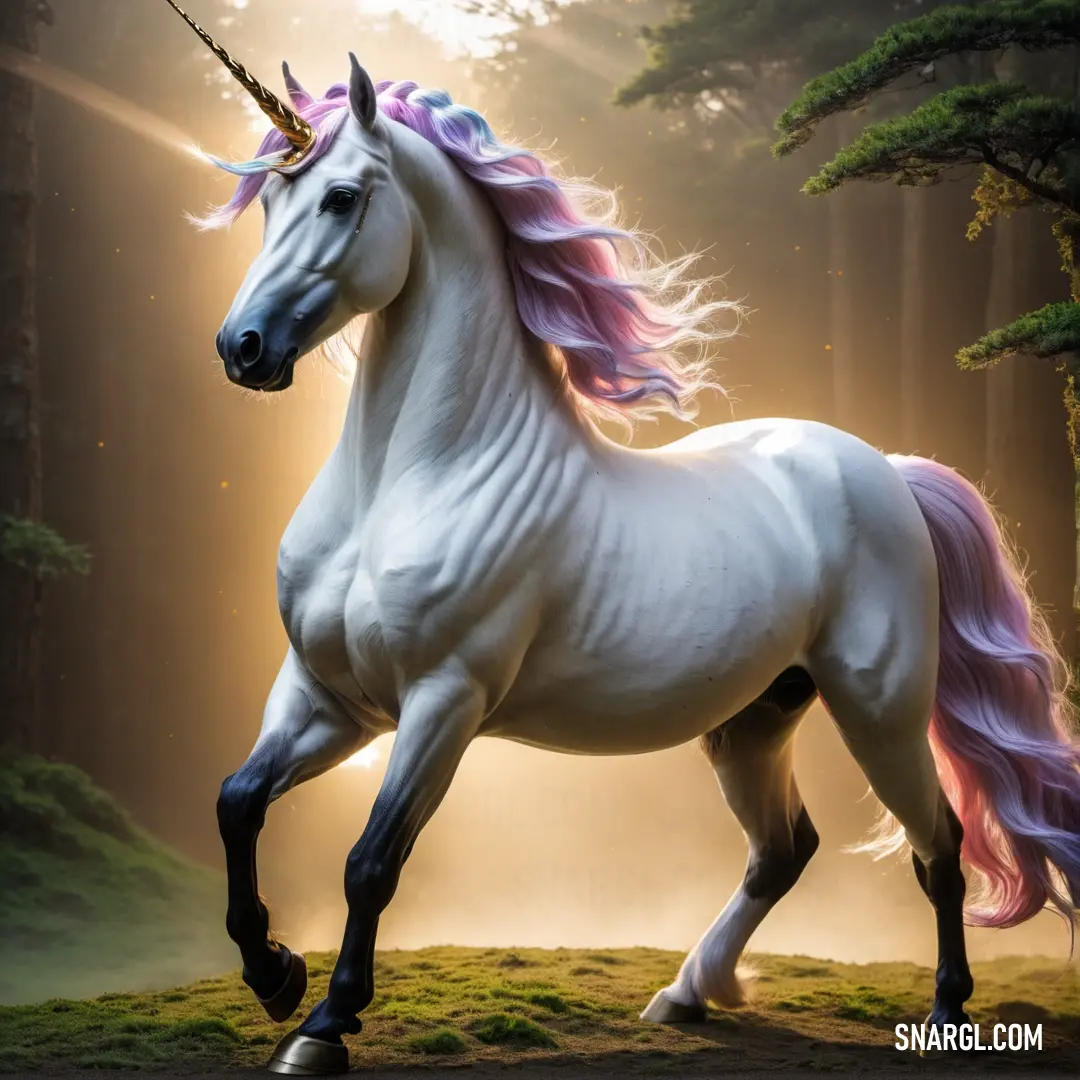
Are unicorns real? The short answer is no, magical, horse-like creatures with spiraling horns do not exist in the wild. However, the cultural obsession with unicorns stems from a fascinating blend of historical misinterpretations, ancient fossil discoveries, and very real animals found in nature that share striking similarities with the legendary beast.
Long before modern fantasy franchises popularized the creature, ancient historians, explorers, and scientists genuinely debated whether unicorns roamed the earth. Understanding why people believed in them requires looking past modern fairy tales and examining the intersection of natural history, early exploration, and how human imagination fills in the gaps of the unknown.
The Origins of the Unicorn Myth in Antiquity
The earliest written descriptions of unicorns do not originate from European fairy tales, but from ancient accounts of natural history in India and Persia. Around 400 BCE, the Greek physician Ctesias wrote Indica, a collection of accounts about India based on travelers' tales. He described wild asses the size of horses, possessing white bodies, dark red heads, and a single cubit-long horn on their foreheads that was colored white, black, and red.
Historians believe Ctesias was likely describing Indian rhinoceroses or Tibetan wild asses, filtered through several layers of translation and exaggerated storytelling. Yet, his description established the baseline image of the unicorn for Western civilization.
Centuries later, Roman natural philosopher Pliny the Elder included the monoceros in his encyclopedic work Naturalis Historia. Pliny described the creature as an extremely fierce animal with the body of a horse, the head of a stag, the feet of an elephant, and a single black horn projecting from the middle of its forehead. Because ancient scholars treated travelers' tales with a mix of skepticism and awe, the unicorn slowly transitioned from a rare foreign animal into a fixture of natural philosophy.
The Biblical Influence and Medieval Symbolism
The cementing of the unicorn into European culture occurred largely through translation errors in early religious texts. The Hebrew Bible uses the word re'em roughly nine times, translating it in ancient Greek versions as monokeros (single-horned) and later in the Latin Vulgate as unicornis. Modern biblical scholarship identifies the re'em as the aurochs, an extinct wild ox known for its powerful build and forward-facing horns.
Despite the linguistic misstep, the medieval church embraced the unicorn as a powerful religious symbol. Bestiaries from the period assigned deep spiritual meaning to the creature, representing purity, grace, and the incarnation of Christ.
According to medieval folklore, a unicorn was too swift and fierce to be captured by hunters directly. The only way to catch one was to use a maiden as bait. A unicorn would allegedly approach a virgin, lose its wild nature, lay its head in her lap, and fall asleep, making it vulnerable to capture. This imagery dominated medieval art, most famously illustrated in the Hunt of the Unicorn tapestries currently housed at The Cloisters in New York. These elaborate tapestries reflect how deeply woven the creature was into the elite culture and religious symbolism of late medieval Europe.
The Practical Role of Unicorn Horns in History
For centuries, wealthy European monarchs, nobles, and religious institutions paid exorbitant sums for "unicorn horns." These artifacts were prized for their supposed ability to neutralize poison and cure various illnesses. Kings kept unicorn horn cups on hand to detect tainted wine at royal banquets.
The catch? The horns were never from unicorns. They were almost universally narwhal tusks—the elongated, spiral canine tooth of the Arctic whale (Monodon monoceros)—sold by Nordic traders and middlemen who kept the exact source a closely guarded commercial secret.
Other times, merchants sold the horns of rhinoceroses or the fossilized horns of extinct animals like woolly rhinoceroses. This trade continued well into the seventeenth century, when scientists like Danish physician Ole Worm finally debunked the medical myths surrounding narwhal tusks, proving that the supposed magical horns belonged to marine mammals rather than land-dwelling mythical beasts.
Real Animals That Inspired the Legend
Nature has produced several creatures that mimic the traits associated with unicorns, fueling historical belief.
The narwhal remains the most direct physical inspiration for the unicorn horn. Swimming in the frigid waters of the Arctic, male narwhals develop a prominent spiral tusk that can grow up to ten feet long. When these tusks washed up on European shores via trade routes, they provided physical proof to medieval buyers that single-horned beasts existed.
The Indian rhinoceros shares the singular horn trait and heavy, armored hide that early writers attributed to mythical beasts. When early travelers encountered rhinocerotes in Asia, their written accounts often emphasized the prominent facial horn, blending the reality of the rhino with the mythology of the horse.
Even in the modern era, genetic mutations occasionally create real-world anomalies. "Lancelot the Unicorn," a biological goat born with a single central horn fused to the center of its skull, toured with the Ringling Bros. circus in the 1930s. Biologists studying the goat confirmed that the horn grew from the center due to a congenital anomaly during embryonic development, proving that single-horned mammals can occur naturally through genetic variation.
Prehistoric Echoes: The Siberian Unicorn
Did humans ever walk the earth alongside a real-life creature that resembled a unicorn? The answer points to Elasmotherium sibiricum, an extinct genus of giant rhinoceros that roamed the Eurasian steppe until roughly 39,000 years ago.
Referred to colloquially as the "Siberian unicorn," this massive mammal stood nearly six feet tall at the shoulder, weighed up to four tons, and bore a single, massive bony horn on its forehead. While it looked more like a giant, hairy rhinoceros than an elegant white stallion, the overlap between human habitation and the survival of Elasmotherium likely gave rise to ancient Indigenous and nomadic oral traditions about a large, fierce beast with a single horn.
Fossil evidence published in the American Journal of Science and other paleontological publications confirms that these creatures survived much later into the Pleistocene epoch than previously thought, bridging the gap between paleontology and ancient myth.
Common Misconceptions About Unicorns
Modern pop culture treats unicorns as cute, rainbow-colored cartoon characters, but historical beliefs were vastly different.
Many people assume the unicorn was invented entirely in medieval Europe. In reality, the earliest written accounts come from ancient Asia and the Mediterranean, far removed from the fairy tales told to children today.
Another common myth is that people genuinely believed in flying, winged unicorns with magical healing powers during historical times. While medieval bestiaries attributed various mystical properties to the creature's horn, wings were a much later addition popularized by modern fantasy literature and animation.
Frequently Asked Questions
Did anyone in modern history actually believe unicorns were real?
During the nineteenth century, as exploration mapped out the globe's remote regions, scientists increasingly realized that large, undiscovered land mammals like unicorns could not exist without leaving fossil or geographical traces. However, sporadic claims and hoaxes continued to surface in newspapers well into the Victorian era.
Why do so many ancient cultures have unicorn myths independently?
While trade routes and shared texts spread the Greek and Roman descriptions across Europe and the Middle East, many cultures independently associated single-horned animals with power and divinity simply because horn mutations occur naturally in horned livestock like goats and antelopes.
Are narwhal tusks actually horns?
No. Biologically speaking, a narwhal tusk is an elongated tooth, specifically a left upper canine that protrudes through the whale's lip and spirals forward. It contains millions of nerve endings and serves as a sensory organ for detecting changes in water temperature and salinity.
What is the national animal of Scotland?
The unicorn is the official national animal of Scotland. The choice dates back to Celtic mythology, where the unicorn represented innocence, purity, healing properties, and power. Scottish heraldry frequently features unicorns chained because only a virgin could tame them, symbolizing the untamable nature of the Scottish people.



