Are negative numbers real? It is a question that has puzzled students, philosophers, and even brilliant historical mathematicians for centuries. When you look around the physical world, you can count three trees or hold five apples, but you cannot physically hand someone negative four apples. This tangible paradox leads many to wonder if negative numbers are just a clever bookkeeping fiction or a fundamental truth of the universe.
The short answer is yes, negative numbers are just as real as positive numbers within the formal framework of mathematics. They are not physical objects you can touch, but rather logical relationships and directional values that describe our reality. Without them, fields ranging from civil engineering to personal finance would completely collapse.
The Historical Resistance to Negative Numbers
For thousands of years, ancient civilizations managed complex construction, commerce, and astronomy without ever using negative numbers. Ancient Greek mathematicians viewed numbers strictly through the lens of geometry and physical magnitude. To them, a negative length or area was nonsensical. If you own a plot of land, its size is a positive quantity; having less than zero land was an unthinkable geometric impossibility.
The earliest practical uses of negative numbers appeared in ancient China and India, primarily driven by commerce and debt. Chinese mathematicians used black rods for positive numbers and red rods for negative numbers to keep track of profits and losses in ledger books. Yet, even as merchants and traders adopted these tools for practical calculations, European scholars resisted them well into the Renaissance.
René Descartes, the famous 17th-century philosopher and mathematician, referred to negative solutions in algebraic equations as "false roots." To early modern European thinkers, an equation yielding a negative answer was considered broken or unsolvable. It took the gradual formalization of algebra and the creation of the Cartesian coordinate system to finally give negative numbers a permanent home on paper.
How the Number Line Makes Negatives Real
The turning point in accepting negative numbers was the invention of the continuous number line. Instead of viewing numbers as isolated quantities of physical items, mathematicians began to view them as positions along an infinite, unbroken continuum.
Zero sits directly in the middle as a reference point. Positive numbers extend infinitely to the right, while negative numbers extend infinitely to the left. In this system, negatives are not "less than nothing" in a mystical sense; they are simply directional opposites. If positive five means moving five steps forward, negative five means moving five steps backward.
This directional framework is governed by strict, unbreakable rules. The further a negative number sits to the left of zero, the smaller its value. For example, negative ten is smaller than negative two because it sits further away from zero in the negative direction, even though the digit ten is larger than two. This distinction trips up many learners who confuse magnitude with directional value.
Why Negative Numbers Matter in the Real World
While you cannot hold negative apples, negative numbers are essential for describing measurable phenomena in the physical world.
In meteorology, temperatures regularly drop below zero during winter months. A reading of negative ten degrees Celsius is not an abstract philosophical concept; it is a critical measurement that dictates whether water will freeze on roadways, affecting public safety and agriculture.
In economics, negative numbers represent debt or financial deficit. If a bank account has a balance of negative fifty dollars, it means the account holder owes money to the institution. This number dictates real-world actions, such as incurring overdraft fees or triggering automated deposits.
In physics, negative numbers designate opposite directions or charges. Vector quantities like velocity and acceleration use positive and negative signs to indicate whether an object is moving forward or backward, upward or downward. Electrons carry a negative electrical charge, which powers every electronic device we use today. Without negative numbers, modern physics equations would fail to predict how bridges withstand wind loads or how aircraft navigate the atmosphere.
The Riddle of Multiplying Negatives
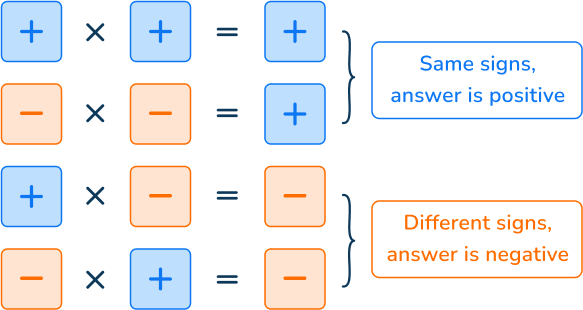
One of the most persistent hurdles in learning mathematics is the rule stating that multiplying two negative numbers yields a positive result. Why should a negative multiplied by a negative become positive?
This rule is not an arbitrary decree invented by math teachers. It is a logical necessity required to keep the arithmetic system consistent. Consider a simple pattern of multiplication:
- Three times three equals nine.
- Three times two equals six.
- Three times one equals three.
- Three times zero equals zero.
In this sequence, every time the multiplier decreases by one, the product decreases by three. To keep the pattern consistent as you move past zero into negative numbers, the next steps must be:
- Three times negative one equals negative three.
- Three times negative two equals negative six.
Now, consider what happens when you reverse the roles and multiply a negative number by a decreasing sequence:
- Negative three times three equals negative nine.
- Negative three times two equals negative six.
- Negative three times one equals negative three.
- Negative three times zero equals zero.
Here, each step increases the product by three. Continuing that exact same logical pattern past zero requires:
- Negative three times negative one equals positive three.
- Negative three times negative two equals positive six.
If negative times negative equals negative broke this pattern, the entire structure of algebra would fall apart. Mathematics requires internal consistency, and the rules governing negative numbers ensure that equations balance cleanly across every branch of science.
Frequently Asked Questions
Are negative numbers considered real numbers?
Yes. In mathematical classification, the set of real numbers includes all rational and irrational numbers, which encompasses positive numbers, zero, and negative numbers.
Can you have a physical quantity that is negative?
You cannot have a physical collection of objects numbering in the negatives, but you can measure physical states that fall below an arbitrary baseline, such as altitude below sea level, electrical charge, or temperatures below freezing.
Who invented negative numbers?
Negative numbers were not invented by a single individual. They were developed independently by ancient Chinese and Indian mathematicians as practical tools for trade and accounting before being formalized in Europe during the Renaissance.
Why does subtracting a negative number act like addition?
Subtracting a negative number is equivalent to removing a deficit or reversing a debt. For example, if you take away a debt of ten dollars, your net financial standing increases by ten dollars, which is why subtracting a negative yields the same result as adding a positive.



