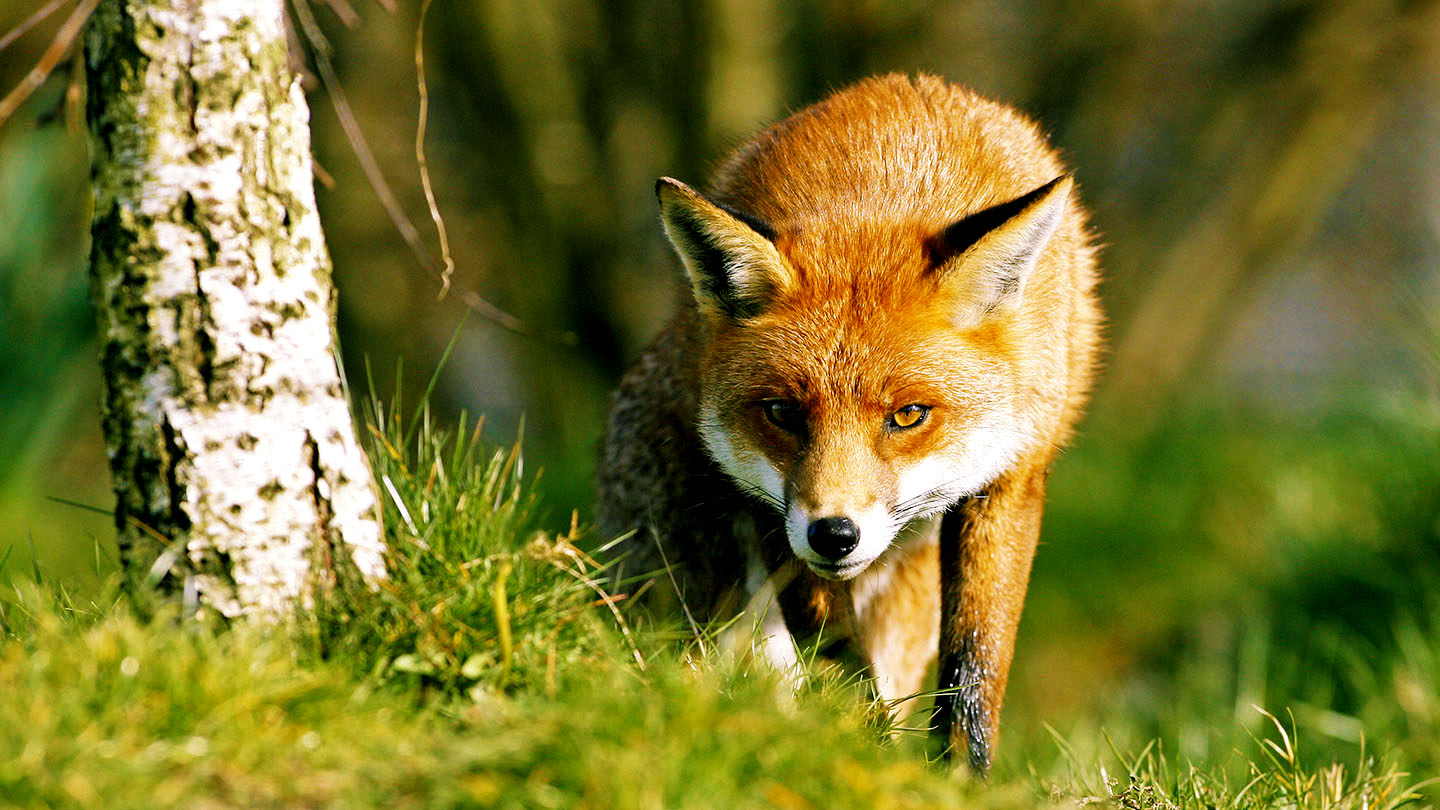
If you've ever watched a red fox leap high into a snowbank or trot across a suburban lawn, you've likely noticed how much it looks like a small dog. Their pointed ears, slender snouts, and bushy tails trigger an immediate mental comparison to our canine companions. But when people ask whether foxes are part of the dog family, the answer depends entirely on whether you mean the broad biological family Canidae or the narrower genus Canis where domestic dogs reside.
Biologically, foxes are indeed members of the dog family (Canidae), making them distant cousins to wolves, jackals, and domestic dogs. However, they diverged from the lineage of modern dogs millions of years ago, landing in separate taxonomic genera with distinct evolutionary adaptations, social structures, and hunting strategies. Understanding this split reveals why you can't simply train a wild fox like a Labrador retriever and how these adaptable predators carved out their own unique niche in nature.
The Taxonomic Breakdown: Family Canidae vs. Genus Vulpes
To understand where foxes sit on the animal family tree, we have to look at biological classification. Taxonomy organizes living things into nested categories: order, family, genus, and species.
Every animal commonly recognized as a dog, wolf, jackal, or fox belongs to the order Carnivora and the family Canidae. This means that on a fundamental anatomical level—sharing specialized shearing teeth called carnassials, non-retractable claws, and similar skeletal layouts—foxes and dogs share a common ancestor that lived tens of millions of years ago.
However, once you move below the family level, the tree splits into distinct branches:
- The Genus Canis: This group includes gray wolves, coyotes, jackals, African golden wolves, and domestic dogs (Canis lupus familiaris). These animals are typically larger, pack-oriented, and adapted for cooperative hunting and complex social hierarchies.
- The Genus Vulpes: This is home to true foxes, including the red fox (Vulpes vulpes), Arctic fox (Vulpes lagopus), fennec fox (Vulpes zerda), and kit fox (Vulpes macrotis). These species are generally smaller, solitary or loosely paired, and rely on stealth rather than pack strength.
- Outliers and Basal Canids: Not all foxes belong to Vulpes. The gray fox (Urocyon cinereoargenteus), for example, belongs to an entirely separate, more ancient genus and possesses unique traits like the ability to climb trees.
According to research published by the San Diego Zoo Wildlife Alliance, the lineage leading to modern true foxes (Vulpes) diverged from the Canis lineage roughly 10 to 12 million years ago during the Miocene epoch. That is a massive evolutionary gap, giving foxes plenty of time to develop specialized traits tailored for solitary survival.
Behavior and Social Structure: Solitary Hunters vs. Pack Animals
The physical differences between foxes and dogs are easy to spot, but their behavioral differences run even deeper. Domestic dogs and wolves evolved as cooperative social hunters. Living in packs requires complex communication systems, strict social ranks, and a heavy reliance on deep howls to coordinate over long distances.
Foxes, by contrast, are largely solitary operators. While they form monogamous breeding pairs during mating season and raise kits together, you won't see a pack of red foxes tracking down large prey. Instead, their social structure is designed for independence.
- Hunting Style: Foxes rely on solitary stealth, acute hearing, and precise pouncing. A red fox can hear a mouse moving beneath a thick layer of snow or grass, calculating the exact location before launching into the air to pin its prey.
- Vocalizations: While wolves howl to assemble the pack, foxes use a wide range of sharp barks, staccato yips, and a famous, haunting scream that often startles homeowners at night. They reserve vocalizations primarily for territory defense, mating alerts, and warning offspring.
- Caching Food: Foxes are prolific hoarders. When food is abundant, they bury surplus meals beneath leaves, dirt, or snow, using their acute memory to retrieve them later. While some dogs hide bones, foxes rely on caching as a core survival strategy during lean winter months.
Why You Can't Domesticate a Wild Fox Like a Dog
One of the most common follow-up questions is whether foxes can be kept as pets since they belong to the dog family. The short answer is no, and the reasons highlight the vast gulf between wild canids and domesticated dogs.
Domestic dogs underwent a rigorous, multi-millennial evolutionary transformation alongside humans. Through artificial selection, humans bred dogs for tameness, reduced fear responses, flattened faces, and a willingness to cooperate across species lines.
Wild foxes have undergone no such domestication process. Even hand-raised foxes retain wild instincts, high anxiety, and destructive behaviors that make them ill-suited for standard household life.
- Scent Marking: Foxes possess powerful scent glands near the base of their tails and on their paws. They use strong-smelling musk to mark territories, and in a domestic setting, this scent is overwhelmingly pungent and nearly impossible to remove from furniture or carpets.
- High Energy and Digging: Foxes are natural diggers. Their instinct to excavate dens means a pet fox can easily tear through drywalled walls, carpeted floors, and yards in a matter of hours.
- Unpredictable Temperament: Unlike dogs, which have been bred for predictable social cues, wild foxes can be high-strung and prone to defensive biting when startled, regardless of how gently they were raised.
Even the famous Russian farm-fox experiment, which successfully bred farm foxes for tameness over decades, showed that selecting for friendly behavior altered physical traits like coat color and floppy ears, proving just how tightly behavior and biology are linked.
Common Misconceptions About Foxes and Dogs
Because folklore and cartoons often blur the lines between wild and domestic animals, several persistent myths surround foxes and their relationship to dogs.
Myth 1: Foxes and dogs can easily mate in the wild
Many people wonder if coyotes, dogs, and foxes crossbreed. While coyotes and wolves readily hybridize with domestic dogs because they share the same genus (Canis), foxes cannot hybridize with dogs. Their chromosome counts and genetic structures are entirely incompatible due to millions of years of separate evolution. A red fox has 34 pairs of chromosomes, whereas a domestic dog has 39. Natural mating is biologically impossible.
Myth 2: The gray fox is just a standard fox that climbs trees
The gray fox is often grouped mentally with red foxes, but it represents a living fossil among canids. It is one of the most primitive surviving members of the dog family, possessing rotating wrists and semi-retractable claws that allow it to scale vertical tree trunks and branches up to 20 feet high to escape predators or forage for fruit.
Myth 3: Foxes carry a higher rabies risk than other wild canids
While foxes can contract and transmit rabies—just like raccoons, skunks, bats, and coyotes—they are not inherently more prone to the disease than other wildlife in their ecosystems. State wildlife agencies monitor outbreaks closely, and oral vaccination programs dropped via baits have successfully managed fox rabies in many regions.
Frequently Asked Questions
Can a domestic dog understand a fox?
Dogs and foxes recognize each other as members of the broad canine family through scent and body language, but their signals differ. A dog's wagging tail can signal friendly submission, whereas a fox uses tail posture to signal dominance or defensive readiness. Encounters between domestic dogs and wild foxes usually result in mutual hostility or avoidance.
Are foxes closer to cats or dogs?
Genetically, foxes are much closer to cats than most people realize—not because they share a direct lineage, but because both cats and dogs belong to the order Carnivora. Within that order, carnivores split into two main suborders: Feliformia (cat-like carnivores) and Caniformia (dog-like carnivores). Foxes and dogs both belong to Caniformia, making foxes definitively canine rather than feline, despite their occasionally cat-like agility and vertical-slit pupils found in some related species.
Do foxes live in packs?
No. Unlike wolves or African wild dogs, foxes do not form permanent packs. They live solitary lives outside of the breeding season, though a mother fox will raise her kits with the assistance of her mate or sometimes a non-breeding helper female (known as an aunt) before the young disperse in autumn.
What eats foxes in the wild?
Despite being successful predators, foxes occupy a middle tier in the food chain. In North America and Eurasia, adult foxes fall prey to larger canids like wolves, coyotes, and lynxes, as well as large raptors like golden eagles and great horned owls that target smaller fox species or vulnerable kits.



