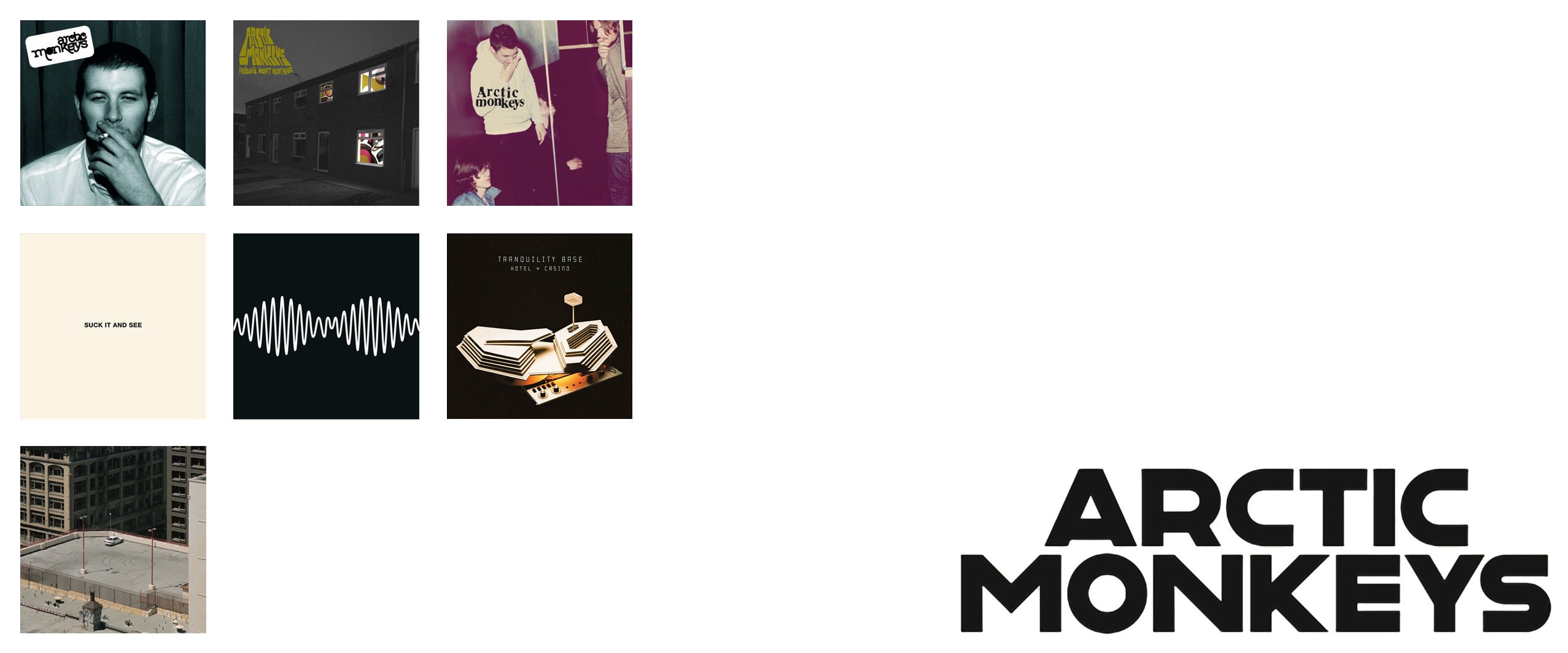
The trajectory of Arctic Monkeys stands as one of the most compelling evolutions in modern rock history. Emerging from the digital grassroots of early internet file-sharing and provincial northern clubs, the Sheffield four-piece transformed from gritty garage-punk chroniclers into cinematic lounge-pop architects. Over nearly two decades, frontman Alex Turner and his bandmates—Jamie Cook, Matt Helders, and Nick O'Malley—refused to repeat themselves, turning every studio release into a sharp pivot rather than a safe retread.
Understanding this transformation requires looking past the singles and examining how the band's seven studio albums map a continuous shift from street-level realism to abstract sonic fiction. This comprehensive look traces that exact journey, examining the shifting aesthetics, production choices, and lyrical maturation that defined each era.
Whatever People Say I Am, That's What I'm Not (2006)
The debut album arrived like a sudden collision in a crowded room. Powered by rapid-fire drum fills, razor-sharp guitar lines, and breathless local vernacular, Whatever People Say I Am, That's What I'm Not captured the frantic energy of weekend club culture in provincial England.
Turner's lyrics functioned as short stories detailing bouncers, fake indie bands, and cigarette-stained romance outside northern nightspots. Tracks like "I Bet You Look Good on the Dancefloor" and "A Certain Romance" combined punk velocity with sharp social observation. It became the fastest-selling debut album in British music history at the time, establishing a gritty standard for 2000s indie rock.
Favourite Worst Nightmare (2007)
Instead of resting on their newfound fame, the band returned ten months later with a record that doubled down on speed and anxiety. Favourite Worst Nightmare amplified every component of the debut while introducing structural complexity and darker psychological undertones.
The record opens with the explosive drum assault of "Brianstorm," setting a relentless pace that rarely drops. Yet songs like "Fluorescent Adolescent" and "Only Ones Who Know" introduced a bittersweet melodic sensibility. The production grew sharper and heavier, reflecting the dizzying disorientation of sudden global success.
Humbug (2009)
Seeking refuge from the relentless touring cycle, Arctic Monkeys retreated to a desert studio in Joshua Tree with Queens of the Stone Age mastermind Josh Homme. The resulting album, Humbug, traded immediate indie-pop hooks for heavy, cavernous textures and unsettling guitar riffs.
Songs like "Crying Lightning" and "Cornerstone" showcased a more atmospheric, mysterious songcraft. Turner's lyrics shifted from literal accounts of weekend nightlife into surreal, gothic imagery. While it initially alienated fans looking for fast dance-punk, Humbug proved the band possessed long-term artistic ambition.
Suck It and See (2011)
If Humbug was recorded in the shadows, Suck It and See stepped back into the Californian sun. This fourth album leaned into classic pop structures, warm analog guitar tones, and romantic lyricism.
Tracks such as "The Hellcat Spangled Shalalala" and "Love Is a Laserquest" revealed a gentler, more nostalgic songwriting approach. It was met with mixed initial reactions from listeners wanting heavier rock, but hindsight reveals it as a vital bridge connecting their early output to their stadium-sized future.
AM (2013)
AM stands as the commercial and cultural peak of the band's modern era. Melding the heavy groove of hip-hop beat production with vintage 1970s glam rock and heavy guitar riffs, the album defined a generation of alternative radio.
Anchored by iconic singles like "Do I Wanna Know?" and "R U Mine?", the record relied on swaggering basslines, falsetto backing harmonies, and lyrics steeped in late-night texting anxiety. It transformed Arctic Monkeys from a beloved British institution into a massive global headliner.
Tranquility Base Hotel & Casino (2018)
After a five-year gap, the band executed the most jarring left turn of their career. Abandoning guitars almost entirely, Turner wrote Tranquility Base Hotel & Casino on a piano gifted to him for his thirtieth birthday.
The resulting music is a lounge-pop concept album set in a fictional luxury resort on the moon. Lyrically dense, cinematic, and heavily satirical, songs like "Star Treatment" and "Four Out of Five" dealt with technology, sci-fi consumerism, and aging. It split critical and fan opinion at first release, but it solidified Turner's status as a master songwriter unconcerned with commercial expectations.
The Car (2022)
Continuing down the cinematic path established on their previous record, The Car refined the lounge-orchestral sound with lush string arrangements, subtle jazz percussion, and sophisticated instrumentation.
Tracks like "There'd Better Be a Mirrorball" and "Body Paint" function less like traditional rock songs and more like atmospheric movie scores. The gritty street-corner observations of 2006 were entirely gone, replaced by sophisticated meditations on memory, art, and motion.
Frequently Asked Questions
How many studio albums have Arctic Monkeys released?
Arctic Monkeys have released seven studio albums. Their discography spans from their 2006 debut Whatever People Say I Am, That's What I'm Not to their 2022 release The Car.
Which album marked their biggest stylistic change?
The most dramatic shift occurred with Tranquility Base Hotel & Casino in 2018. The band completely abandoned standard guitar-driven rock arrangements in favor of piano-based lounge pop and abstract storytelling.
What is considered their most commercially successful album?
AM (2013) remains their biggest commercial and streaming success, dominating international charts and cementing their arena-rock status with tracks like "Do I Wanna Know?" and "Why'd You Only Call Me When You're High?".
Did the band change producers as they evolved?
Yes. They worked with early collaborators like Jim Abbiss and Mike Crossey, but also expanded their sound significantly by collaborating with external heavyweights like Josh Homme on Humbug and James Ford across multiple later releases.


