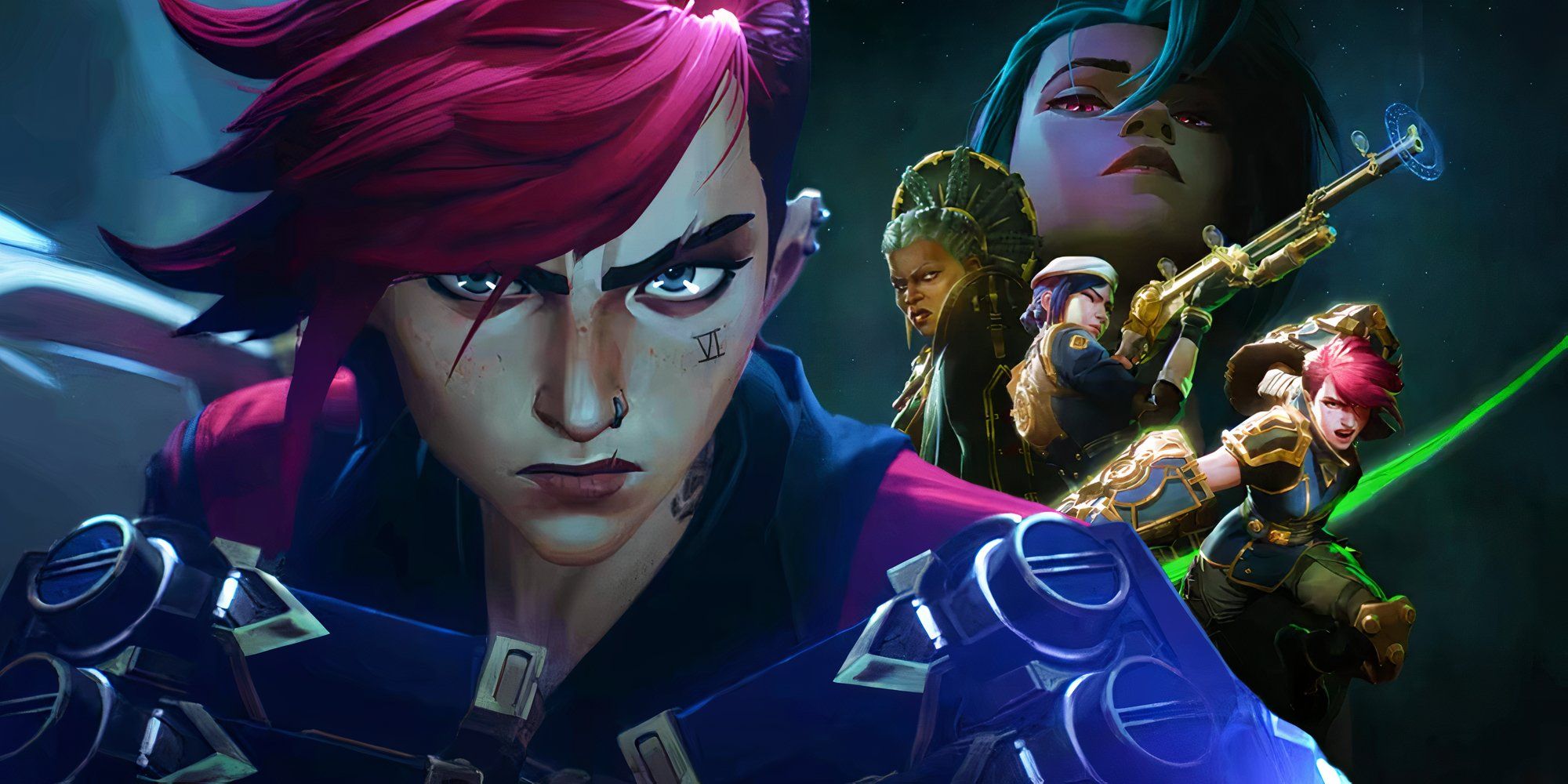
When Riot Games and Fortiche Production released Arcane on Netflix, viewers didn't just watch a video game adaptation; they witnessed a seismic shift in modern animation. The series bypassed the sterile plastic look of conventional computer-generated imagery in favor of a hybrid technique that married 3D character rigs with hand-painted textures. It's a visual approach that feels tactile, immediate, and utterly distinct from anything else on television.
If you've ever stared at the screen wondering how Fortiche achieved that painterly brushstroke texture on a moving 3D model, you're not alone. Let's break down the exact technical foundations, artistic influences, and production choices that make Arcane style art a masterclass in modern animation design.
The Hybrid Pipeline: Marrying 2D and 3D
At its core, Arcane uses a custom pipeline built around Autodesk Maya and Blender, integrated heavily with traditional 2D matte painting and compositing techniques in After Effects and Nuke. Instead of aiming for photorealism, the studio wanted every single frame to resemble a moving oil painting.
Animators achieved this by painting textures directly onto 3D geometry. Every highlight, shadow, and skin pore was treated with visible brushwork. When characters move, these textured surfaces don't shift smoothly like standard computer-generated graphics; instead, they maintain a sketchy, tactile quality.
- Texturing on Geometry: Artists painted surface details by hand, breaking up uniform digital gradients with intentional brush strokes.
- Custom Shader Development: Fortiche utilized custom shaders to manipulate how light hits characters, creating stark, graphic shadow lines rather than smooth, soft-edged ambient occlusion.
- Line Weight Variation: Outlines aren't uniform. The studio programmed dynamic line weights that thicken or thin depending on camera angle, motion speed, and emotional tension.
The Divided World: Color Theory in Piltover and Zaun
The visual storytelling relies heavily on a stark, deliberate color script that separates the twin cities of Piltover and Zaun. Color isn't just decoration here; it's narrative world-building that tells you where you are and how characters feel before a single line of dialogue is spoken.
Piltover is rendered in clean, aristocratic tones. You'll see polished golds, pristine whites, deep mahoganies, and cool steely blues. The lighting is pristine, geometric, and structured, reflecting a society obsessed with progress, order, and high-society elegance.
Zaun flips the entire palette on its head. It thrives on toxic greens, bruised purples, rusted oranges, and murky industrial grays. The lighting feels damp, filtered through smog and flickering neon signs, mirroring the decay and grit of the underworld.
When characters cross between these two districts, the color grading shifts instantly. You don't need a map to know Vi is out of her element in a Piltover council room or that Jayco is struggling to breathe down in the lanes of Zaun.
Character Design and Silhouette Language
Character silhouettes in Arcane are exaggerated to communicate personality and background at a single glance. Fortiche avoided average human proportions, opting instead for stylized shapes that draw from classic caricature and comic book illustration.
Jinx's design tells her entire psychological story through geometry. Her limbs are long and disjointed, her posture is hunched and erratic, and her hair flows in sharp, chaotic strands that frame her unstable mindset. Vi, on the other hand, relies on heavy blocky shapes, thick gauntlets, and a grounded posture that signals brute strength and protective stubbornness.
- Shape Language: Circles represent warmth and vulnerability (like young Powder), squares represent stability and rigidity (like Marcus or early Jayce), and triangles signal danger, agility, or unpredictability (like Jinx or Ekko).
- Expressive Facial Rigging: Facial animations blend standard 3D blend shapes with hand-drawn 2D cleanup passes, allowing for extreme expressions that stretch emotional beats without sliding into the uncanny valley.
Combat Choreography and Kinetic Camera Work
Action sequences in Arcane feel visceral because the camera is treated like a physical participant in the scene rather than an omniscient observer. The cinematography borrows heavily from live-action cinematic language, utilizing dynamic tracking shots, sudden rack focuses, and weight-conscious choreography.
When Vi throws a punch, you feel the momentum in the frame rate. The animation dips and spikes strategically, utilizing traditional anime-style smear frames and limited framing during high-speed impacts. This breaks away from the hyper-smooth, weightless look of modern 3D cartoons, giving every collision physical consequence.
Common Mistakes When Mimicking the Arcane Art Style
Many indie animators and digital artists try to replicate this look and fall into common technical traps. Avoiding these pitfalls saves hours of render time and keeps your project visually cohesive.
- Over-smoothing Textures: If you rely on default subsurface scattering or clean PBR shaders, you'll lose the hand-painted grit. Every surface needs intentional, manual brush noise.
- Uniform Line Art: Keeping outline thickness constant destroys the illusion. Outlines must react to light direction and camera distance.
- Ignoring the Environment: You can't put a gritty Zaun-style character against a clean, realistic 3D background. The background art must share the exact same painterly texture treatment as the characters.
Frequently Asked Questions
What software was used to make Arcane?
Fortiche Production primarily used Autodesk Maya for 3D animation, combined with proprietary tools, ZBrush for sculpting, and heavy 2D compositing in Adobe After Effects and Nuke to achieve its signature painted aesthetic.
Is Arcane 2D or 3D animation?
Arcane is a hybrid. It uses 3D character models and environments as a base, but wraps them in hand-painted 2D textures, custom shaders, and manual 2D cleanup passes to create a painterly, hand-drawn look.
Why does Arcane look so different from other 3D shows?
Most studios prioritize smooth, realistic rendering to mimic live action. Fortiche chose the opposite path, embracing imperfections, visible brushstrokes, graphic shadow lines, and comic-book-inspired line weights that prioritize emotional expression over technical realism.
Can indie animators replicate the Arcane art style?
Yes, but it requires a specialized workflow. Artists can achieve similar results in Blender or Unity by utilizing non-photorealistic rendering (NPR) toon shaders, hand-painted diffuse maps, and post-processing filters that add line work and color grading.


