Mastering APA style means aligning your academic manuscript with the precise guidelines established by the American Psychological Association. Whether you're drafting an undergraduate term paper or submitting a manuscript to a peer-reviewed journal, adherence to this framework ensures consistency, transparency, and clarity across social and behavioral sciences. This guide breaks down structural requirements, citation mechanics, and stylistic rules so you can format your paper correctly on the first attempt.
The current seventh edition of the APA Publication Manual simplifies several legacy rules—such as dropping running heads for student papers and easing web source location requirements—while tightening standards around bias-free language and DOI presentation. Getting these details right removes formatting distractions, letting your core research and methodology take center stage.
Document Formatting and Page Layout
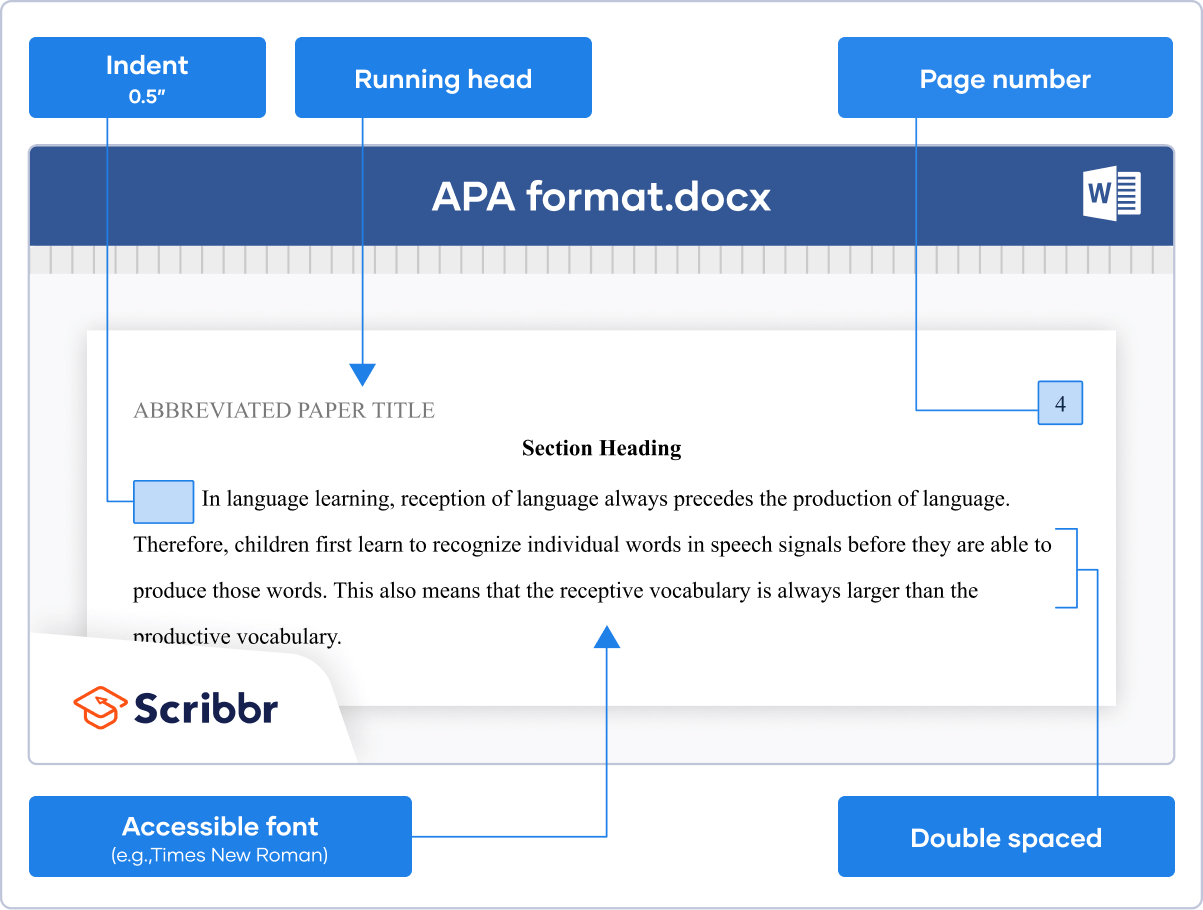
Before writing a single sentence of your introduction, configure your word processor to meet foundational layout requirements. Proper document setup ensures readability across digital and print formats.
Set your margins to exactly one inch on all sides. Choose an accessible, highly readable font option permitted by the manual, such as 12-point Times New Roman, 11-point Calibri, 11-point Arial, or 10-point Lucida Sans Unicode. Double-space the entire document, including block quotes, abstract paragraphs, and reference list entries. Never insert extra blank lines between paragraphs or section headers.
For student papers, the title page typically includes the paper title, your name, the institutional affiliation course number and name, instructor name, and assignment due date, all centered in the upper half of the page. Place page numbers flush right in the header of every page, starting with the title page as page one.
Core Structural Sections
A standard empirical research paper flows through four main sections, often remembered by the acronym IMRAD: Introduction, Method, Results, and Discussion. Each section serves a distinct purpose in communicating the scientific narrative.
The introduction immediately follows the abstract, opening with the broad research problem without using an "Introduction" heading (since the paper title acts as the top-level heading). Here, you review relevant prior literature, identify the specific knowledge gap, and state your hypotheses or research questions.
- Method: Detail how you conducted the study. Subsections typically include participants or subjects, materials or apparatus, and procedures. Write this with enough precision that another researcher could replicate your exact study.
- Results: Summarize the collected data and statistical analyses. Report exact test statistics, degrees of freedom, probability values, and effect sizes alongside descriptive statistics like means and standard deviations.
- Discussion: Interpret your findings in light of existing literature. Evaluate whether your hypotheses were supported, acknowledge methodological limitations, and propose concrete directions for future investigation.
In-Text Citation Rules
Proper attribution protects academic integrity and lets readers trace every assertion back to its origin. APA uses an author-date citation system for all borrowed ideas, facts, and direct quotations.
When mentioning an author's name directly in your sentence structure, write a narrative citation by placing the publication year inside parentheses immediately following their name. When the author's name and date appear together at the end of a sentence, use a parenthetical citation separated by a comma.
For direct quotes of fewer than 40 words, incorporate the quote directly into your running text using quotation marks, and always include the specific page number or paragraph locator preceded by "p." or "para." For example, previous research indicates that "procrastination strongly predicts academic distress" (Miller, 2024, p. 112).
When a direct quote reaches 40 words or more, format it as a freestanding block quote. Indent the entire block 0.5 inches from the left margin, omit quotation marks, and place the parenthetical citation after the final punctuation mark.
Constructing the Reference List
Every in-text citation must correspond to a full bibliographic entry on the reference list page, which begins on a new page at the end of your manuscript. Center the word "References" at the top in bold.
Alphabetize reference entries by the primary author's last name. Apply a hanging indent to every entry, meaning the first line aligns flush left while all subsequent lines in that reference indent by 0.5 inches.
For journal articles, include the author surname, initials, publication year in parentheses, article title, periodical name in italics, volume number in italics, issue number in parentheses (if available), page range, and a digital object identifier (DOI) formatted as a URL. For books, list the author, year, italicized book title, and publisher name.
Common Pitfalls and Editing Strategies
Writers frequently lose points on minor mechanical errors that automated checkers miss. Watch out for these recurrent mistakes during your final proofread:
- Abbreviation overuse: Define every abbreviation the first time you use it in the text (e.g., standard deviation [SD]), then use the abbreviation consistently thereafter without redefining it.
- Inconsistent verb tenses: Use past tense when describing previous research outcomes and your own study's procedures and results. Use present tense when discussing established facts, conclusions, or implications in the discussion section.
- Mismanaged et al.: For sources with three or more authors, use et al. right from the first in-text citation, listing only the first author's surname followed by et al. and the year.
Run a final check to verify that every citation in your body text has a matching reference list entry, and ensure no unreferenced sources appear at the end. Taking time to cross-check these pairs prevents the most common source of academic penalties.
Frequently Asked Questions
Do student papers require an abstract?
Most undergraduate and master's level papers do not require an abstract unless explicitly requested by your instructor. Check your assignment prompt or syllabus before adding one.
How do I cite a source with no publication year?
When a reliable web source lacks a formal date, use the abbreviation "n.d." inside your parentheses where the year would normally go, such as (Department of Education, n.d.).
Are footnotes permitted in APA style papers?
While APA permits content footnotes to provide brief clarifying commentary or acknowledgments, academic instructors generally discourage them. Integrate necessary details directly into the body text whenever possible.
How should online article DOIs be formatted?
Always format DOIs as active URLs starting with https://doi.org/ followed by the alphanumeric string. This ensures readers can click the link directly to access the primary source.



