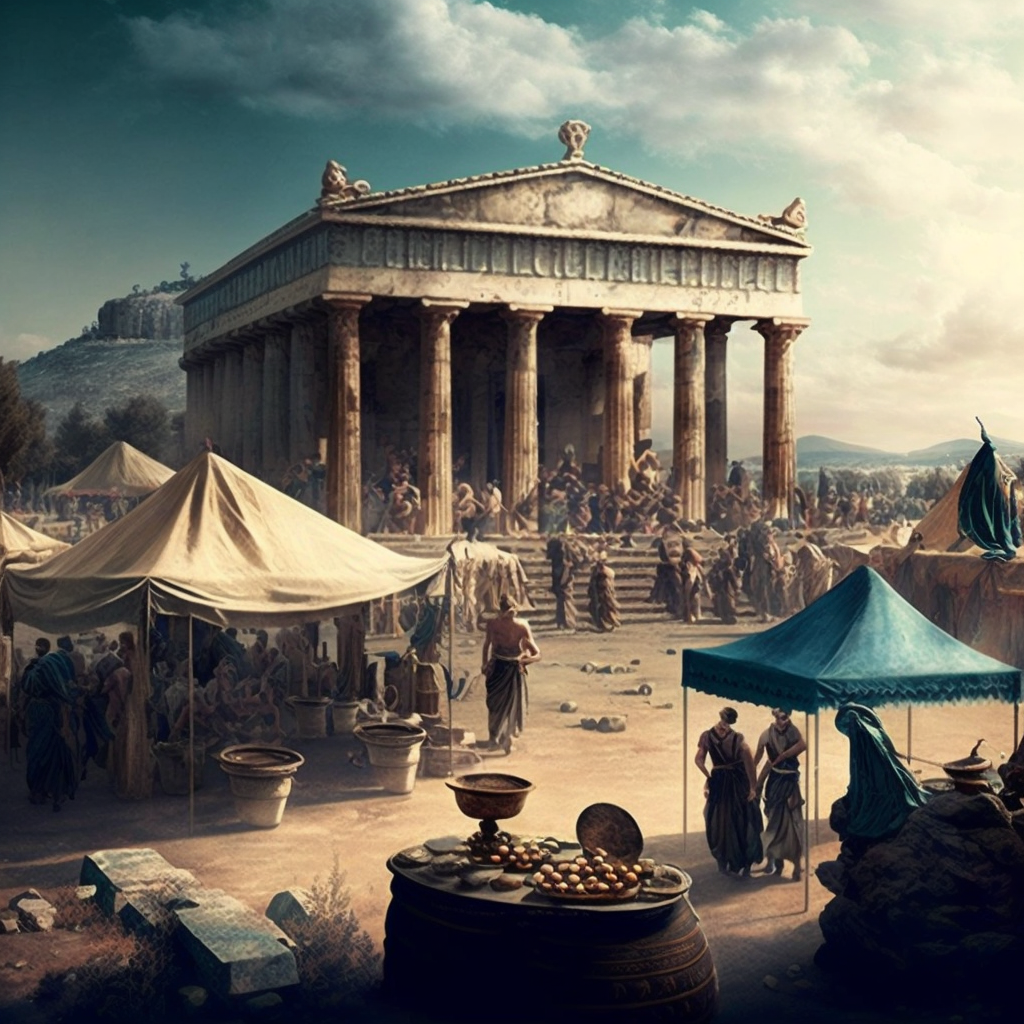
Antioch sat at the convergence of ancient trade routes, military roads, and cultural fault lines, functioning as the premier metropolis of the Near East for centuries. Founded around 300 BCE by Seleucus I Nicator along the banks of the Orontes River in modern-day Turkey, the city bridged the Mediterranean world with the Mesopotamian interior. It wasn't just a physical transit point; it was a crucible where Greek philosophy, Roman administration, Persian diplomacy, and early Christian theology collided and transformed.
To understand why Antioch mattered so deeply in antiquity, you have to look beyond its ruined colonnades and excavated mosaics. It served as the third city of the Roman Empire, a launchpad for global religious movements, and a flashpoint for imperial border defense. While cities like Rome held political supremacy and Alexandria dominated scholarship, Antioch functioned as the ultimate nerve center of cultural synthesis.
Foundation and Rise Under the Seleucids
The story of Antioch begins with the splintering of Alexander the Great's empire. Seleucus I Nicator, one of Alexander's prominent generals, needed a capital that could secure his eastern territories while maintaining strong maritime links to the Mediterranean. He chose a fertile valley near the Orontes River and founded Antioch on the Orontes, naming it after his father, Antiochus.
The city's urban design broke conventional molds. Seleucus laid out a grid system, financed massive public works, and populated the settlement with Greek colonists, Macedonians, and local populations. This demographic mix created a cosmopolitan environment unusual for the ancient Mediterranean.
- Strategic Geography: Positioned just inland from the port of Seleucia Pieria, the city controlled access to the Syrian Gates mountain pass.
- Economic Hub: It intercepted caravans traveling the Silk Road branches and trade coming up from the Persian Gulf.
- Military Anchor: It functioned as the primary staging ground for Seleucid military campaigns against rival Hellenistic kingdoms.
Within decades, Antioch eclipsed neighboring older cities like Seleucia in Pieria and Antioch ad Pyramus, growing into a sprawling administrative capital that projected Hellenistic power across the Levant.
The Queen of the Orient Under Roman Rule
When Roman legions under Pompey the Great swept through the Near East in 64 BCE, they annexed the Seleucid territories and made Antioch the capital of the newly minted Roman province of Syria. Rome recognized the city's immense strategic value. Under Roman administration, Antioch transformed into the "Queen of the Orient," trailing only Rome and Alexandria in population, wealth, and architectural splendor.
Roman emperors poured vast resources into the city. Julius Caesar visited and granted it autonomy. Augustus funded the construction of a massive theater, an aqueduct system, and a grand colonnaded street that stretched for miles, lined with shops and public monuments.
[Mediterranean Port: Seleucia Pieria]
       │ (Orontes River / Road)
       ▼
[Antioch on the Orontes] ──► [Silk Road / Persian Frontier]
       │
       ▼
[Roman Provincial Capital of Syria]
Urban Life and Architecture
Antioch wasn't just a military garrison; it was a vibrant metropolis boasting high-density residential quarters, sophisticated sanitation, and luxurious villas adorned with world-class floor mosaics. The suburb of Daphne, located a few miles south, featured lush groves, cascading waterfalls, and a famous temple of Apollo, serving as an upscale retreat for the city's elite.
The city also hosted the imperial court whenever emperors campaigned in the East. Trajan, Hadrian, and Julian all spent extended periods in Antioch, using it as their base of operations for wars against the Parthian and Sassanid Empires. Yet, this proximity to the frontier brought vulnerability. The city suffered frequent sieges, Persian raids, and devastating earthquakes that repeatedly tested its resilience.
The Birthplace of Christian Identity
While Antioch's political and commercial achievements were monumental, its most profound global legacy lies in the realm of religion. As detailed in historical accounts such as the New Testament Book of Acts, Antioch became the primary incubator for early Christianity outside of Jerusalem.
Following the persecution and scattering of believers after the martyrdom of Stephen, refugees traveled to Antioch and began preaching to non-Jews as well as Jews. The community grew rapidly, drawing the attention of leaders like Barnabas and Paul.
- The Name "Christian": According to Acts 11:26, it was in Antioch that the followers of Jesus were first mockingly or descriptively called "Christians."
- The Pauline Missions: Paul used Antioch as his home base, launching his influential missionary journeys across Asia Minor and Greece from its gates.
- The Council of Antioch: The city hosted critical early theological debates regarding whether Gentile converts needed to follow Jewish ritual laws, setting a precedent for Christianity as an independent, universal faith.
The School of Antioch
In subsequent centuries, Antioch emerged as a major intellectual powerhouse of Christian thought, rivaling Alexandria in Egypt. The School of Antioch championed a literal and historical method of biblical interpretation, contrasting sharply with the allegorical traditions of Alexandria. Prominent theologians from this tradition wrestled deeply with the divine and human natures of Christ, sparking theological controversies that shaped ecumenical councils for generations.
Natural Disasters and Gradual Decline
Antioch's geography was both its greatest asset and its ultimate undoing. Built near the Dead Sea Transform fault line, the city sat in an active seismic zone. In 526 CE, a catastrophic earthquake leveled large portions of the city, killing an estimated 250,000 people due to fires that swept through the wreckage.
Just as the city began rebuilding under the Byzantine Emperor Justinian, the Sassanid Persian king Khosrow I sacked and burned Antioch in 540 CE, deporting much of its population to a newly built replica city in Persia known as "Better Antioch of Khosrow."
Although Byzantine rulers restored parts of the city, it never fully reclaimed its ancient scale or dominance. Subsequent Arab-Muslim conquests in the 7th century transformed Antioch into a frontier border zone between the Byzantine Empire and the Islamic Caliphate. It changed hands multiple times during the Crusades, becoming the capital of the Principality of Antioch before falling to the Mamluks in 1268, after which it dwindled into a modest provincial town.
Enduring Significance in the Modern World
Today, the ancient metropolis lies largely buried beneath the modern Turkish city of Antakya. Yet, the echoes of its golden age resonate clearly. The exquisite Roman and Byzantine mosaics unearthed in the region—now preserved in institutions like the Hatay Archaeology Museum—provide a window into the artistic brilliance of a multi-ethnic society.
Antioch remains a historical touchstone because it demonstrates how great civilizations are built at cultural intersections. It proves that wealth and power follow trade, but ideas outlive empires. The shifts in language, religion, and governance that occurred in those bustling Syrian streets ripple through modern legal, theological, and cultural frameworks across the Western and Middle Eastern worlds.
Frequently Asked Questions
Where was ancient Antioch located?
Ancient Antioch was situated on the banks of the Orontes River in the Hatay province of southern Turkey, close to the modern Syrian border. Its exact location was chosen to secure a trade link between the Mediterranean Sea and the interior valleys of the Middle East.
Why is Antioch important in Christian history?
Antioch served as the first major center for Christianity outside Jerusalem. It was where believers were first called Christians, where the Apostle Paul launched his missionary journeys, and where foundational theological debates about the nature of the faith took place.
Who founded Antioch and when?
The city was founded around 300 BCE by Seleucus I Nicator, a general of Alexander the Great and founder of the Seleucid Empire. He established it as his primary administrative capital in the West.
What caused the decline of ancient Antioch?
A combination of factors led to Antioch's decline, most notably catastrophic earthquakes (particularly the massive tremor in 526 CE), foreign invasions by the Sassanid Persians and Arab armies, and shifting regional trade routes that bypassed the Orontes valley.



