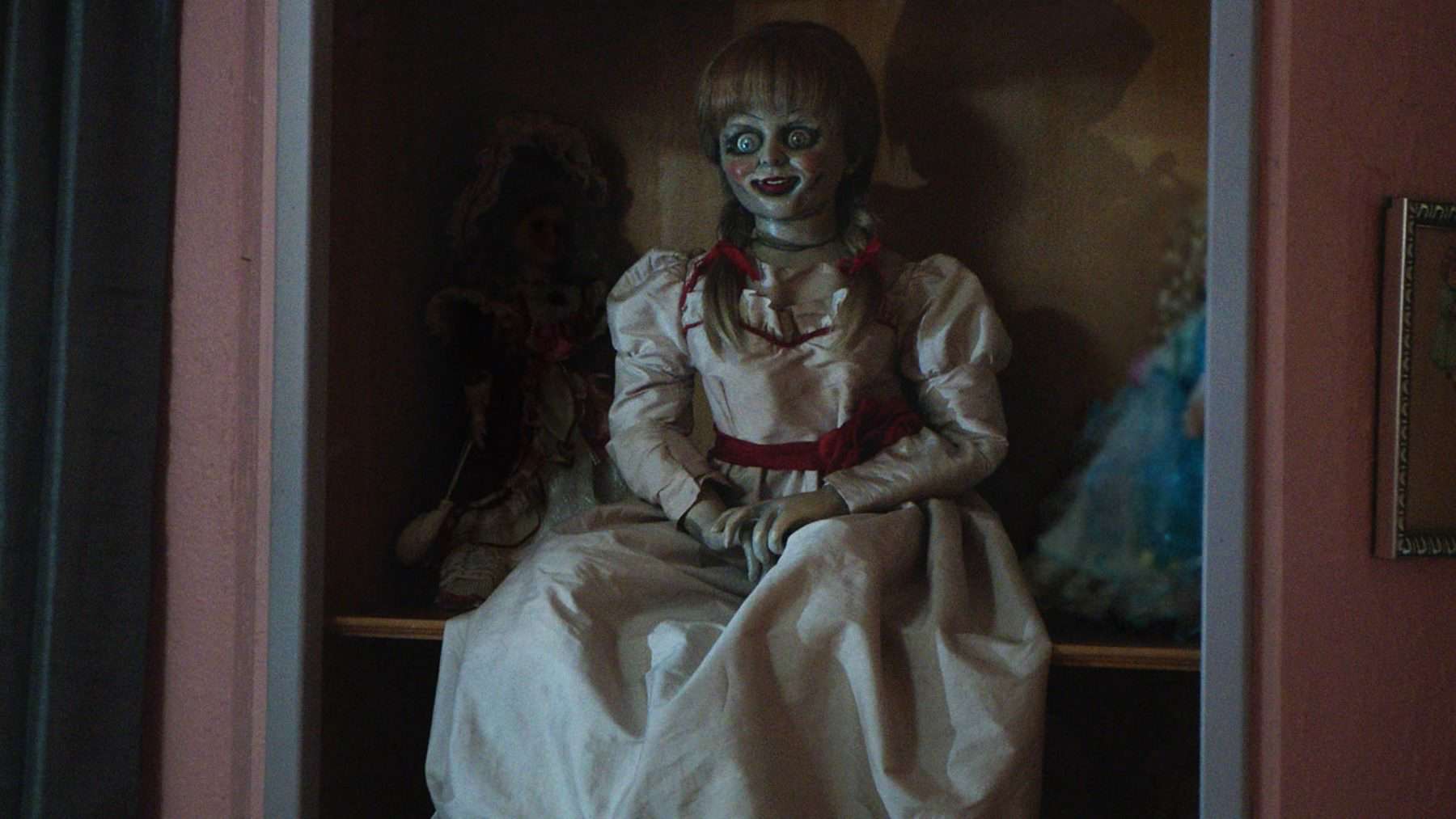
The real Annabelle isn't a porcelain-faced antique that glares from a glass case; she's an ordinary, mass-produced Raggedy Ann doll bought from a hobby shop in 1970. Yet today, this simple yarn-haired toy stands alongside cinema icons like Freddy Krueger and Michael Myers as a defining face of modern horror. Her journey from a nursing student's apartment to the silver screen reveals how urban legends mutate into multi-million-dollar cinematic franchises.
If you're wondering how a innocent childhood toy became a demonic emblem, the answer lies in the intersection of real-world paranormal folklore and Hollywood myth-making. Ed and Lorraine Warren, the famous self-described demonologists, transformed a local ghost story into a global brand. When James Wan adapted their lore for The Conjuring in 2013, he swapped the friendly red-haired cloth doll for a terrifying, porcelain-faced artifact with cracking skin and glowing eyes. This visual redesign catalyzed a cinematic obsession, spawning multiple prequels and cementing the doll's status in horror history.
Let's examine how a humble rag doll captured the public imagination and reshaped horror cinema.
The Real Origin: Beyond the Raggedy Ann Myth
Long before Hollywood writers dreamed up scripts, the legend began in 1970. A mother purchased a Raggedy Ann doll at a hobby store as a gift for her daughter Donna, a nursing student sharing an apartment with her friend Angie. Soon after bringing the doll home, the roommates noticed strange occurrences. The toy seemed to move on its own, shifting rooms or changing positions when they weren't looking. For another perspective on this event, refer to the latest coverage from Reuters.
Soon, the phenomena escalated. The roommates began finding parchment paper notes scrawled in childish handwriting with messages like "Help us" or "Save Lou," even though they didn't own any parchment paper. Lou, a friend of the nurses, experienced a violent encounter where he claimed an unseen force slashed his chest, leaving distinct claw marks that vanished days later.
Frightened, the women called in a local psychic, who held a séance and told them the doll was possessed by the spirit of a deceased seven-year-old girl named Annabelle Higgins. Seeking formal help, they contacted Ed and Lorraine Warren. The paranormal investigators concluded that the doll wasn't haunted by a child spirit at all, but rather manipulated by a non-human demonic entity trying to latch onto human souls.
The Warrens took the doll into their custody, locking it inside a custom glass-and-wood case at their Occult Museum in Monroe, Connecticut. While skeptics point out that the entire narrative was a clever marketing stunt or a psychological misunderstanding, the real-world lore provided an airtight foundation for cinematic adaptation.
The Cinematic Transformation: Crafting the Monster
When director James Wan prepared The Conjuring (2013), he faced a creative hurdle: the real Raggedy Ann doll didn't look threatening. To modern audiences, a cloth toy with yarn hair evokes nostalgia rather than sheer terror.
Wan and his production designers completely redesigned the character. They turned to the porcelain aesthetic of vintage dolls, incorporating heavy, cracked enamel, a fixed wicked grin, and glossy, dead eyes. This tactile shift played directly into the psychological fear of the uncanny valley—things that look almost human, but feel deeply wrong.
- The visual redesign traded colorful cloth for muted, eerie antique tones and vintage Victorian-era garments.
- The mechanical framing used subtle camera angles, slow pans, and sudden framing shifts to make a static object feel predatory.
- The mythology expansion detached the movie doll entirely from the Raggedy Ann copyright, creating an original intellectual property owned by Warner Bros.
This bold pivot worked. Even though the real doll makes only a brief appearance in the prologue of The Conjuring, audiences left theaters talking about the creepy toy. Warner Bros. greenlit a standalone prequel before the year ended, proving that moviegoers hungered for more backstory.
Expanding the Universe: The Franchise Blueprint
Following the success of The Conjuring, the studio launched Annabelle (2014), directed by John R. Leonetti. While critically mixed, it proved financially lucrative. The studio learned a valuable lesson: horror fans didn't need complex character arcs; they wanted atmospheric dread, jump scares, and a compelling villain.
The franchise course-corrected with Annabelle: Creation (2017), directed by David F. Sandberg. By taking the narrative back to the doll's tragic origin story involving a grief-stricken dollmaker and orphaned children, the film delivered tighter pacing, genuine tension, and a cohesive tie-in to the broader Conjuring cinematic universe. Annabelle Comes Home (2019) followed, turning the Warrens' artifact room into a haunted funhouse where the doll acts as a catalyst for other supernatural artifacts.
By treating the doll as a conductor of chaos rather than just a standalone slasher, the filmmakers kept the premise fresh across multiple entries.
Common Misconceptions About the Legend
Pop culture and viral internet lore often muddy the waters between fact and fiction. Clearing up these misconceptions highlights how the myth evolved:
- The doll looks the same in real life: Many fans visit the Warrens' museum expecting to see the porcelain movie version. In reality, the actual artifact remains a standard, soft-bodied Raggedy Ann doll.
- The doll walks around on its own: The lore suggests the toy teleported or changed posture, but it never grew legs or chased people down hallways like Chucky.
- The Warrens invented the story from scratch: While the Warrens certainly embellished details for theatrical flair and lectures, the initial claims originated entirely from the nursing students who were genuinely spooked.
Frequently Asked Questions
Where is the real Annabelle doll kept today?
The real Raggedy Ann doll is housed in the Warrens' Occult Museum in Monroe, Connecticut. Following Ed and Lorraine Warren's passing, the museum closed its physical doors to the public due to zoning and structural issues, and the artifact remains secure with their son-in-law, Tony Spera.
Why was a Raggedy Ann doll used in the real-life story?
Raggedy Ann was one of the most popular, mass-produced children's toys in the United States during the mid-20th century. Donna received it as a standard, inexpensive gift, which made the sudden paranormal claims feel all the more unsettling to the roommates.
Did the real doll ever physically harm anyone?
According to the Warrens and their associates, the doll was responsible for physical scratches on Lou and various poltergeist phenomena. However, independent journalists and skeptics have found no verified, objective evidence to support these physical claims.
Is Annabelle part of the official Conjuring timeline?
Yes. Chronologically within the universe's timeline, Annabelle: Creation takes place first (1955), followed by Annabelle (1967), and finally Annabelle Comes Home (1972), which places the artifact right before its acquisition depicted in the opening of The Conjuring (2013).
What makes the doll scarier than traditional movie monsters?
Unlike slasher villains who rely on weapons or brute force, a haunted object exploits the fear of the inanimate. Because dolls are designed to look human, our brains naturally anthropomorphize them, making it deeply unsettling when we imagine them moving on their own in the dark.



