Mastering geometric puzzles begins with understanding how angles interact across intersecting lines, triangles, and parallel structures. Whether you're working through a classroom math lib activity or preparing for advanced coursework, knowing how to set up algebraic equations from visual diagrams is an essential skill.
An angle relationships math lib turns abstract geometric theorems into structured problem-solving exercises. Instead of guessing measurements, you use proven theorems—like the Linear Pair Postulate or Alternate Interior Angle Theorem—to find missing values with mathematical certainty.
Core Classifications and Terminology
Before solving complex multi-step angle puzzles, you need a firm grasp of basic angle types and their standard measurements.
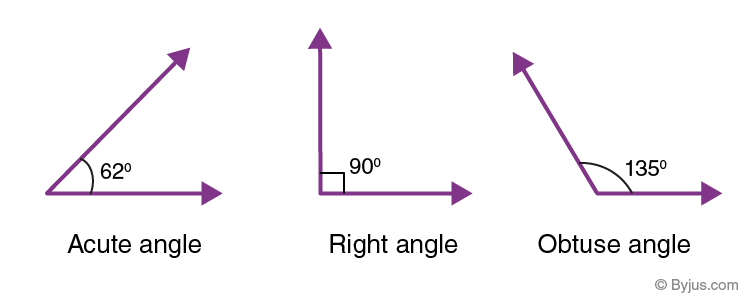
- Acute angles: Measure strictly between 0 and 90 degrees.
- Right angles: Measure exactly 90 degrees, indicated by a small square symbol at the vertex.
- Obtuse angles: Measure strictly between 90 and 180 degrees.
- Straight angles: Measure exactly 180 degrees, forming a straight line.
Beyond individual sizes, angles are classified by how they relate to one another spatially and numerically. Recognizing these pairings allows you to translate visual diagrams into simple linear equations.
Complementary and Supplementary Pairs
Additive relationships form the backbone of most geometric puzzles. When two or more angles combine to form a specific sum, you can easily isolate and solve for an unknown variable.
Complementary Angles
Two angles are complementary if the sum of their measures equals exactly 90 degrees. You'll frequently see this relationship in right triangles, where the two non-right angles must add up to 90 degrees.
- Example application: If one angle in a complementary pair measures $37^\circ$, you find the missing angle by subtracting it from 90: $90 - 37 = 53^\circ$.
- Algebraic setup: If angle A is $(3x)^\circ$ and angle B is $60^\circ$, set up the equation $3x + 60 = 90$, leading to $3x = 30$ and $x = 10$.
Supplementary Angles
Two angles are supplementary if their measures sum to 180 degrees. This relationship appears constantly wherever a straight line is divided into adjacent parts.
- Example application: If an angle on a straight line measures $115^\circ$, its adjacent supplement measures $180 - 115 = 65^\circ$.
- Algebraic setup: If two supplementary angles are represented as $(5x)^\circ$ and $(4x)^\circ$, set up $5x + 4x = 180$, which simplifies to $9x = 180$, giving $x = 20$.
Intersecting Lines and Congruent Relationships
When two straight lines cross each other, they create specific predictable patterns that rely on equality rather than addition.
Vertical Angles
The Vertical Angle Theorem states that when two lines intersect, opposite non-adjacent angles are congruent. They share the exact same degree measure.
- Theorem logic: If lines $m$ and $n$ intersect, opposing pairs like angle 1 and angle 3 have identical measurements.
- Problem-solving use: If an intersecting line creates an angle of $128^\circ$, the angle directly across from it is also $128^\circ$. If that opposite angle is expressed as $(4x + 8)^\circ$, set $4x + 8 = 128$ to solve for $x$.
Linear Pairs
A linear pair consists of two adjacent angles whose non-common sides form a straight line. By definition, linear pairs are always supplementary.
- Practical check: Whenever a problem shows an angle sitting on a straight line, automatically assume its neighboring angle adds up to 180 degrees, even if the diagram doesn't explicitly state it with a note.
Parallel Lines Cut by a Transversal
Complex math lib puzzles usually culminate in parallel lines intersected by a transversal line. This creates eight distinct angles with powerful relational rules.
- Corresponding angles: Occupy the same relative position at each intersection. When lines are parallel, corresponding angles are congruent.
- Alternate interior angles: Lie between the parallel lines on opposite sides of the transversal. These are congruent.
- Alternate exterior angles: Lie outside the parallel lines on opposite sides of the transversal. These are also congruent.
- Consecutive interior angles (same-side interior): Lie between the parallel lines on the same side of the transversal. These are supplementary, summing to 180 degrees.
According to the National Council of Teachers of Mathematics, connecting spatial reasoning with algebraic representation helps students transition from visual observation to rigorous proof-based thinking.
Step-by-Step Problem-Solving Strategy
When faced with an intricate angle puzzle, don't try to solve for every variable at once. Follow a disciplined routine to break down the diagram.
- Scan the diagram for known values: Identify any given degree measurements, perpendicularity markers (small squares), or parallel line arrows.
- Identify the specific relationship: Determine whether the target angle forms a linear pair, vertical pair, or interior relationship with a known angle.
- Write the equation: Translate the geometric relationship into an algebraic equation (e.g., setting two angles equal or setting their sum to 180).
- Solve for the variable: Use standard algebraic steps to isolate $x$.
- Substitute and verify: Plug the value of $x$ back into the expression to ensure all adjacent angles add up correctly to their expected totals (like 180 degrees for a straight line).
Common Mistakes to Avoid
- Assuming lines are parallel without proof: Never treat lines as parallel just because they look parallel. Look for explicit arrow markers or stated conditions in the problem text.
- Confusing complementary and supplementary sums: A helpful memory trick is alphabetical order—C comes before S, and 90 comes before 180. Complementary equals 90; supplementary equals 180.
- Forgetting to check negative values: If your algebraic solution yields a negative angle measure or a negative side length, re-check your equation setup immediately.
Frequently Asked Questions
What is the easiest way to tell if angles are complementary or supplementary?
Look at the visual context. If the angles combine to form a square corner (90 degrees), they're complementary. If they sit flat along a straight line (180 degrees), they're supplementary.
How do I solve angle puzzles with variables on both sides?
Set up your geometric equation based on the relationship theorem (such as setting alternate interior angles equal to each other), then use standard algebraic balancing to collect all variable terms on one side.
What should I do if a diagram has too many intersecting lines?
Cover up parts of the diagram using a piece of paper or isolate a single transversal intersection at a time. Breaking a complex diagram into smaller two-line intersections prevents visual overwhelm.
Are vertical angles ever supplementary?
Yes, but only in one specific scenario: when the intersecting lines are perpendicular, creating four right angles where each angle measures 90 degrees.


