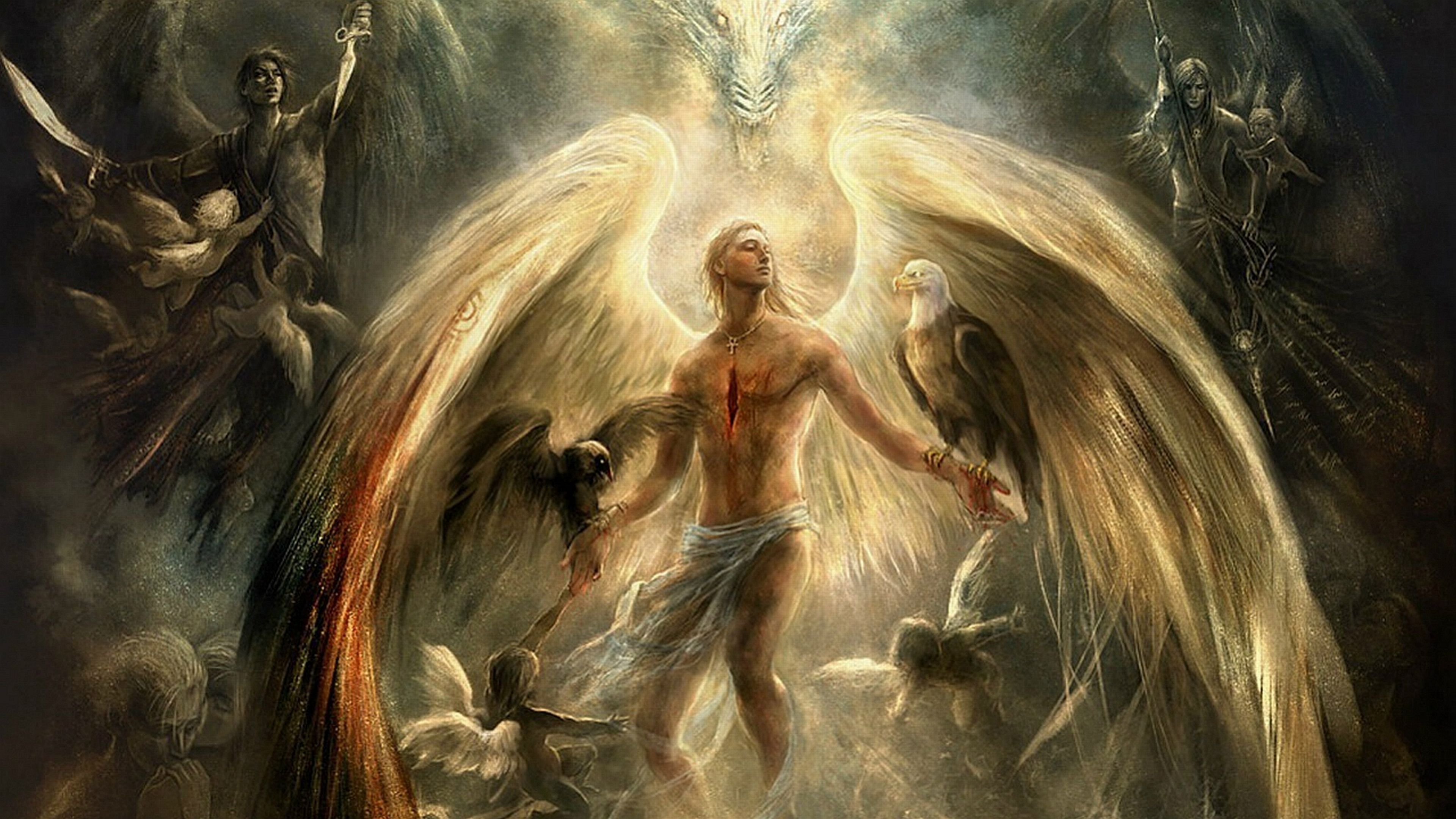
When people look at angels and demons, they usually see them through the lens of theology, folklore, or horror movies. But if you step back and look at how these supernatural figures shape human behavior, you're entering the territory of a different kind of researcher: the supernatural sociologist. This specialized field examines how belief in unseen forces structures human communities, dictates moral codes, and influences collective decision-making.
Instead of asking whether angels or demons actually exist, a sociologist asks what happens when people believe they do. When a community treats these entities as active participants in daily life, culture shifts, power dynamics emerge, and social boundaries solidify. Let's break down how the sociology of the supernatural operates, why these ancient archetypes persist, and how they quietly govern modern social institutions.
Defining the Supernatural Sociologist
What does it mean to study the supernatural from a sociological standpoint? Traditional sociology looks at institutions, economic classes, and demographic trends. A sociologist focusing on the supernatural investigates the intersection of belief systems and structural power. They study how invisible entities are weaponized, revered, or integrated into social order.
You won't find this subfield isolated in a single academic department. It draws heavily from the sociology of religion, cultural anthropology, and social psychology. Researchers in this space examine several core mechanisms:
- Moral boundary-making: Defining who belongs to the ingroup (often aligned with celestial protection) and who belongs to the outgroup (frequently associated with demonic corruption).
- Legitimation of authority: Using spiritual forces to validate political or religious leadership, framing rulers as divinely guided or opponents as corrupted.
- Collective coping mechanisms: Channeling societal anxiety about disasters, plagues, or economic collapse into supernatural narratives of angelic intervention or demonic warfare.
By treating beliefs about angels and demons as social facts rather than private fantasies, researchers uncover how invisible entities exert very real, physical influence over human societies.
The Social Utility of the Beneficial Angel
In almost every culture, benevolent supernatural figures serve a stabilizing function. Anthropologists and sociologists note that angels embody society's highest aspirations. They act as cosmic guarantors of justice, mercy, and order.
When a community faces a crisis, the narrative of angelic intervention provides psychological relief and reinforces social solidarity. People don't just imagine angels dropping out of the sky; they construct an archetype of the beneficial angel that mirrors what their specific society values most.
Consider how this plays out in institutional settings:
- Moral exemplars: Angels provide a standardized template for altruism, self-sacrifice, and obedience to community norms.
- Institutional sanction: Charitable organizations, hospitals, and relief efforts often utilize angelic symbolism to justify humanitarian work as part of a divine mandate, encouraging public participation and donations.
- Social cohesion: Shared beliefs in divine protection bind diverse populations together under a common cultural umbrella, reducing internal friction during turbulent times.
When individuals report feeling guided by an unseen protector, sociologists look at how that personal conviction translates into public action. Belief in angelic aid typically encourages pro-social behaviors, motivating individuals to volunteer, protect the vulnerable, and maintain community standards.
The Anatomy of Demonic Othering
While angels hold communities together through shared ideals, demons perform an equally powerful sociological function: they define the boundaries of acceptable behavior by embodying what the community rejects.
Sociologists pay close attention to the concept of othering, and few mechanisms are as efficient as demonization. Throughout history, whenever societies experience rapid change, economic strain, or political instability, the search for scapegoats intensifies. Labeling political rivals, marginalized groups, or non-conformists as agents of demonic influence effectively strips them of their human rights within that cultural framework.
This dynamic manifests in several recurring social patterns:
- Moral panics: Sudden outbursts of intense fear about perceived corrupting forces—ranging from historical witch trials to modern conspiracy theories—which serve to re-establish strict social control.
- In-group purity: By identifying external or internal demonic threats, dominant groups force members to conform rigidly to group norms to prove they aren't compromised.
- Institutional exclusion: Labeling unconventional ideas or behaviors as demonic justifies censorship, legal penalties, or social banishment without requiring rational debate.
Understanding these patterns reveals that demons are rarely just theological bugbears. They are social constructs used to police boundaries, manage deviance, and concentrate power in the hands of those who claim to possess the tools of spiritual defense.
Institutional Governance and Supernatural Protection
Societies don't just talk about angels and demons; they build entire governance structures around them. Historically, legal codes, monarchies, and judicial systems derived their legitimacy directly from humanity's relationship with the unseen world.
Even in secular modern states, the echoes of supernatural sociology remain visible. Political rhetoric frequently invokes existential battles between light and darkness, good and evil, or civilization and chaos. This language isn't accidental. It taps into deeply ingrained sociological instincts, framing policy debates as cosmic struggles where compromise feels impossible.
When governance relies on supernatural framing, dissent becomes dangerous. If a policy is viewed as divinely ordained, opposing it isn't just a political disagreement—it's viewed as alignment with destructive forces. Sociologists analyze these rhetorical strategies to understand how leaders mobilize populations for war, economic sacrifice, or cultural shifts.
Common Pitfalls in Studying Belief Systems
When exploring the sociology of the supernatural, researchers and observers often fall into predictable traps. Avoiding these mistakes ensures a more accurate analysis of how belief systems operate:
- Reducing belief to mere superstition: Dismissing supernatural beliefs as outdated ignorance prevents researchers from understanding the rational social functions those beliefs serve for the people holding them.
- Ignoring power dynamics: Analyzing angels and demons purely as abstract folklore while missing how those concepts are weaponized by institutions to control populations or suppress minorities.
- Treating cultures as monoliths: Assuming everyone within a specific society interprets angelic or demonic entities the same way, ignoring internal class, racial, and regional differences.
Frequently Asked Questions
What is the primary focus of a supernatural sociologist?
A supernatural sociologist studies how beliefs in invisible entities like angels and demons influence human behavior, structure communities, and shape cultural institutions. They focus on the social impact of these beliefs rather than their theological truth.
How do angels function socially compared to demons?
Angels generally function as social stabilizers, embodying communal ideals, encouraging pro-social behavior, and reinforcing moral boundaries. Demons typically act as catalysts for social control, serving as archetypes for deviance, justifying the exclusion of outgroups, and fueling moral panics.
Why do supernatural beliefs persist in modern secular societies?
Even in secular environments, human beings grapple with uncertainty, injustice, and existential dread. Supernatural frameworks provide a ready-made vocabulary to articulate these complex emotional and moral realities, transforming random chaos into meaningful narratives.
How does demonization impact political discourse?
Framing political opponents or social movements as demonic shifts debates from policy disagreements to existential conflicts. This tactic suppresses compromise, polarizes communities, and justifies extreme measures to protect the in-group.