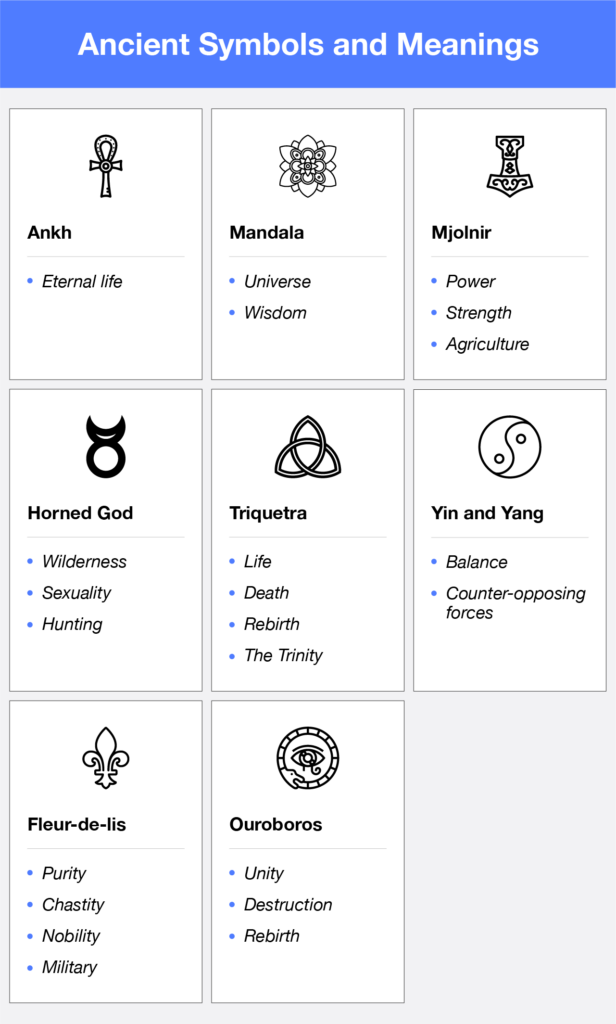
A symbol of strength acts as a visual shortcut for resilience, power, and endurance. From carved Germanic runes in antiquity to minimalist geometric vectors in corporate branding today, humanity has consistently relied on visual markers to communicate inner fortitude. Understanding these emblems requires looking past superficial aesthetics to examine how cultural values, psychological archetypes, and design principles shape what enduring power looks like.
The Linguistic and Magical Roots of Ancient Runes
Long before modern branding guidelines existed, ancient Germanic and Scandinavian peoples carved runes into stone, weapons, and amulets. These characters served as writing systems like the Elder Futhark, but they also functioned as magical signifiers meant to invoke specific forces, protection, and victory.
The Tiwaz Rune and Martial Resolve
The Tiwaz rune, shaped like an upward-pointing arrow ($\uparrow$), was dedicated to Týr, the Norse god of single combat, law, and heroic honor. Warriors carved Tiwaz onto their sword hilts and shields because they believed it focused intent and secured victory through righteous action. Unlike brute force, Tiwaz represented disciplined courage, sacrifice, and the willingness to stand firm when odds were stacked against opponents.
The Algiz Rune and Defensive Power
Another critical runic symbol of endurance was Algiz, resembling a man with arms raised toward the sky ($\mathbb{M}$) or the branching antlers of an elk. Algiz symbolized sanctuary, divine protection, and shielding against adversity. Rather than offensive power, it embodied the strength found in boundaries, resilience against hostile forces, and spiritual grounding. These runic carvings demonstrate that early symbolic strength was deeply tied to cosmic order and personal integrity.
Classical Mythology and Natural Archetypes
As civilizations grew, cultures mapped human virtues onto the natural world and mythological pantheons. Animals, geological formations, and celestial bodies became universal shorthand for endurance.
The Lion in Royal Heraldry
The lion has dominated Western iconography for millennia as the quintessential emblem of majesty and fearlessness. Ancient Mesopotamian rulers kept captive lions to project dominance, while Greek mythology immortalized the Nemean Lion slain by Heracles. During the Middle Ages, European monarchs placed lions rampant on their coats of arms to communicate untamed authority, courage in battle, and royal lineage.
Trees and Geological Formations
In the plant kingdom, the oak tree stands out for its deep root system and hardwood density, allowing it to survive violent storms that snap lesser trees. Similarly, the mountain and the solid rock represent unyielding stability. Cultures worldwide used these natural anchors in poetry and folklore to describe leaders or communities that refused to break under pressure.
According to research published by the American Psychological Association, exposure to natural fractal patterns and stable organic structures measurably lowers human stress hormones, explaining why humans instinctively associate natural anchors with safety and endurance.
The Transition to Industrial and Institutional Power
The Industrial Revolution shifted the function of symbols from tribal protection and royal lineage to civic identity, labor movements, and public institutions.
The Clenched Fist and Solidarity
Emerging in the 19th and 20th centuries during labor struggles and anti-fascist movements, the raised fist became a universal symbol of collective strength and resistance. By replacing solitary animal imagery with united human anatomy, it signaled that power resided in solidarity among ordinary workers rather than divine right or monarchical rule.
The Anvil and Industrial Might
During the 1800s and early 1900s, the heavy iron anvil became a staple of trade unions, manufacturing companies, and municipal seals. Because an anvil withstands thousands of hammer strikes without deforming, it perfectly communicated industrial endurance, craftsmanship, and heavy labor.
Modern Logos, Corporate Identity, and Minimalism
Today, graphic designers face the challenge of condensing strength into digital-first, minimalist vectors that scale cleanly from a smartphone favicon to a massive billboard. Modern logos strip away ornate historical details in favor of geometric clarity.
Geometric Precision and Stability
Modern brands frequently rely on sharp angles, heavy lines, and balanced symmetry to signal strength. Triangle-based logos, for instance, evoke a physical pyramid resting on a broad base, resisting lateral force. Automotive brands like Volvo use the ancient astronomical symbol for iron and the shield of Mars to communicate safety, durability, and mechanical reliability.
The Psychology of Modern Branding
When developing an identity for athletic apparel, financial institutions, or security firms, designers intentionally select typography and shapes that trigger feelings of safety and power. Thick sans-serif fonts, dark blue and black color palettes, and sharp directional arrows are calculated choices designed to make consumers feel secure and motivated.
Common Misconceptions About Strength Symbols
- Bigger means stronger: Many assume massive, aggressive imagery always communicates true strength, yet minimalist designs often convey more refined, unshakable confidence.
- Symbols possess inherent magic: Runes and crests do not grant power on their own; they only amplify values that are already practiced and culturally agreed upon.
- All cultures view the same animal identically: While lions signify European royalty, other traditions view elephants, tigers, or eagles as primary emblems of wisdom and endurance.
Frequently Asked Questions
What is the oldest known symbol of strength?
Some of the earliest symbols include Upper Paleolithic cave paintings of large game animals like bulls and lions, dating back over 30,000 years, which early humans painted to honor the physical power of nature.
Why do corporate logos use geometric shapes for strength?
Geometric shapes like squares, triangles, and heavy rectangles create a visual foundation of balance and symmetry, which the human brain subconsciously associates with physical stability and safety.
How do runic symbols differ from modern corporate logos?
Ancient runes carried spiritual, magical, and linguistic weight intended to invoke supernatural protection or favor, whereas modern corporate logos are strategic tools designed for market recognition and consumer trust.
Can a symbol of strength change its meaning over time?
Yes. Many historical symbols have been recontextualized across centuries, shifting from religious or royal markers to political resistance icons or commercial brand identities.



