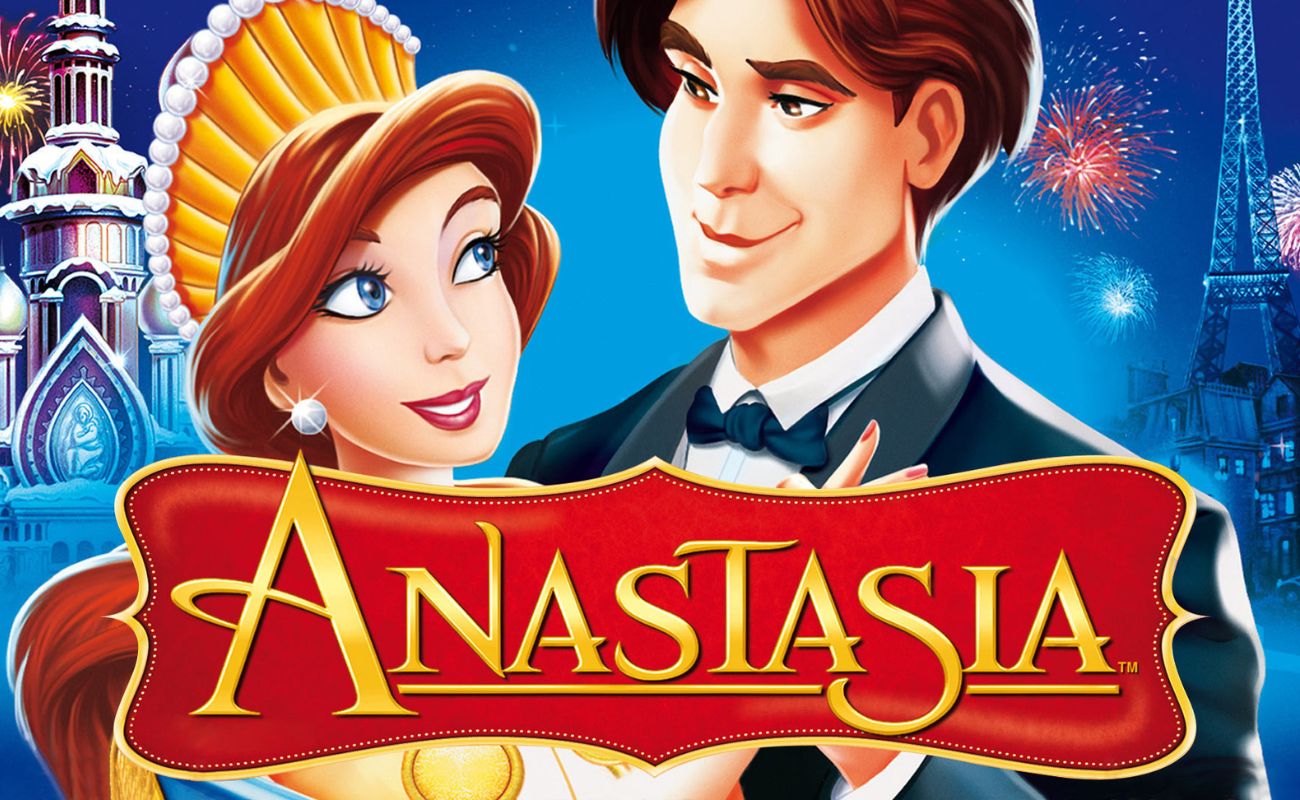
When the 1997 animated film Anastasia hit theaters, it did something risky. It took a genuine 20th-century geopolitical tragedy—the execution of the Romanov family and the collapse of imperial Russia—and turned it into a vibrant, Broadway-style musical fairy tale. Produced by Fox Animation Studios, the movie didn't just compete with Disney's 1990s dominance; it fundamentally changed how studios could approach dark history in family entertainment.
Instead of sanitizing the Russian Revolution completely, the production team leaned into the famous urban legend that Grand Duchess Anastasia might have survived. By framing a devastating historical trauma through a personal coming-of-age lens, the film proved that animated storytelling could handle complex, somber historical backdrops without losing its emotional core.
The Historical Reality Versus Hollywood Legend
You can't talk about the Anastasia motion picture without addressing the stark gap between the actual historical record and the cinematic adaptation. In July 1918, the Bolsheviks executed Tsar Nicholas II, his wife Alexandra, and their five children—including the real-time youngest grand duchess, Anastasia—in Yekaterinburg. Decades of rumors followed, fueled by women claiming to be the lost royal, most famously Anna Anderson. DNA testing in the late 20th century eventually disproved these claims, but the myth held a powerful grip on the public imagination.
Don Bluth and Gary Goldman's film capitalized on this enduring intrigue. Rather than presenting a dry documentary, the directors used the legend to explore themes of displacement and identity.
- The Real Romanov Fate: Historical consensus and forensic science confirmed the tragic reality long before internet databases made archives searchable, meaning the filmmakers knowingly adapted a myth rather than a biography.
- The Impostor Phenomenon: Over two hundred women stepped forward over the decades claiming to be Anastasia, creating a rich cultural subtext of public longing and deception that inspired the film's con-artist characters, Dimitri and Vlad.
- The Shift to Fiction: By focusing on Anya—an amnesiac orphan who genuinely doesn't know her origins—the story sidesteps dark historical atrocities while keeping the emotional stakes anchored in the turbulent aftermath of World War I.
This approach gave the creative team freedom. They didn't have to worry about strict historical timelines; instead, they built a narrative around universal questions of belonging that resonate with anyone trying to figure out where they come from.
Animation Innovation and Production Scale
Fox Animation Studios built its entire identity around rivaling Disney, and Anastasia was their most ambitious gamble. The production relied heavily on traditional hand-drawn techniques while integrating early computer-generated imagery to handle complex crowd scenes, camera rotations, and swirling snow effects.
The visual style split the difference between gritty historical realism and classic fairy-tale splendor. The opening scenes in St. Petersburg capture the oppressive grandeur of the Winter Palace before shifting into the desolate, industrial bleakness of a Soviet-controlled train station.
- Digital Compositing: The grand ballroom sequence used early 3D computer graphics for the waltzing crowd, allowing for sweeping camera angles that traditional hand-drawn cells couldn't easily achieve.
- Color Palette Transitions: The movie uses color to mirror Anya's psychological state, moving from the muted, freezing blues and grays of her early life to warm, golden imperial hues as she recovers her memories.
- Character Design Roots: Animators drew inspiration from classic Russian art and historical photographs to give characters distinct silhouettes that communicated status and personality instantly.
The Musical Blueprint and Broadway Sensibility
Music drives the emotional engine of the film. Composers Lynn Ahrens and Stephen Flaherty brought a distinct theatrical sensibility to the project, treating the score like a Broadway show rather than a collection of standard cartoon pop songs.
Songs like "Journey to the Past" and "Once Upon a December" function as narrative mechanics. They aren't just musical numbers; they are memory triggers that push Anya closer to her true identity. "Journey to the Past" earned an Academy Award nomination and became an anthem for self-discovery, while the haunting waltz of "Once Upon a December" uses music boxes and ghostly visual echoes to make historical loss tangible for younger audiences.
The studio also made deliberate casting choices that elevated the voice acting beyond typical celebrity stunt-casting. Meg Ryan gave Anya a sharp, grounded edge that contrasted with traditional passive princesses, while John Cusack's Dimitri brought street-smart charm. Meanwhile, Christopher Lloyd infused the villainous Rasputin with a frantic, theatrical menace that leaned into gothic horror tropes.
Legacy and Influence on Historical Animation
Looking back, the success of the Anastasia motion picture proved that families were willing to engage with serious historical settings if the storytelling respected their intelligence. It grossed over $139 million worldwide against a $53 million budget, proving that a non-Disney studio could mount a critical and commercial hit.
The film's footprint expanded far beyond the box office. It inspired a Broadway musical adaptation that premiered in 2017, translating the animated world into live theatrical spectacle. More importantly, it created a blueprint for how subsequent animated films could weave real-world history into fantasy without completely ignoring the gravity of past events.
Frequently Asked Questions
Is the 1997 film Anastasia based on a true story?
No. While it uses the real historical backdrop of the 1917 Russian Revolution and the tragic fate of the Romanov family, the plot is based on the popular myth that Grand Duchess Anastasia survived. Historical evidence and DNA testing confirmed that all members of the Romanov family died in 1918.
Who directed the 1997 animated film Anastasia?
The film was directed by veteran animators Don Bluth and Gary Goldman, who were known for creating major alternative animated features during the 1980s and 1990s, including The Secret of NIMH and The Land Before Time.
Why was Rasputin portrayed with magical powers in the film?
The filmmakers needed a high-stakes, supernatural antagonist to drive the fairy-tale elements of the narrative. While the real Grigori Rasputin was a mystic and political influencer in the Romanov court, the film exaggerated his persona into an undead sorcerer to fit traditional adventure-story tropes.
How did the film perform at the box office?
It was a strong commercial success, grossing approximately $139.5 million globally. It also earned two Academy Award nominations for Best Original Song ("Journey to the Past") and Best Original Score.



