In the year 1600, Amsterdam stood on the edge of unprecedented economic expansion, holding a population estimated between 75,000 and 100,000 people. This demographic milestone transformed a regional trading port into a bustling metropolis, setting the stage for the Dutch Golden Age. While other European urban centers faced stagnation or religious upheaval, Amsterdam welcomed waves of refugees, merchants, and laborers whose collective skills fueled an economic engine that reshaped global commerce.
Understanding this population surge requires looking past the raw numbers to examine the social structures, housing pressures, and political catalysts driving the growth. The city didn't just grow larger; it fundamentally changed how it operated, inventing modern finance, urban planning, and international trade networks in the process.
The Demographic Landscape of 1600
Historians reconstruct early modern populations using tax records, baptism registries, and hearth counts. For Amsterdam around 1600, these records point to a rapid and compounding trajectory.
- 1500: Approximately 30,000 residents lived within the medieval walls.
- 1600: The population reached 75,000 to 100,000 residents.
- 1620: Rapid migration pushed totals past 150,000 in just two decades.
This growth rate outpaced many contemporary European capitals. While London was larger at roughly 200,000 residents, it grew at a slower percentage rate. Amsterdam's density made it a hyper-efficient hub where information, capital, and labor moved with remarkable speed. For further context on demographic shifts during this era, you can explore resources from the Rijksmuseum collection on seventeenth-century civic life.
Catalysts of the Demographic Surge
The explosive population increase didn't happen by chance. It was engineered by a unique intersection of geopolitical shifts, economic innovation, and religious policies.
The Refugee Influx from the South
The most critical factor in Amsterdam's demographic boom was the Fall of Antwerp in 1585. As Spanish Catholic forces recaptured the southern Netherlands, tens of thousands of Protestant merchants, intellectuals, and artisans fled north. Amsterdam welcomed these immigrants because they brought capital, maritime expertise, and established trade networks across Europe and the Mediterranean. This transfer of human capital instantly upgraded Amsterdam's commercial capabilities.
Religious Tolerance as Economic Policy
The Dutch Republic practiced a pragmatic form of religious tolerance. While citizens couldn't always worship openly in public buildings everywhere, private worship was largely overlooked. This policy attracted persecuted minorities across Europe, including Sephardic and Ashkenazi Jews fleeing the Iberian Peninsula and Central Europe, as well as French Huguenots. These communities integrated quickly into the commercial fabric, creating specialized trade corridors that spanned the globe.
Urban Adaptation and Housing Challenges
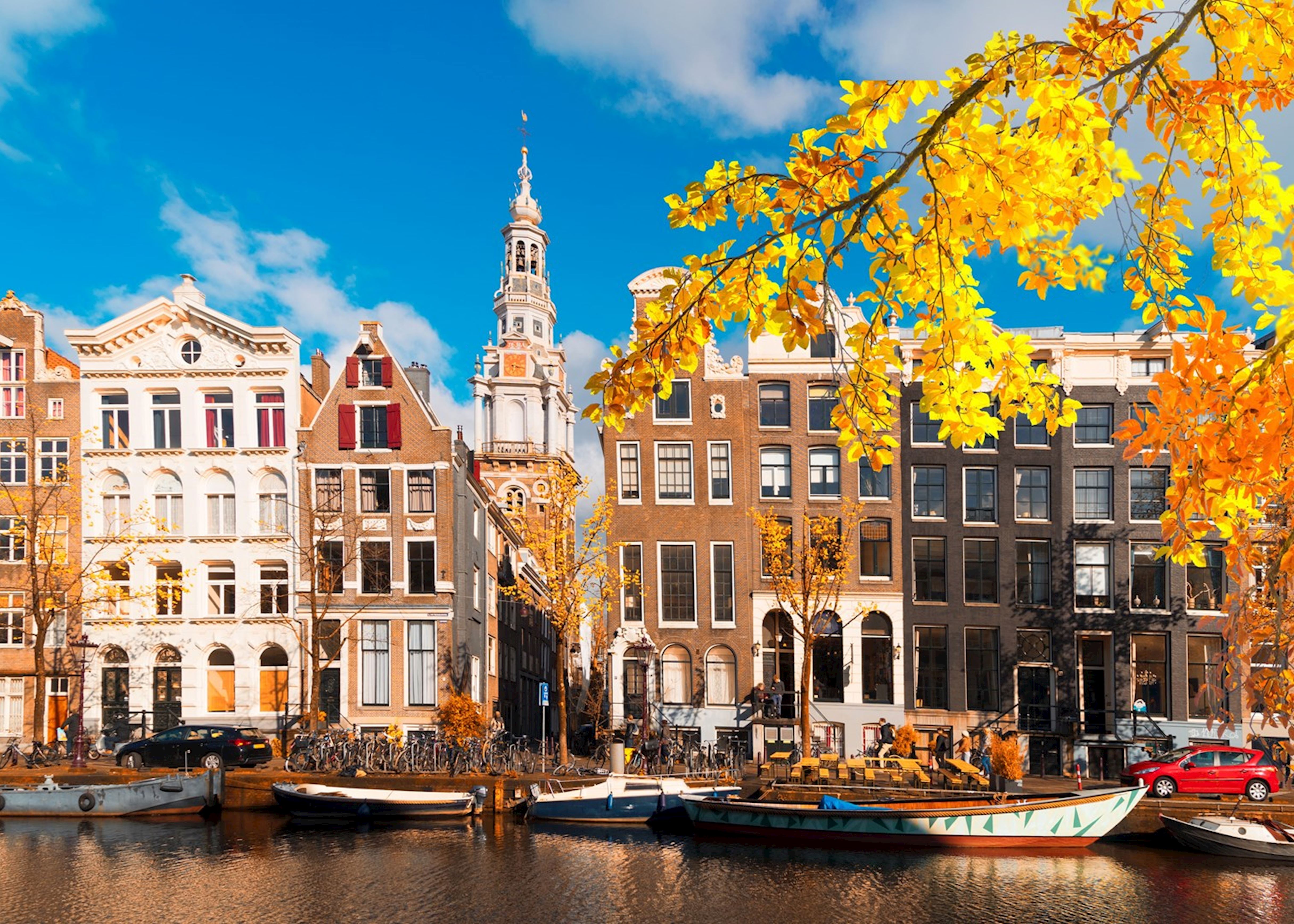
Housing 100,000 people in a swampy delta required radical engineering solutions. The city government initiated ambitious urban expansion projects, most notably the Burgwallen expansion and the initial planning for the famous concentric canal belt, or Grachtengordel.
- Vertical Architecture: Because land was restricted by canals and fortifications, houses were built narrow, deep, and tall to maximize usable space per square foot.
- Working-Class Districts: Neighborhoods like the Jordaan were laid out to accommodate the massive influx of manual laborers, weavers, and dockworkers.
- Sanitation Pressures: High density strained fresh water supplies and waste management, leading to periodic outbreaks of waterborne diseases and the bubonic plague.
City magistrates invested heavily in civil infrastructure, building sophisticated sluice gates, canals, and windmills to drain surrounding wetlands and manage water levels safely.
Economic Stratification and Society
An expanding population created sharp economic divides. At the top sat the regenten class—wealthy merchant oligarchs who controlled municipal governments and commercial monopolies like the Dutch East India Company (VOC), founded in 1602. Below them thrived a growing middle class of shopkeepers, master craftsmen, and notaries.
At the base of the social pyramid lived a large underclass of sailors, dockworkers, soldiers, and domestic servants. Life for these laborers was precarious, dependent entirely on seasonal shipping work and fluctuating grain prices. Despite these inequalities, the promise of social mobility drew continuous streams of migrants from the German hinterlands and the Dutch countryside.
Frequently Asked Questions
How reliable are population estimates for 1600?
Historians rely on tax assessments, household hearth lists, and military muster rolls. While exact single-digit counts are impossible, consensus ranges like 75,000 to 100,000 are well-supported by archival tax yields from the period.
Did the population growth cause food shortages?
Amsterdam relied heavily on the Moedernegotie (the mother trade)—massive grain imports from the Baltic region. When Baltic shipping lanes were disrupted by war or ice, the city faced severe price spikes and localized food stress.
How did the population impact the local government?
Municipal administration had to professionalize rapidly. Part-time civic guards and traditional guilds gave way to specialized bureaucratic committees tasked with managing poor relief, orphanages, harbor fees, and public health infrastructure. To examine original municipal archives and urban maps from this period, consult the City of Amsterdam Archives.



