Are America and the US the same thing? In everyday speech across much of the English-speaking world, people treat them as identical. You'll hear someone say they're visiting America when they mean Chicago, or refer to American foreign policy when discussing Washington's decisions.
Strictly speaking, they aren't the same. America describes two massive continents spanning the Western Hemisphere, while the US refers specifically to a constitutional republic established in North America. This distinction matters deeply in international law, linguistics, and cross-cultural communication, especially given how the shorthand affects millions of people who live outside the United States but share the American continent.
Defining the Terms: Continent Versus Country
To untangle the confusion, look at how cartographers, historians, and politicians define the core labels.
The name America originates from the Italian explorer Amerigo Vespucci. Mapmakers like Martin Waldseemüller applied his name to the newly mapped landmasses in the early 1500s. Over time, that geographical label stuck to two distinct continental plates: North America and South America. Together, they cover roughly 42.5 million square kilometers and hold thirty-five sovereign countries.
When you look at the map through a geographic lens, anyone born in Argentina, Canada, Mexico, or Brazil is technically an American. They live on the American continents.
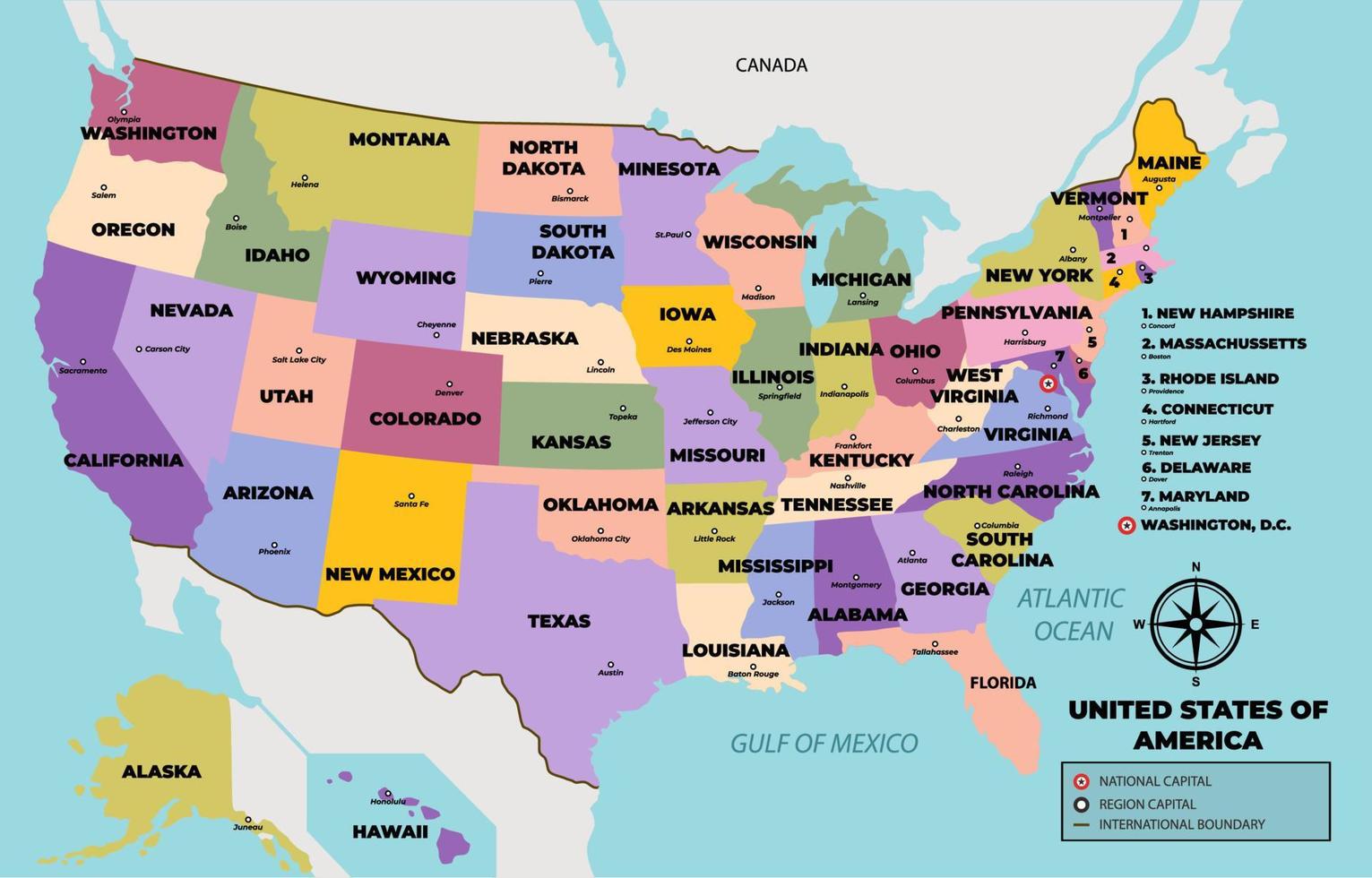
By contrast, the United States of America is a federal republic consisting of fifty states, a federal district, and several overseas territories. Founded in 1776, it occupies a central portion of North America. When officials, diplomats, and legal scholars use the term United States, they mean this specific sovereign entity—complete with its own constitution, federal laws, and distinct borders.
Why the Linguistic Confusion Happened
How did a single country come to monopolize a continental name?
When the thirteen colonies declared independence, they needed a formal title that united their separate colonial governments. Calling themselves the United States of America established their political structure while anchoring them geographically.
As the country expanded westward and grew into an economic and military powerhouse through the nineteenth and twentieth centuries, its global footprint exploded. Hollywood films, mass media, popular music, and economic dominance projected US culture across the globe. International observers and domestic citizens alike adopted "America" as a convenient, snappy shorthand for the United States.
Languages handle this differently. In Spanish and Portuguese, speakers maintain a strict boundary. They use Estados Unidos for the country and reserve América for the continents. A person from the US is an estadounidense (United Statesian), ensuring that Canadians and Brazilians don't lose their continental identity in translation. English lacks a widely accepted equivalent to estadounidense, leaving speakers to rely on "American" for US citizens.
Geopolitical and Diplomatic Friction
Using "America" to mean only the United States creates subtle friction in international relations and cultural exchanges.
In diplomatic circles, precision prevents miscommunication. Treaties and trade agreements specify the United States of America rather than loose continental terms. When US politicians talk about "America's interests" in hemispheric summits, listeners in Latin America sometimes hear an implicit claim of hegemony over the entire Western Hemisphere.
Consider how this plays out in everyday situations:
- International sports: Athletes from across the Americas compete in regional tournaments. When commentators refer loosely to US teams as "America's team," it rankles athletes from other nations on the continent who share that geographic title.
- Academic literature: Historians studying the pre-Columbian era or Indigenous civilizations across the hemisphere must carefully distinguish between hemispheric history and US national history.
- Corporate branding: Multinational companies expanding operations must navigate marketing differences. Launching a product across "the American market" requires understanding whether the campaign targets US consumers or requires localized strategies for distinct nations like Mexico or Colombia.
Common Misconceptions About National Identity
People often stumble over demonyms and territorial nuances when discussing the Americas. Clearing up these misconceptions helps paint an accurate picture of the region.
Many assume that "United States" is the only country with that naming style. In the nineteenth and twentieth centuries, Mexico's official name was Estados Unidos Mexicanos (United Mexican States).
Another frequent mix-up involves US territories. Puerto Rico, Guam, the US Virgin Islands, American Samoa, and the Northern Mariana Islands belong to the US politically, yet residents have distinct local identities and varying degrees of voting representation in federal government.
People also confuse citizenship with continental residency. A person holding a Canadian passport lives in North America, but calling them an American in casual conversation causes confusion because the term has been co-opted to mean a citizen of the US.
Frequently Asked Questions
Is it grammatically incorrect to call someone from the US an American?
No, it's standard accepted usage in English dictionaries and daily conversation. However, it's helpful to recognize that it's a national demonym derived from a continental name, which can occasionally feel exclusive to other people living in North or South America.
Do other countries in the Americas use America in their official names?
Historically, yes. Mexico used the United Mexican States, and the Confederate States of America was a historical breakaway republic. Today, no other sovereign nation on the continents uses America in its primary short-form title.
Why doesn't English have a word like estadounideunse?
Attempts to introduce terms like "Usonian" or "United Statesian" into English haven't caught on. "American" became deeply entrenched in global English centuries ago due to the cultural and economic reach of the United States.
How do Spanish speakers avoid this ambiguity?
Spanish speakers use Estados Unidos for the nation and América for the landmass. They also use the adjective estadounidense to describe things originating from the US, keeping geographic and political definitions cleanly separated.



