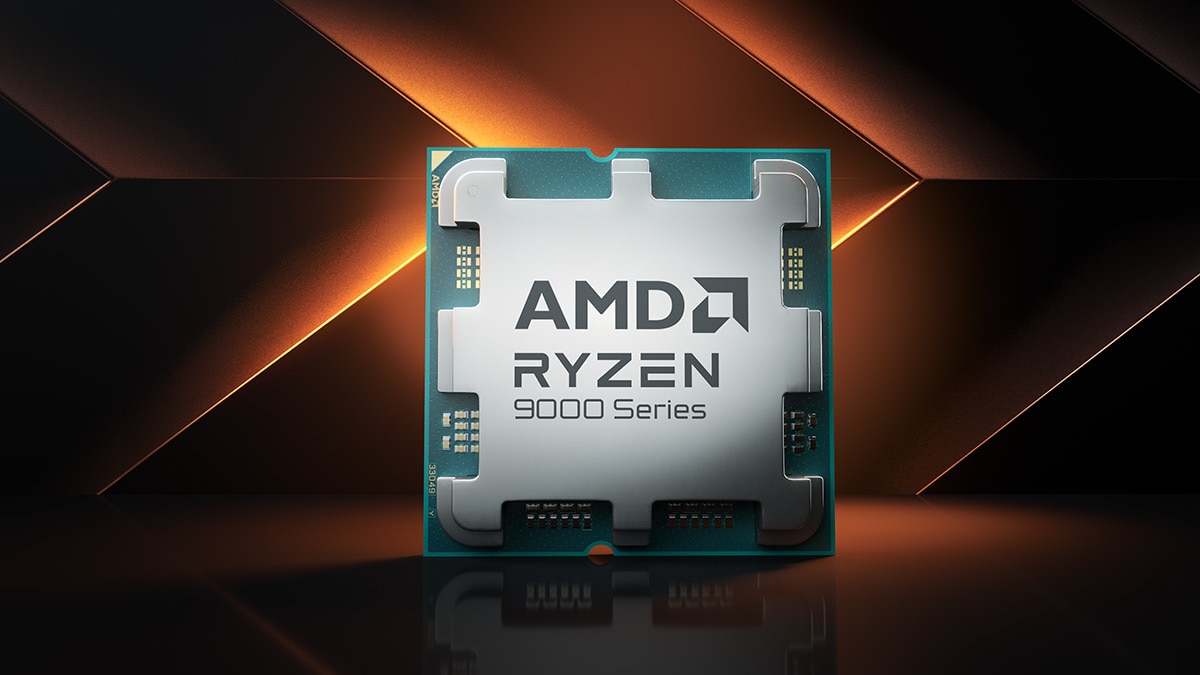
When you buy an AMD Ryzen processor, the heatspreader or retail box often labels the product as either "Made in China" or "Made in Malaysia". This stamping frequently triggers worry among PC builders who wonder if one location indicates superior silicon quality, better overclocking headroom, or a higher standard of quality control.
The short answer is that the assembly location makes zero difference to your processor's performance. The core silicon dies for Ryzen processors are fabricated by TSMC in Taiwan, while IO dies and other components are produced elsewhere. China and Malaysia are simply regional facilities handling final packaging, testing, and distribution. Understanding the global semiconductor supply chain clarifies why these labels exist and what factors genuinely affect your processor.
How Ryzen Production Works
To understand why the country stamp on your CPU doesn't matter, you have to look at how a modern processor comes together. Advanced microprocessors aren't manufactured from scratch in a single factory. Instead, the process is heavily fragmented across specialized global partners.
The foundational silicon dies are etched onto semiconductor wafers using extreme ultraviolet lithography at advanced foundries. Once these wafers are diced into individual processor dies, they are shipped to regional assembly, test, and mark (ATM) facilities.
- The Silicon Core: Designed by AMD and manufactured primarily by TSMC overseas, carrying the raw computing power.
- The Packaging Stage: The silicon die is mounted onto the green printed circuit board substrate, surrounded by surface-mount components, and covered with the integrated heatspreader.
- The Final Testing: Facilities in countries like China and Malaysia execute stress tests, laser-etch the branding and serial numbers onto the metal lid, and seal the unit into retail packaging.
Splitting these final operations across multiple geographic hubs protects the company from regional supply chain bottlenecks. If an earthquake or local disruption temporarily halts operations at one facility, production continues smoothly elsewhere.
Separating Assembly Origin from Silicon Quality
A common misconception is that "Made in China" or "Made in Malaysia" means the entire chip was built inside that specific border. In reality, the country stamp only indicates where the final physical assembly and laser marking took place.
Every Ryzen processor goes through identical validation suites, thermal stress tests, and electrical benchmarks regardless of where it was boxed. Performance variations between two identical CPU models—such as a Ryzen 5 7600 or a Ryzen 7 7800X3D—stem entirely from the silicon lottery rather than the assembly plant. The silicon lottery describes the microscopic, unavoidable physical variations in semiconductor wafers that give some chips slightly better voltage efficiency or thermal tolerances than others.
Geopolitical Realities and Supply Chain Shifts
The broader semiconductor industry is caught in a complex geopolitical landscape. Governments across North America and Europe are pouring billions into domestic fabrication plants to reduce reliance on Asian supply chains. However, packaging and testing remain heavily concentrated in Southeast Asia and East Asia due to specialized infrastructure and decades of accumulated technical expertise.
Malaysia has emerged as a major global hub for backend semiconductor testing and packaging, hosting major operations for Intel, AMD, and various independent OSAT providers. Meanwhile, facilities in China serve both domestic market distribution and broader international export demands.
When international trade tensions flare up or trade restrictions change, multinational tech firms adjust their shipping routes and assembly distribution ratios. These corporate adjustments happen behind the scenes to maintain compliance with international trade laws while ensuring retail shelves stay stocked. For the end user, these macroeconomic shifts do not alter the behavior or capability of the processor sitting inside a gaming rig.
Common Mistakes When Evaluating CPU Origins
Many buyers fall into traps based on internet myths or outdated manufacturing models from decades past. Avoiding these errors saves time and prevents unnecessary worry over retail box labels.
- Assuming higher cost means better origin: Some grey-market importers or online sellers try to market chips from a specific country as "binned" or specially selected for overclocking. This is a marketing gimmick.
- Confusing wafer fabrication with packaging: Believing that a chip made in China or Malaysia was entirely engineered and etched locally ignores the reality of global foundry networks.
- Paying a markup for preferred stamps: Never pay extra because a listing promises a specific country of assembly. The internal architecture remains identical.
Frequently Asked Questions
Does a Chinese or Malaysian Ryzen CPU overclock better?
No. Overclocking potential is determined entirely by the silicon lottery and your motherboard's voltage regulation. The assembly facility has zero impact on clock speeds.
Can I check my CPU's authenticity using the origin label?
The origin label printed on the heatspreader is standard, but counterfeit processors do exist on secondary marketplaces. Instead of worrying about the country text, you should verify authenticity by scanning the small data matrix QR code laser-etched onto the CPU lid or checking the chip ID inside the system BIOS.
Why did AMD change how it labels some packaging?
AMD and other semiconductor firms periodically update retail box text and laser markings to comply with shifting regional customs requirements, local import regulations, or internal supply chain tracking updates.
Do Intel processors use the same assembly model?
Yes. Intel similarly designs processors in the United States and Israel, manufactures wafers abroad, and routes final packaging through assembly plants in Malaysia, Vietnam, China, and other global hubs.
https://www.youtube.com/watch?v=GOl9GroRUro This video provides a helpful look at how Malaysia has developed into a major global hub for semiconductor packaging and testing amid changing international trade dynamics.