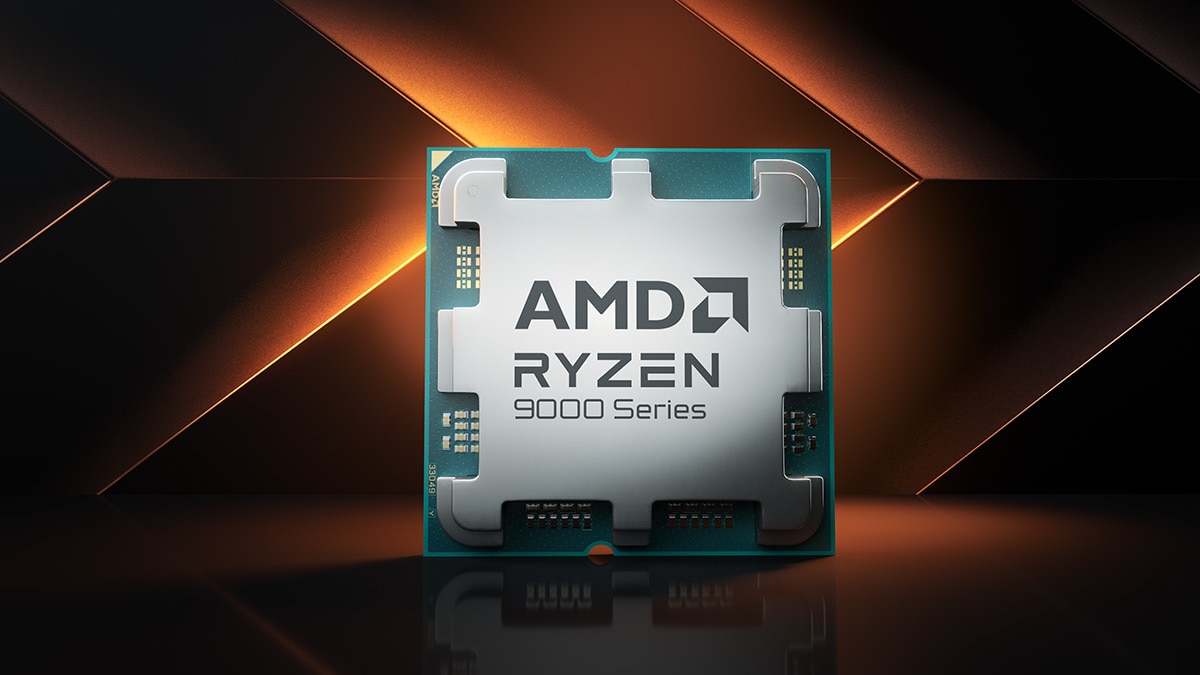
An AMD iGPU (integrated graphics processing unit) lives directly on the processor die alongside the CPU cores, sharing the system's main memory rather than relying on a dedicated video card. Modern versions built on architectures like RDNA 3 handle everyday multitasking, 4K media playback, and even 1080p esports gaming without needing a discrete GPU. Understanding how these graphics processors operate helps you pick the right chip for a budget office build or a compact gaming system.
The performance of an integrated graphics solution depends heavily on system memory bandwidth, thermal limits, and driver optimization. Because an iGPU doesn't have dedicated VRAM, it carves out a portion of your system RAM to use as a frame buffer. Choosing fast, dual-channel DDR5 memory is essential for unlocking the full potential of modern AMD processors.
Evolution of AMD Integrated Graphics Architecture
AMD's approach to onboard graphics has shifted dramatically from early budget desktop APUs to the powerful graphics engines found in modern silicon. Older Vega-based architectures laid the foundation, but recent generations have closed the gap between integrated and entry-level dedicated cards.
- Vega Architecture: Found in older Ryzen 2000G through 5000G desktop chips. It provided functional display outputs and light gaming capabilities but struggled with high memory bottlenecks.
- RDNA 2 Architecture: Integrated into handheld devices and mobile Ryzen processors. It introduced a massive leap in instructions-per-clock and power efficiency.
- RDNA 3 and 3.5 Architectures: Powering modern Ryzen desktop APUs (such as the Ryzen 7 8700G) and mobile processors. These designs include dedicated ray tracing accelerators, improved hardware video encoders, and support for high-refresh-rate displays.
Performance scales directly with architecture generation. If you're building a new PC or buying a mini PC, prioritizing an RDNA 3 or newer iGPU ensures you get modern video decoding features like AV1 support.
Desktop APUs Versus Standard Ryzen Processors
A common point of confusion for builders is telling the difference between a standard Ryzen processor and an AMD APU (Accelerated Processing Unit) that features a high-performance iGPU.
Most standard desktop Ryzen processors (like the Ryzen 5 9600X or Ryzen 7 9800X3D) do include basic integrated graphics. However, these built-in graphics are strictly meant for display output, troubleshooting, and office work—they feature only two compute units and lack the muscle for gaming.
True desktop APUs (traditionally marked with a "G" suffix, such as the Ryzen 7 8700G) pack up to 12 compute units of Radeon graphics. They trade a small amount of L3 cache for a much larger graphics footprint, making them ideal for small form factor builds where a discrete graphics card won't fit.
For official documentation on managing these graphics settings, you can consult the AMD Ryzen Master Guide.
Real-World Performance and Use Cases
An AMD iGPU handles everyday workloads smoothly, but expectations should match hardware realities. Knowing what these graphics engines can and cannot do prevents costly upgrade mistakes.
- Productivity and Multitasking: Office suites, browser tabs, and multi-monitor setups run effortlessly. Hardware-accelerated video decoding handles 4K HDR streams on platforms like YouTube and Netflix without dropping frames.
- Content Creation: Basic photo editing in Lightroom and 1080p video exports in editing suites work well. However, heavy 3D rendering or complex visual effects still require a dedicated GPU with massive VRAM.
- Gaming Capabilities: Titles like League of Legends, Valorant, Minecraft, and CS2 run smoothly at 1080p on medium to high settings. Demanding modern AAA titles require lowered settings and FSR (FidelityFX Super Resolution) upscaling to maintain playable frame rates.
For broader hardware trends and component choices, tech publications like PC Guide offer regular performance benchmarks.
Common Mistakes When Using AMD Integrated Graphics
Builders often run into performance traps when relying solely on an integrated GPU. Avoiding these errors ensures stable operation:
- Using Single-Channel Memory: Installing only one stick of RAM cuts your memory bandwidth in half, which chokes the iGPU's frame rates. Always use a matched dual-channel kit.
- Choosing Slow RAM Speeds: Because the graphics processor shares system memory, slow RAM directly reduces graphic performance. Pairing modern Ryzen processors with high-speed DDR5 memory is mandatory.
- Ignoring Power and Thermal Limits: Small chassis designs can trap heat, causing the processor to thermal throttle under combined CPU and GPU loads. Ensure adequate cooling.
Frequently Asked Questions
Can I add a dedicated graphics card later if I start with an AMD iGPU?
Yes. You can install any discrete PCIe graphics card into your motherboard later. You'll simply plug your monitor cable into the new card and install the appropriate drivers.
How much system RAM should I allocate to the iGPU?
Most modern systems manage this dynamically through the BIOS and operating system. If you have 32GB of system RAM, the iGPU can grab what it needs on demand, though you can manually reserve a static buffer size in the BIOS if a specific application requires it.
Do AMD integrated graphics work well with Linux?
Yes. Modern AMD graphics processors benefit from open-source drivers built directly into the Linux kernel (amdgpu), offering stable performance and strong compatibility out of the box.
Are mobile AMD iGPUs the same as desktop APUs?
They share similar underlying architectures, but mobile variants are power-tuned for laptops and handheld consoles to maximize battery life, whereas desktop APUs can draw more power to sustain higher clock speeds.