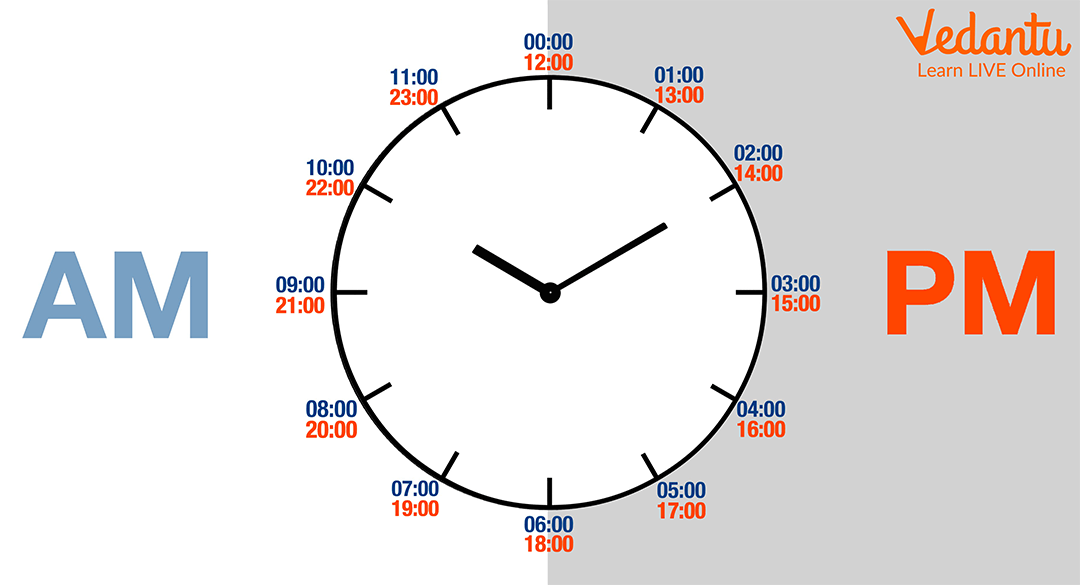
We've all stared at a digital display late at night, wondering if a 12:00 meeting invite refers to noon or midnight. The abbreviations AM and PM govern our daily lives, yet they represent a quirky compromise between ancient sundials and modern digital screens. Understanding what these two terms actually signify helps clear up scheduling mistakes once and for all.
At their core, AM and PM divide the solar day into two equal halves of twelve hours each. AM stands for ante meridiem, a Latin phrase meaning "before midday." PM stands for post meridiem, meaning "after midday." When the sun reaches its highest point overhead, the clock flips from AM to PM. While simple in theory, human routines, legal definitions, and software clocks make these letters a constant source of friction.
The History of the 12-Hour Cycle
Ancient civilizations didn't measure time with uniform 60-minute blocks. The Egyptians and Babylonians divided daylight into twelve hours and darkness into twelve hours. Because the length of daylight changes with the seasons, an ancient Egyptian summer hour lasted longer than a winter hour.
The Romans streamlined this into a more consistent framework, splitting the 24-hour rotation of Earth into two equal cycles. Sundials and water clocks tracked the sun's passage across the sky, setting the midpoint at solar noon.
When mechanical clocks emerged in Europe during the fourteenth century, makers kept the familiar 12-hour face because it fit mechanical gears and church bell schedules better than a sprawling 24-hour dial. People already understood the day in two halves: morning and afternoon/night. The Latin abbreviations stuck around as official shorthand for legal and astronomical records.
The Great 12:00 Ambiguity: Noon vs. Midnight
The single biggest point of confusion involves the exact hour of 12:00. If AM means before midday and PM means after midday, where do noon and midnight fit?
Strictly speaking, noon is neither before nor after midday—it is midday. However, standard convention and digital clocks handle this in specific ways:
- 12:00 PM is noon: The moment the sun crosses the meridian, the clock transitions to post meridiem. This is why lunch meetings scheduled for 12:00 PM take place in the middle of the day.
- 12:00 AM is midnight: The start of a new calendar day. As soon as the clock ticks past midnight by a single second, it becomes 12:01 AM (ante meridiem, moving toward the next noon).
Airlines, train networks, and software developers frequently trip over this boundary. Booking a flight for "12:00 AM on Tuesday" often means boarding in the middle of the night as Monday turns into Tuesday, catching many travelers off guard.
According to the National Institute of Standards and Technology (NIST), using phrases like "12:00 noon" or "12:00 midnight" in writing completely eliminates ambiguity, which is why official contracts and legal documents avoid bare numerical timestamps.
Why We Still Confuse AM and PM
Even though we use these terms daily, our brains don't intuitively link the Latin roots to our modern schedules. Several psychological and environmental factors keep the confusion alive.
The Digital Shift and Context Loss
On an analog clock, the position of the hands gives immediate visual feedback. If the hour hand points straight up and the minute hand points straight up, you can look outside to see if the sun is shining or if it's pitch black. Digital displays strip away that physical context. If you wake up in a dark hotel room and look at a glowing phone screen reading 3:15, you have to consciously check whether it's morning or afternoon.
Language Habits and Colloquial Speech
In casual conversation, people routinely drop the AM or PM modifier and rely on context. Someone might say, "Meet me at 5 for dinner." If you assume PM but they meant AM, you'll be sitting in an empty restaurant. Because spoken language relies heavily on shared assumptions, we often fail to specify the modifier when writing quick text messages, leading to missed appointments.
Shift Work and Sleep Disruption
For shift workers, nurses, and remote employees collaborating across global time zones, the natural biological cues of daylight and darkness often blur. Working a night shift from 7 PM to 7 AM flips normal circadian rhythms. When your body clock thinks it's midnight, daylight outside creates cognitive dissonance, making it easier to misread a calendar reminder or alarm setting.
Avoiding Scheduling Mistakes: Best Practices
Eliminating AM and PM errors requires deliberate habits in both personal organization and professional communication.
- Adopt 24-Hour Time for Critical Schedules: If you manage complex projects or travel frequently, switch your phone and computer settings to a 24-hour format (often called military time). Seeing 19:00 instead of 7:00 PM removes all guesswork.
- Spell Out Noon and Midnight: In emails, calendar invites, and written instructions, replace "12:00 AM" and "12:00 PM" with "midnight" and "noon."
- Double-Check Flight and Event Itineraries: When booking travel across international borders, verify whether the ticketing system uses a 12-hour or 24-hour clock before finalizing departure times.
- Use Explicit Modifiers in Writing: When writing formal documents, always place a space between the numerals and the designator, such as 9:00 AM, following guidelines from the Associated Press (AP) Stylebook.
Frequently Asked Questions
Is AM uppercase or lowercase?
Style guides generally recommend lowercase letters with periods (a.m. and p.m.) or uppercase letters without periods (AM and PM). Consistency within a single document matters most.
Why do some digital clocks use 24-hour time while others use 12-hour?
The 12-hour format dominates consumer electronics in North America due to cultural habit, while the 24-hour format is standard across European public transit, military organizations, and medical fields for absolute clarity.
Can noon be written as 12 AM?
No. Noon is 12 PM because it marks the arrival of midday (post meridiem). Writing 12 AM for noon is technically incorrect and creates scheduling errors.
What is the origin of the word meridiem?
It derives from the Latin meridies, which combines medius (middle) and dies (day), translating directly to midday.



