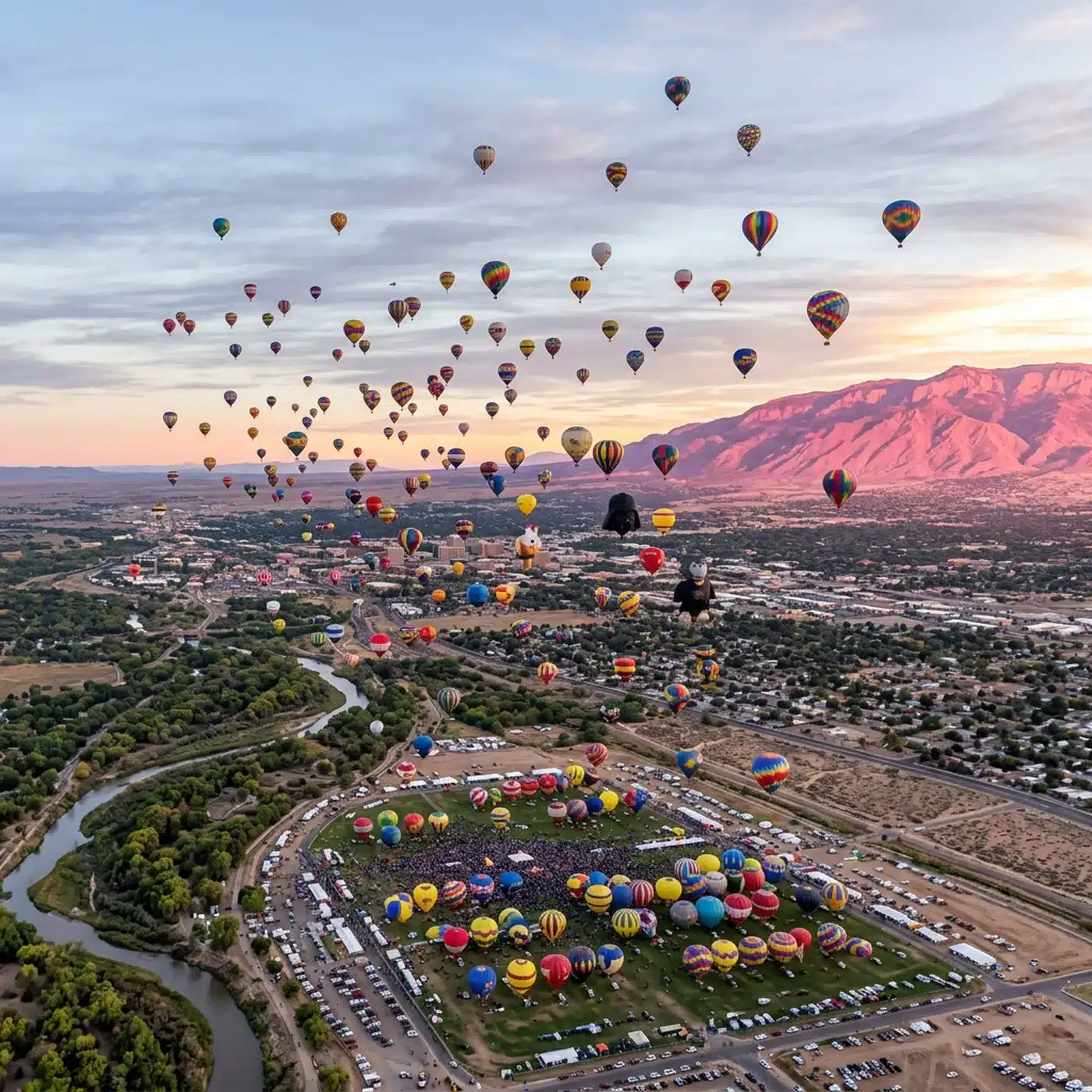
Winter in Albuquerque surprises visitors who expect a permanent sun-drenched desert. Sitting at roughly 5,300 feet above sea level in the Rio Grande Rift, New Mexico's largest city experiences a high-desert climate where cold air plunges from the north and mixes with Pacific moisture. Winter brings an average of 9 to 10 inches of annual snowfall to the Albuquerque International Sunport, though totals swing wildly from year to year. Some seasons pass with barely a white dusting, while others deliver heavy, disruptive storms that coat the Sandia Mountains and bring the Duke City to a temporary halt.
Understanding Albuquerque snow requires looking past basic climate averages to examine atmospheric triggers, local microclimates, and municipal impacts. While coastal or mountain-town residents shrug off a few inches of powder, Albuquerque's infrastructure reacts sensitively to frozen precipitation because temperatures frequently hover right around the freezing mark. This dynamic creates treacherous driving conditions, rapid freeze-thaw cycles, and unique challenges for city planners and homeowners alike.
The Meteorology of High Desert Snowstorms
Albuquerque's winter weather relies on a delicate balance between cold surface air and moisture tracking in from the Pacific Ocean or the Gulf of California. Because the city sits in an arid basin bordered by the towering Sandia Mountains to the east, storms behave differently here than they do across the Great Plains or the Rockies.
When a low-pressure system tracks across Arizona and northern Mexico, it pulls moisture northward. If a cold Arctic or Canadian air mass has already spilled southward into New Mexico, it forms a shallow layer of dense, freezing air hugging the ground. Warm, moist air overrides this cold dome, causing precipitation to fall as snow.
Meteorologists look for specific atmospheric setups:
- Southwest Flow Patterns: Moisture streams in from the southwest, riding over surface cold air to produce steady, widespread snowfall across Bernalillo County.
- Cold Air Damming: Cold air pours down the eastern side of the Rocky Mountains and pushes through Tijeras Canyon, creating localized blizzard conditions and heavy drifts in the city's eastern foothills.
- Cut-Off Lows: Slow-moving low-pressure systems stall over the Southwest, wringing out moisture over several days and causing prolonged, wet snow events.
Temperature profiles dictate whether a storm drops light powder or heavy, slushy snow. Because winter daytime highs in Albuquerque often reach the mid-40s, afternoon snow usually melts on contact or turns heavy and wet before transitioning back to rain as lower elevations warm up.
Microclimates: Why Snowfall Varies Across Albuquerque
One of the most striking aspects of winter weather in Albuquerque is how unevenly snow accumulates across town. You can drive from a dry, clear Westside neighborhood and find several inches of packed snow accumulating near the base of the Sandia Mountains. Elevation and topography drive these sharp local differences.
The city slopes upward from the Rio Grande valley floor—sitting around 4,900 feet—toward the foothills, which climb past 6,000 feet. Temperature drops roughly three to five degrees Fahrenheit for every 1,000-foot gain in elevation. Consequently, a storm that brings cold rain to downtown Albuquerque often produces accumulating snow in foothill communities like High Desert, Academy Acres, and Four Hills.
Neighborhood orientation also matters. Areas exposed to northerly winds experience faster cooling, while protected urban canyons and the dense concrete core of downtown retain heat longer, preventing snow from sticking to pavement. Furthermore, wind funnels through gaps like Tijeras Canyon, creating localized whiteout conditions and massive snow drifts that catch commuters off guard.
Historical Snow Records and Outliers
While typical winters bring modest accumulations, Albuquerque's weather history features dramatic extremes. The city's greatest single 24-hour snowfall occurred in December 1978, when a powerful storm dropped 14 inches of snow across the metropolitan area, collapsing roofs and shutting down schools for days.
Another historic benchmark occurred in December 1967, which remains the snowiest month on record with a staggering 36 inches total accumulation. These monster storms remind residents that the high desert is fully capable of severe winter weather.
Conversely, modern winters often experience significant variability driven by large-scale climate cycles. During El Niño winters, the southern jet stream becomes active, steering Pacific storms across the southern tier of the United States and increasing the odds of above-average snow in central New Mexico. La Niña phases typically bring drier, warmer winters, reducing seasonal snowfall totals and placing extra stress on regional water supplies.
Infrastructure Impact and City Response
Albuquerque's infrastructure is built for an arid climate with over 300 days of sunshine annually, meaning municipal agencies must balance readiness with cost efficiency when winter storms strike. The New Mexico Department of Transportation and the city's public works crews manage a fleet of snowplows and salt spreaders, but treating every secondary neighborhood immediately is impossible.
Crews prioritize high-volume corridors, including parts of Interstate 25, Interstate 40, Paseo del Norte, and Tramway Boulevard. Bridges, overpasses, and shaded stretches freeze long before flat roads do, turning routine commutes into hazard zones. Black ice forms rapidly overnight when melted snow refreezes on untreated pavement.
Public services adapt quickly when major winter storms hit:
- School Delays and Closures: Albuquerque Public Schools closely monitor pre-dawn road conditions, frequently calling two-hour delays or remote learning days to keep buses off icy streets.
- Transit Adjustments: ABQRide bus routes may experience detours or delays, particularly when navigating steep residential hills in the northeast heights.
- Power Grid Reliability: Wet, heavy snow can occasionally weigh down aging tree branches, causing localized power outages when limbs fall across distribution lines served by PNM.
The Vital Role of Mountain Snowpack
Beyond the immediate travel disruptions, winter snow holds immense economic and ecological importance for New Mexico. The snowpack that accumulates in the Sandia and Manzano mountains acts as a natural reservoir.
As spring temperatures rise, this snowpack melts gradually, feeding the Rio Grande and recharging underground aquifers. This slow-release water supply is critical for municipal drinking water, local agriculture, and riparian ecosystems throughout the Middle Rio Grande Valley.
Water managers monitor snow water equivalent data through regional SNOTEL stations maintained by the USDA Natural Resources Conservation Service. In years with low winter snowpack, water authorities implement conservation measures to protect dwindling river flows and reservoir levels.
Common Winter Mistakes in Albuquerque
Residents and visitors frequently make miscalculations when facing high desert winter weather. Avoiding these errors ensures a safer season:
- Underestimating Morning Ice: Assuming the sun will keep roads clear early in the morning ignores shaded spots and bridges that remain frozen long after sunrise.
- Neglecting Vehicle Prep: Failing to check tire tread, battery health, and antifreeze levels leaves drivers stranded when sudden cold snaps hit.
- Improper Home Winterization: Forgetting to insulate outdoor spigots or disconnect garden hoses leads to costly burst pipes during hard freezes.
- Ignoring Hydration and Sun Protection: High-altitude sun reflecting off fresh snow creates intense ultraviolet exposure, making sunscreen and sunglasses essential even in winter.
Frequently Asked Questions
Does it snow every year in Albuquerque?
Yes, Albuquerque receives snow every winter, but the amounts vary dramatically. Some years bring only light, fleeting dustings, while other seasons accumulate over a foot of total snow.
When is the snowiest month in Albuquerque?
Historically, December and January are the snowiest months, combining cold temperatures with active storm tracks moving across the Southwest.
Why do roads get so icy so quickly in Albuquerque?
High desert air is extremely dry, causing rapid evaporation and cooling. When snow melts during sunny winter afternoons and temperatures plunge below freezing after sunset, water on the pavement instantly turns into black ice.
How do the Sandia Mountains affect local weather?
The Sandias create a rain-and-snow shadow effect while also acting as a barrier that traps cold air against the eastern edge of the city, frequently amplifying snowfall totals in foothill neighborhoods compared to the Westside.



