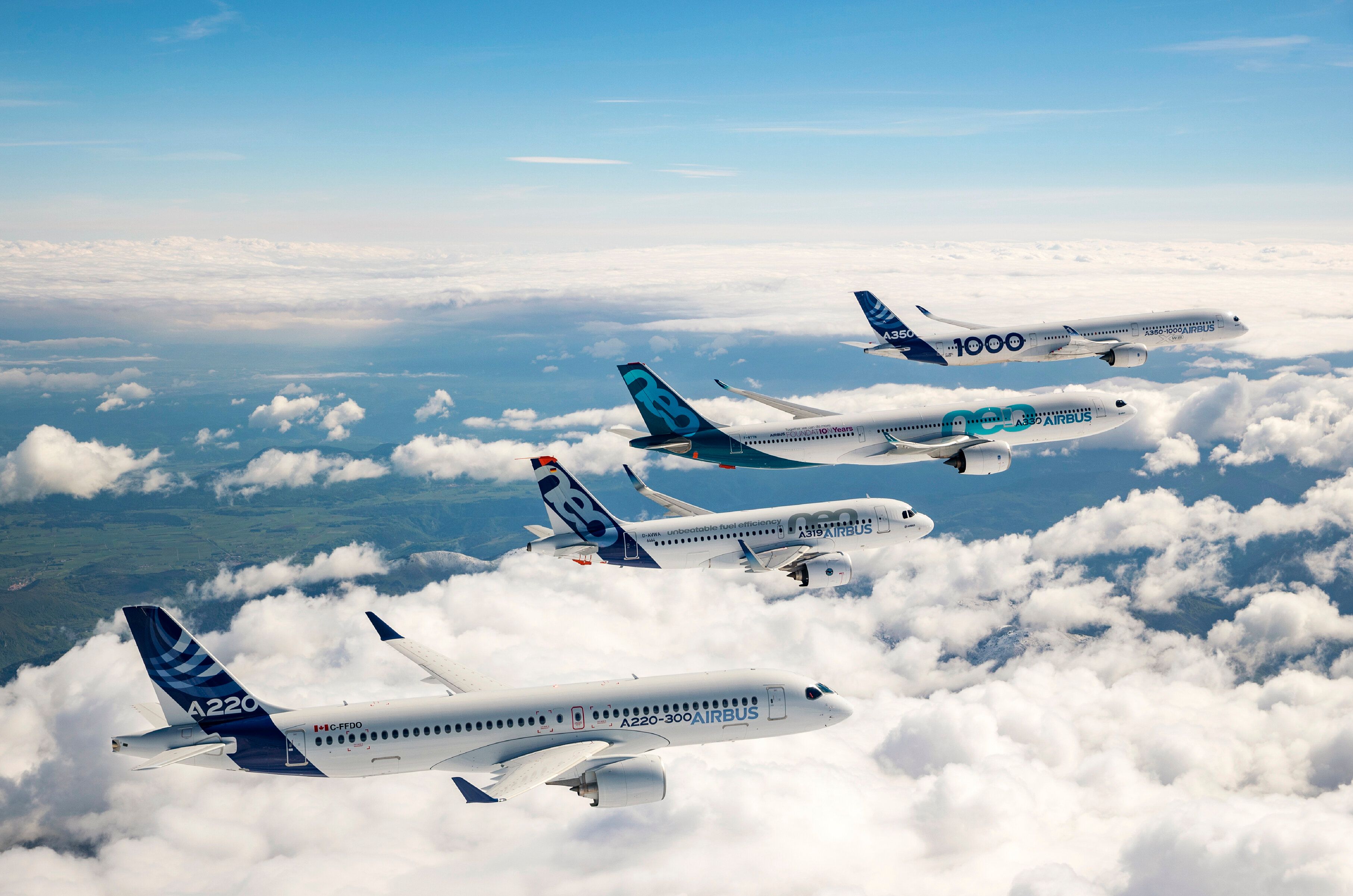
Rumors surface online periodically about a mythical secret aircraft called the Airbus A390, often described by viral videos and speculative blog posts as a giant widebody meant to shake up the aviation industry. The reality is straightforward: Airbus has never manufactured, designed, or announced an aircraft officially designated as the A390. The designation exists entirely within internet fiction, speculative fan theories, and fabricated social media content rather than official corporate announcements from Airbus.
Understanding how these aviation myths catch on requires separating corporate strategy from digital folklore. Commercial aircraft naming conventions follow strict patterns, and tracing the actual lineage of Airbus widebodies reveals why the nonexistent A390 captures so much online imagination while remaining entirely fictional.
The Origin of the Airbus A390 Myth
The internet loves a hidden corporate conspiracy, especially one involving multi-billion-dollar aerospace rivalries. Online creators frequently pitch the notion that Airbus is hiding a massive, revolutionary twin-deck or ultra-stretched aircraft designed to blindside competitors. These rumors usually borrow elements from real, discontinued programs like the massive A380 superjumbo or stretch concepts of the A350.
Content farms and speculative channels generate views by presenting CGI mockups and fictional performance metrics as leaked insider information. In reality, major aerospace manufacturers don't develop multi-billion dollar airframes in complete secrecy. Regulatory bodies like the European Union Aviation Safety Agency (EASA) and the Federal Aviation Administration (FAA) must clear certification pathways years before a commercial plane ever enters service, leaving no room for surprise rollouts.
Official Airbus Naming Conventions
To understand why the A390 is a fabrication, look at how the manufacturer actually names its commercial line. Every official passenger jet follows a distinct numerical sequence beginning with the letter "A":
- A300 and A310: The foundational twin-engine widebodies that established the company in the 1970s and 1980s.
- A320 Family: The ultra-successful single-aisle workhorse series spanning the A318, A319, A320, and A321.
- A330 and A340: Long-range widebodies introduced in the 1990s, offering twin-engine and four-engine variants.
- A350: The modern carbon-composite widebody designed to dominate long-haul international routes.
- A380: The iconic double-deck superjumbo, whose production concluded after the final delivery in 2021 due to changing market demands for point-to-point travel.
Notice the gap? A sequence number like 390 sits right outside official project pipelines. While fan wikis and fiction forums happily catalog imaginary specs for an A390-900 or A390-1000NEO, no internal engineering teams recognize the designation.
Why the Aviation Market Moved Past Super-Widebodies
The viral fascination with a hypothetical giant like the A390 stems from nostalgia for massive four-engine planes like the Boeing 747 and the Airbus A380. Travelers loved their spacious cabins, and aviation enthusiasts marvelled at their engineering. However, airline economics shifted drastically away from hub-and-spoke transit models.
Modern carriers favor fuel-efficient, high-capacity twin-engine jets capable of flying direct point-to-point routes. Operating a massive four-engine aircraft doesn't make financial sense when smaller widebodies like the Boeing 787 or Airbus A350 can cross oceans with lower fuel burn and simpler maintenance costs. Proposing a brand-new super-giant aircraft today goes against every current market trend prioritizing sustainability and operational flexibility.
Current Real Priorities at Airbus
Instead of working on fictional internet airframes, the manufacturer focuses its capital on tangible next-generation challenges. Current corporate efforts concentrate on sustainable aviation fuels (SAF), hydrogen-powered propulsion concepts through the ZEROe initiative, and maximizing the efficiency of existing single-aisle and widebody lines.
When official updates happen, they are announced through investor relations portals and certified aerospace press channels—not through anonymous social media clips promising hidden secrets.
Frequently Asked Questions
Did Airbus ever plan an A390 project?
No. Official historical records and active product roadmaps do not contain any references to an A390 project.
Where did the A390 rumor start?
The rumor primarily thrives on fictional aircraft creation wikis, speculative YouTube channels, and automated content farms that mix CGI concepts with unverified rumors to drive clicks.
What is the largest actual plane Airbus ever built?
The Airbus A380 remains the largest passenger airliner ever produced, featuring a full double-deck cabin capable of seating over 500 passengers in typical multi-class configurations.
How can you spot fake aviation news online?
Check official manufacturer press releases or regulatory certification filings. If an entirely new commercial aircraft family is supposedly being launched without any mention from industry authorities or financial reports, it is fictional.


