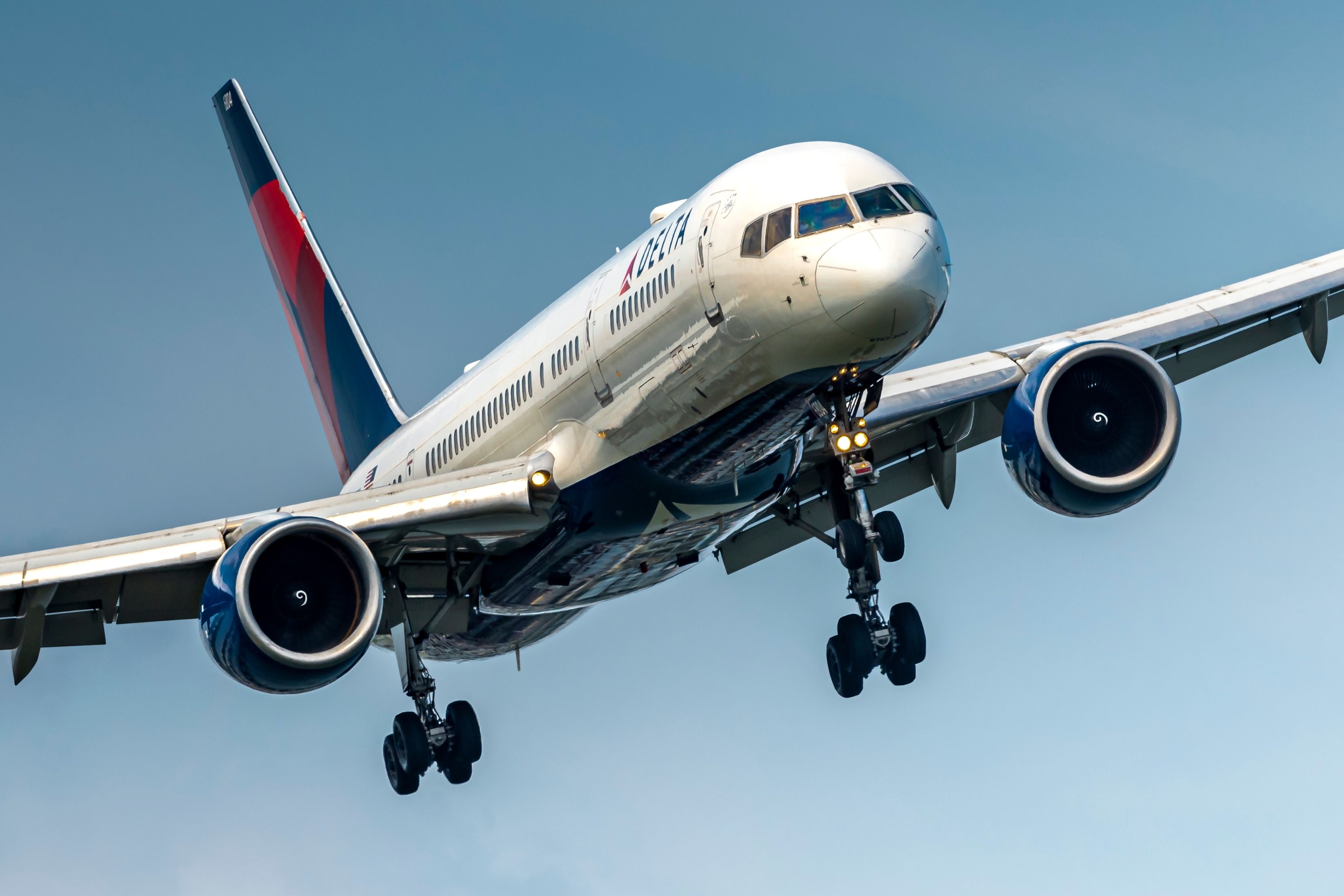
When talking about commercial aviation, two iconic aircraft stand out above all others: the Airbus A380 and the Boeing 747. For decades, these legendary quad-jets ruled international long-haul routes, carrying millions of travelers across oceans. While the Boeing 747 earned the title of Queen of the Skies and changed global travel forever, the Airbus A380 arrived later as a massive double-decker superjumbo designed to solve airport congestion at major international hubs.
Comparing these two titans reveals a fascinating clash of philosophies. The Boeing 747 relies on efficient, evolutionary design and nose-cone cargo loading, whereas the Airbus A380 focuses on absolute volume with a full-length double-deck cabin. Understanding how they compare requires looking closely at their dimensions, passenger capacities, operational mechanics, and why the aviation industry ultimately moved away from four-engine giants in favor of twin-engine jets.
Size and Passenger Capacity
Both aircraft are massive, but they handle internal space quite differently. The Airbus A380 is the largest passenger airliner ever built, featuring a full double-deck layout that runs the entire length of the fuselage. Its cabin width allows airlines to configure seating in comfortable wide-body arrangements. In a typical three-class setup, an A380 usually seats around 500 to 550 passengers, though it can be packed to hold up to 853 travelers in a high-density single-class layout used by some carriers.
The Boeing 747, particularly its final passenger variant the 747-8 Intercontinental, features a iconic partial upper deck that gives it a distinct hump. It's slightly shorter and narrower than the A380. A typical three-class configuration on a 747-8 accommodates around 410 to 467 passengers. While you can read more about commercial fleet standards on the Federal Aviation Administration, the key difference is that the 747 balances lower passenger counts with dedicated nose-cone cargo space on freighter variants, making it uniquely versatile.
Performance and Engineering Specifications
Powering aircraft of this scale requires immense engineering capability. Both models rely on four massive turbofan engines to get airborne, but their performance profiles vary.
- Airbus A380 Engines: Powered by four Engine Alliance GP7200 or Rolls-Royce Trent 900 engines, producing high thrust outputs suited for heavy lift-offs.
- Boeing 747-8 Engines: Powered by General Electric GEnx-2B engines, which feature modern chevron designs on the nacelles to reduce noise footprint and improve fuel burn efficiency.
- Range: The 747-8 boasts a slightly longer maximum range of roughly 8,000 nautical miles, compared to the A380's range of around 7,500 to 8,200 nautical miles depending on payload and atmospheric conditions.
The 747 also benefits from an advanced wing design featuring raked wingtips, which reduce aerodynamic drag and improve cruise efficiency. Meanwhile, the A380 relies on sheer lifting surface area generated by its massive delta-like wing structure.
Operational Realities and Airport Infrastructure
Operating an aircraft of this magnitude involves immense logistical challenges. When airlines purchase superjumbos, they can't just fly them into any regional airport.
The A380 requires specialized gate infrastructure with dual-jet bridges to load the upper and lower decks simultaneously. Airports across the globe had to spend millions widening runways, reinforcing taxiways, and upgrading terminal gates to accommodate the massive wingspan and height of the Superjumbo. According to historical International Civil Aviation Organization guidelines, aircraft of this size fall into specific design groups that dictate airport compatibility worldwide.
The Boeing 747, having been around since the late 1960s, was designed with existing airport constraints in mind. Its length and wingspan allowed it to fit into standard heavy-gate footprints long before the A380 entered service. Furthermore, the 747's nose cargo door on freighter variants made it an irreplaceable workhorse for outsized cargo transport, a capability the A380 lacks.
Economics and the Shift to Twin-Engines
The ultimate showdown between these two icons wasn't settled in the air, but on airline balance sheets. Four-engine aircraft are inherently expensive to maintain and burn significantly more fuel than modern twin-engine wide-bodies like the Boeing 777X or Airbus A350.
Airlines traditionally used the hub-and-spoke model, flying massive numbers of passengers between major megahubs on A380s or 747s, and then transferring them to smaller planes. However, passenger preferences shifted toward point-to-point travel. Travelers prefer direct flights between secondary cities rather than layovers at congested hubs. Consequently, filling 500 seats on every single flight became increasingly difficult for airlines, leading both Airbus and Boeing to end production of their respective quad-jets.
Frequently Asked Questions
Which plane is larger, the Airbus A380 or the Boeing 747?
The Airbus A380 is larger by volume, maximum takeoff weight, and total passenger capacity. It features a full-length double deck, whereas the Boeing 747 features a partial upper deck hump.
Why did airlines stop buying the A380 and 747?
Four-engine aircraft consume more fuel and incur higher maintenance costs than modern twin-engine aircraft. Additionally, changes in global travel patterns favored direct point-to-point routes over high-capacity hub-to-hub flights.
Can the A380 carry cargo like the Boeing 747?
No freighter version of the A380 was ever successfully produced. The Boeing 747, particularly the 747-8F and previous freighter models, remains famous for its nose-loading capability, which allows it to transport extremely long or bulky industrial cargo.
How many engines do both aircraft use?
Both the Airbus A380 and the Boeing 747 are quad-jets, meaning they are powered by four independent turbofan engines mounted under their wings.


