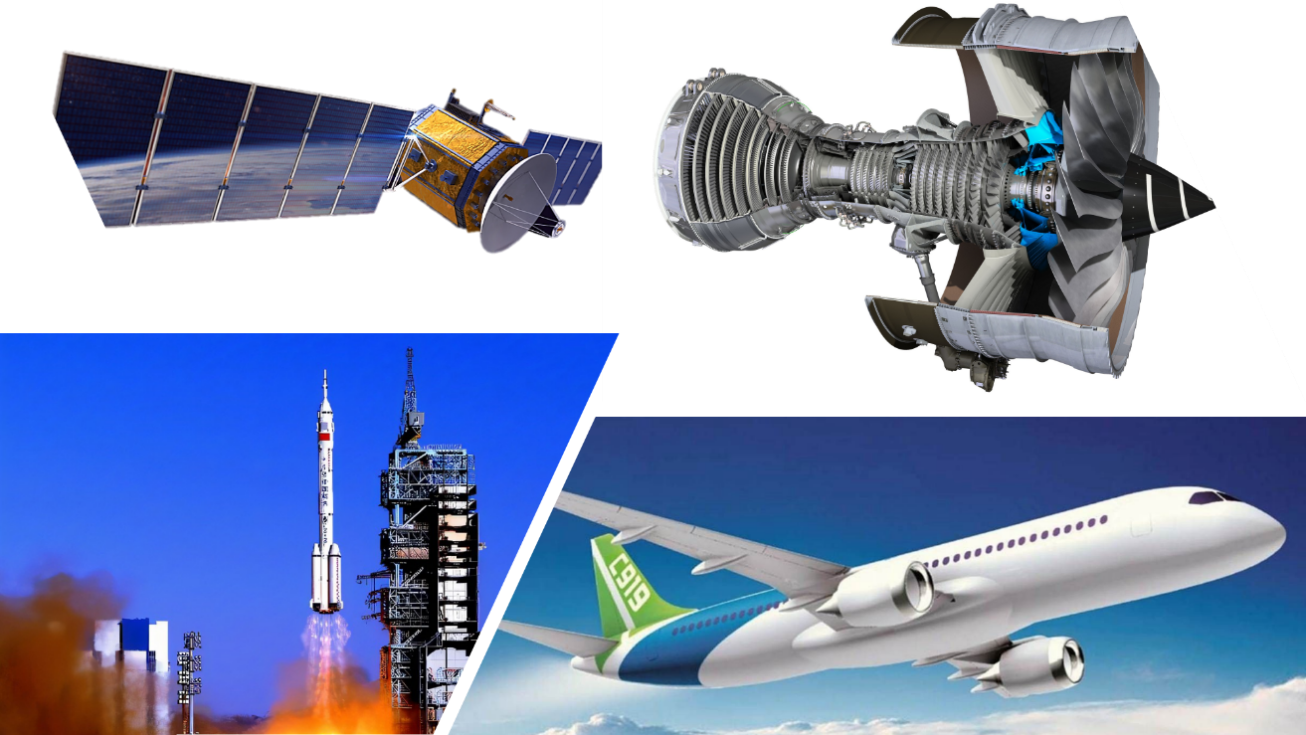
Aerospace technical publications form the critical regulatory and engineering foundation that keeps commercial fleets and military aircraft flying safely. These documents dictate every inspection, repair, and operational sequence performed by maintenance technicians and flight crews. Without precise documentation, airworthiness compliance collapses, grounding multi-million-dollar assets instantly.
Managing this data requires adhering to rigorous global standards, transitioning from legacy paper manuals to modular data architectures. Writing these manuals demands a precise blend of systems engineering, strict grammar rules, and advanced content management software to handle complex revisions across decades of an aircraft's operational life cycle.
Core Standards Driving Modern Aviation Documentation
Global aviation relies on standardized frameworks to ensure that technical data remains interchangeable, consistent, and easy to interpret across different operators and maintenance repair organizations. Two primary specifications dominate the sector: ATA iSpec 2200 and S1000D.
- ATA iSpec 2200: Maintained by Airlines for America, this standard organizes aircraft systems using a standardized numbering system. It structures data for maintenance, flight operations, and parts information into predictable formats.
- S1000D: An international specification for modular technical publications that utilizes a Common Source Database. Instead of producing linear book-style chapters, S1000D breaks information into discrete data modules that allow technicians to reuse content across multiple aircraft programs.
Adopting these specifications eliminates ambiguity on the hangar floor. Technicians working in a repair station in Europe or North America encounter identical chapter hierarchies and fault isolation trees, minimizing the risk of misinterpretation during high-stakes maintenance tasks.
Essential Document Types in Aerospace Fleets
A complete aircraft program requires several interconnected manuals to cover every operational and structural contingency. Each document serves a distinct purpose within the engineering ecosystem:
- Aircraft Maintenance Manual (AMM): Provides step-by-step procedures for troubleshooting, removing, installing, and testing aircraft systems.
- Component Maintenance Manual (CMM): Issued by original equipment manufacturers to guide shop-level overhaul, disassembly, repair, and functional testing of individual subassemblies like hydraulic pumps or avionics boxes.
- Illustrated Parts Catalog (IPC): Lists every assembly, sub-assembly, and individual part with exploded views to help supply chains procure exact replacements safely.
- Wiring Diagram Manual (WDM): Maps electrical routing, connector pins, and wire bundles across the entire airframe to simplify electrical fault isolation.
Maintaining version control across these documents represents a massive operational hurdle. When an original equipment manufacturer issues a service bulletin, technical writers must update the AMM, CMM, and IPC simultaneously to prevent technicians from working off obsolete instructions.
The Shift to Modular Content Management Systems
Traditional desktop publishing tools cannot handle the sheer volume of data required for modern fly-by-wire aircraft. Technical writing teams now rely on specialized Component Content Management Systems paired with Extensible Markup Language workflows.
Modular authoring allows writers to create a single paragraph describing a torque procedure and reuse it across dozens of different manual variants. When engineering limits change, updating the source module automatically propagates the revision to every affected manual in the database.
- Data Creation: Writers draft content using controlled languages like Simplified Technical English to eliminate ambiguity for non-native speakers.
- Validation: Automated parsers check the markup against Document Type Definitions to ensure structural compliance before publication.
- Publishing: The system compiles the raw data modules into PDF, HTML5, or interactive electronic technical manuals deployed directly to tablets on the hangar floor.
Common Pitfalls in Aerospace Technical Writing
Writing for aviation leaves zero room for stylistic ambiguity. Editorial teams often struggle with specific operational hurdles that compromise document usability:
- Overcomplicating Syntax: Writers sometimes use passive voice or convoluted phrasing, forcing technicians to read instructions multiple times while wearing heavy personal protective equipment.
- Orphaned Revisions: Failing to cross-reference related changes between wiring diagrams and maintenance procedures leads to incorrect reassembly.
- Ignoring Feedback Loops: Neglecting direct input from line mechanics and shop-floor inspectors means recurring documentation errors persist across multiple revision cycles.
To combat these issues, publishing groups must establish strict peer-review workflows and maintain direct communication channels with airline engineering departments.
Frequently Asked Questions
What is Simplified Technical English?
Simplified Technical English is an international controlled vocabulary standard originally developed to help maintenance personnel whose native language is not English. It restricts vocabulary and enforces strict grammar rules to make technical sentences unambiguous.
How do S1000D and ATA iSpec 2200 differ?
ATA iSpec 2200 relies on a traditional chapter-section-paragraph numbering structure tailored for commercial aviation. S1000D is a modular specification built around data modules stored in a common database, designed to support both civil and military programs across land, sea, and air.
Who regulates aviation technical publications?
Regulatory bodies like the Federal Aviation Administration and the European Union Aviation Safety Agency mandate that operators maintain up-to-date, approved technical documentation as a condition of airworthiness.
What is an interactive electronic technical manual?
An interactive electronic technical manual is a digital document format that incorporates searchable databases, dynamic wiring diagrams, and direct links between parts catalogs and maintenance procedures, replacing bulky paper binders.


