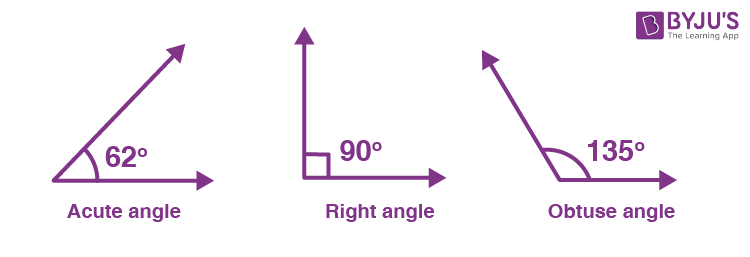
An acute angle is any angle measuring strictly between zero and ninety degrees. While people often think of geometry as dry textbook theory, these sharp corners do heavy lifting in the physical world. They dictate the structural integrity of suspension bridges, optimize the aerodynamic drag of commercial aircraft, and allow plant leaves to maximize sunlight absorption.
Understanding how these narrow angles function goes far beyond memorizing a protractor. Whether you're drafting architectural blueprints, calculating trigonometric ratios, or studying natural efficiency, acute angles form the bedrock of precise spatial design.
Defining Acute Angles in Geometry
In standard Euclidean geometry, angle measurements rely on degrees or radians. A full circle contains 360 degrees, a straight line forms 180 degrees, and a right angle measures precisely 90 degrees. An acute angle occupies the narrow band strictly greater than 0 degrees and less than 90 degrees. In radian terms, this spans from 0 up to $\pi / 2$ radians.
The word "acute" comes from the Latin acutus, meaning sharp or pointed. Visually, an acute angle looks like a narrow wedge or the tip of an arrowhead. If an angle hits exactly 90 degrees, it graduates to a right angle; anything wider enters the obtuse territory.
Key Classification Rules
- Strict boundaries: An angle measuring 89.9 degrees remains acute, while 90 degrees is a right angle.
- Complementary pairings: Two acute angles can be complementary, meaning their measurements sum up to exactly 90 degrees.
- Triangle inclusion: A triangle where all three interior angles measure less than 90 degrees is categorized as an acute triangle.
Mathematical Properties and Trigonometry
Acute angles serve as the foundation for trigonometric functions. In a right-angled triangle, the two non-right angles are always acute. Mathematicians use these specific angles to define the primary trigonometric ratios: sine, cosine, and tangent.
As an acute angle increases from near zero toward 90 degrees, its sine and tangent values climb steadily, while its cosine value shrinks toward zero. This predictable behavior allows engineers and surveyors to calculate unknown distances and heights using triangulation.
          /|
         / |
        /  |  <-- Acute angle (theta)
       /___|
When working with triangles, the interior angles always add up to 180 degrees. Because acute angles measure less than 90 degrees, a triangle can feature a mix of one right or obtuse angle paired with two acute angles, or it can consist entirely of three acute angles. For instance, a triangle with interior angles of 50, 60, and 70 degrees is an acute triangle. You can review standard geometric proofs through resources provided by Khan Academy.
Acute Angles in Nature and Physics
Nature relies on sharp angles to solve complex structural and energetic problems. Evolution favors efficiency, and narrow geometric alignments frequently provide the best physical outcomes under stress.
Botanical Efficiency and Phyllotaxis
Plants arrange their leaves and branches to capture maximum sunlight while minimizing self-shading. The branching patterns of trees often feature acute angles that distribute physical weight evenly along the trunk and direct rainwater downward toward the root system.
Fluid Dynamics and Aerodynamics
Birds and high-speed marine animals feature tapered, pointed anatomical structures. The leading edges of falcon wings and shark fins form sharp, acute angles that slice through air and water. This geometry minimizes turbulence and form drag, allowing for high-velocity movement with minimal energy expenditure.
Crystalline Structures
At the microscopic level, mineral crystals form specific geometric lattices. The cleavage planes of minerals like calcite and feldspar often intersect at precise acute angles, which dictates how the mineral fractures when struck.
Engineering and Architectural Applications
Human innovation mirrors natural efficiency. Architects and engineers intentionally integrate acute angles into physical structures to balance aesthetic impact with mechanical performance.
Architectural Load Distribution
Triangles are the most rigid geometric shape because they cannot deform without changing side lengths. Roof trusses, A-frame cabins, and suspension bridge cables utilize acute triangular framing to transfer dead loads and environmental forces safely down to the foundation. Sharp roof pitches, created by acute angles at the eaves, prevent heavy snow accumulation and shed rainwater rapidly.
Mechanical Design and Gearing
Mechanical engineers use acute angles in cutting tools, wedge designs, and gear teeth profiles. A sharper wedge angle increases mechanical advantage, making it easier to split materials or cut through dense surfaces. Similarly, specialized tooth profiles in bevel gears utilize precise angular geometries to transmit rotational force smoothly between intersecting shafts.
To explore how structural engineering standards govern building safety, you can consult guidelines published by the National Institute of Standards and Technology.
Common Misconceptions About Angles
Even though the definition of an acute angle is straightforward, several recurring points of confusion trip up learners and practitioners alike.
- Visual scale vs. measurement: A hand-drawn diagram can distort perception. An angle drawn to look wide might actually measure 88 degrees, making it technically acute despite visual impressions. Always use a protractor or digital measurement tool.
- Acute angles vs. acute triangles: People often confuse the angle itself with a triangle containing those angles. Remember that a single acute angle can exist inside a right or obtuse triangle.
- The zero boundary: An angle of 0 degrees is a degenerate angle (a overlapping ray), not an acute angle, because acute angles must be greater than zero.
Frequently Asked Questions
Can an acute angle be negative?
No. Standard geometric angles are measured as positive magnitudes between 0 and 360 degrees. While directed angles in trigonometry can be negative, standard classification defines acute angles strictly between 0 and 90 positive degrees.
What is the difference between an acute angle and an obtuse angle?
An acute angle measures less than 90 degrees, creating a sharp, narrow point. An obtuse angle measures greater than 90 degrees but less than 180 degrees, creating a wide, open spread.
How do you measure an acute angle without a protractor?
If you know the side lengths of a right-angled triangle containing the acute angle, you can calculate its measure using inverse trigonometric functions, such as taking the inverse sine of the opposite side divided by the hypotenuse.
Why are acute angles important in carpentry?
Carpenters frequently cut acute angles—such as 30 or 45 degrees—when joining trim, building custom furniture, or framing roofs. Precise cuts ensure tight, seamless joints that resist shifting over time.



