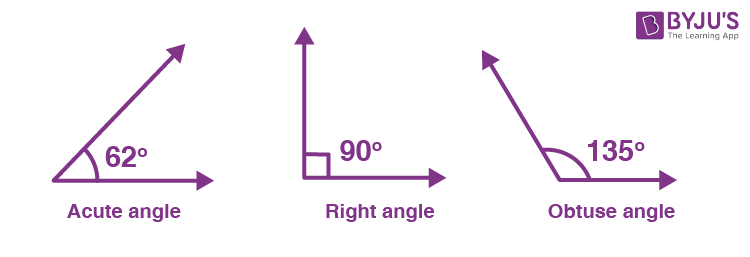
An acute angle is any angle that measures strictly between zero and ninety degrees. It's the sharp cornerstone of geometric analysis, structural engineering, and precision design. While a right angle forms a rigid, square corner and an obtuse angle opens wide, the acute angle creates a narrow wedge. You see it in the point of a chisel, the pitch of a roof truss, and the vector calculations governing computer graphics.
Understanding how acute angles behave goes beyond basic school geometry. It unlocks the underlying mechanics of trigonometry, force distribution, and structural stability. Let's break down what defines them, how to calculate them, and where they drive precision in the physical and digital world.
Defining the Acute Angle
In standard Euclidean geometry, an angle forms when two rays share a common endpoint called the vertex. The measure of this opening determines its classification.
- Acute Angle: Greater than 0° and less than 90°.
- Right Angle: Exactly 90°.
- Obtuse Angle: Greater than 90° and less than 180°.
- Straight Angle: Exactly 180°.
- Reflex Angle: Greater than 180° and less than 360°.
The strict inequality for an acute angle matters. It can't be 0° (which is a zero angle where the rays overlap) and it can't be 90° (which is perpendicular). Because its rays diverge less widely than a right angle, it produces a distinct visual sharpness.
According to geometric standards maintained by bodies like the National Council of Teachers of Mathematics, recognizing these boundaries forms the foundational basis for spatial reasoning and advanced polygon analysis.
Mathematical Properties and Trigonometry
Acute angles don't exist in a vacuum; they interact directly with other angles and side lengths, particularly within triangles.
In any standard triangle, the sum of all interior angles always equals 180 degrees. If a triangle contains a 90-degree right angle, the remaining two angles must split the leftover 90 degrees. This forces both remaining angles to be acute.
This geometric reality makes acute angles the bedrock of trigonometry. When you study sine, cosine, and tangent, you're evaluating the ratios of a right-angled triangle's sides relative to its acute angles.
- Sine: Ratio of the opposite side to the hypotenuse.
- Cosine: Ratio of the adjacent side to the hypotenuse.
- Tangent: Ratio of the opposite side to the adjacent side.
Because these ratios remain stable and predictable between 0° and 90°, engineers and physicists use acute angle relationships to calculate unknown distances, heights, and structural forces without direct measurement.
Acute Angles in Engineering and Precision Design
In practical drafting and manufacturing, precision relies heavily on managing acute angles. When you design a mechanical part or a architectural truss, sharp angles determine how stress flows through the material.
Structural Load Distribution
Civil engineers use acute angles in triangular trusses—the framework supporting bridges and roofs. Triangulation transforms external loads into pure tension and compression along structural members. Acute triangles distribute weight evenly down to supporting pillars, preventing buckling under heavy loads or wind shear.
Cutting Edges and Tool Geometry
The sharpness of a tool depends entirely on an acute angle. A wood chisel, a surgical scalpel, or a lathe cutting bit relies on an acute bevel angle to concentrate applied force onto a microscopic point. A wider angle spreads force out, reducing cutting efficiency.
Digital Rendering and Computer Graphics
In modern software development and 3D modeling, acute angles dictate how rendering engines calculate light and collision detection.
When a 3D animation software renders a polygon mesh, it computes surface normals—vectors perpendicular to a surface. The angle between these surface normals and incoming light sources determines shadow casting and specular highlights.
If two adjacent faces meet at a sharp acute angle, the rendering engine must calculate a hard edge or apply smooth shading algorithms to prevent visual tearing. Game physics engines also rely on acute angle collision vectors to determine how objects bounce or deflect upon impact.
Common Mistakes to Avoid
When working with angles in design or math, a few frequent errors pop up:
- Confusing acute with obtuse: Remember that "acute" sounds like "cute" (think small), meaning it's the smaller angle under 90 degrees.
- Assuming all triangles have acute angles: While right triangles have two acute angles, obtuse triangles contain one angle greater than 90 degrees and two acute angles.
- Ignoring tolerance in manufacturing: In CAD software, drawing an acute angle is easy, but machining a sharp interior corner creates a stress concentration point where metal fatigues and cracks. Engineers always add fillets or radii to sharp interior corners.
Frequently Asked Questions
Can an acute angle be negative?
No. In standard geometry, angle measures are positive scalar quantities ranging from just above 0° up to 360°. Negative angles exist in trigonometry to denote direction of rotation on a coordinate plane, but the geometric classification of an acute angle requires a positive measure under 90 degrees.
How do you measure an acute angle accurately?
You use a protractor or a digital angle finder. Align the baseline of the tool with one ray of the angle, place the center point directly over the vertex, and read where the second ray intersects the graduated scale.
Why are acute angles important in roof design?
Roof pitches often utilize acute angles to shed heavy snow and rainwater efficiently. Steeper pitches formed by sharp acute angles prevent moisture pooling and structural water damage.
What is the difference between an acute angle and an acute triangle?
An acute angle is a single geometric measurement between 0° and 90°. An acute triangle is a polygon where all three interior angles are acute (each measuring less than 90 degrees).



