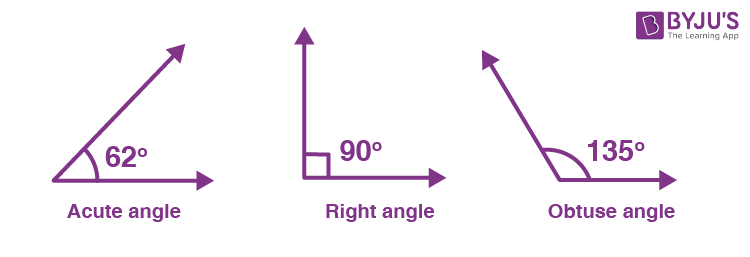
When you measure an angle that opens narrower than a standard right corner, you're working with an acute angle. The acute angle definition is simple in geometry: it's any angle that measures strictly greater than zero degrees and less than ninety degrees. While this property sounds basic, it forms the geometric spine of structural engineering, architectural framing, and digital rendering algorithms.
You'll spot these sharp corners everywhere, from the steep peak of a mountain cabin's roof to the digital polygons forming a 3D character in a video game engine. Understanding how these measurements work lets architects balance heavy loads and allows software engineers to calculate lighting vectors efficiently. Let's break down the mathematical properties, structural applications, and technological uses that make this narrow measurement so critical.
Mathematical Properties and Classification
Geometry classifies angles by their exact span between intersecting lines or rays. To understand where the acute angle sits, you have to look at the broader spectrum of angular measurements recognized by standard mathematical frameworks, such as those detailed in Euclid's historical texts archived by Britannica.
The standard angular classification includes:
- Acute angles: Greater than 0 degrees and less than 90 degrees.
- Right angles: Exactly 90 degrees, forming a square corner.
- Obtuse angles: Greater than 90 degrees and less than 180 degrees.
- Straight angles: Exactly 180 degrees, forming a flat line.
Unlike obtuse or straight angles, the acute angle creates a converging vertex that pulls lines together. In trigonometry, this convergence drives the study of right triangles. Every standard right triangle contains one 90-degree corner and two acute angles. The ratios of these acute angles give us the foundational trigonometric functions—sine, cosine, and tangent—which map out wave frequencies, sound vibrations, and mechanical oscillations. If you're calculating the trajectory of a robotic arm or mapping wave mechanics, you're relying entirely on the trigonometric behavior of these narrow corners.
Applications in Architecture and Engineering
Architects don't just use acute angles for visual drama; they use them to manage physical forces like gravity, wind shear, and snow loads. When building structures that must withstand harsh weather, engineers rely on triangular framing because triangles are inherently rigid.
Consider how roof pitches work in heavy snowfall regions. A steep gable roof relies on sharp peaks formed by acute angles. This steep pitch prevents heavy wet snow from accumulating and crushing the framing, letting gravity pull the weight down naturally.
Bridge engineering relies on similar geometric principles. Truss bridges utilize interconnected triangles where acute angles distribute heavy vehicular loads across multiple support beams. Instead of bending under pressure, the narrow joints transfer compressive and tensile forces evenly through the steel network.
When you look at modern architectural landmarks, you can see these geometric concepts in action. The triangular glass facets of the Louvre Pyramid in Paris use acute angles to create a stable lattice that resists wind pressure from multiple directions while maximizing internal volume.
Role in Technology and Computer Science
In the digital world, physical structures are replaced by mathematical models, but the geometric rules remain identical. Computer graphics engines use vectors and angular calculations to determine how light bounces off digital surfaces.
When a 3D rendering software calculates shading on a low-poly character model, it measures the angle between the surface normal and the light source. Sharp corners and tight creases in models often rely on acute angles to catch specular highlights, creating the illusion of hard metallic edges or realistic facial features.
Geospatial mapping software also relies heavily on these measurements. Navigation apps calculate the shortest driving routes by processing graph networks of roads. When an algorithm determines a sharp turn or a merging highway ramp, it calculates the bearing change using acute angle vectors to optimize vehicle turning radii and travel times.
Common Mistakes and Misconceptions
Working with angles seems straightforward, but a few common errors trip up students and professionals alike:
- Confusing acute with obtuse: Remember that acute angles are sharp and narrow (less than 90 degrees), while obtuse angles are wide and open (more than 90 degrees).
- Measuring from the wrong baseline: When using a protractor, always align the baseline properly with one ray of the angle. Reading the wrong scale on a 180-degree protractor is the most common cause of calculation errors.
- Assuming 0 or 90 degrees are acute: By definition, an acute angle cannot be zero degrees (which is a zero angle) or exactly 90 degrees (which is a right angle). Boundaries matter in technical specifications.
Frequently Asked Questions
What is the exact range of an acute angle?
An acute angle must measure strictly greater than 0 degrees and strictly less than 90 degrees. Any angle measuring 0 or 90 degrees falls into a different geometric category.
Can a triangle have two obtuse angles?
No. Because the interior angles of any flat triangle must always add up to exactly 180 degrees, a triangle can only contain one right or obtuse angle. Every standard triangle must have at least two acute angles.
How do engineers use acute angles in construction?
Engineers use them primarily within truss systems and roof framing. Acute angles allow for triangular load-bearing shapes that distribute weight effectively and prevent structural sagging.
Why are acute angles important in computer graphics?
They help rendering algorithms determine surface normals, light reflections, and shadow boundaries, which make digital 3D models look solid and realistic.



