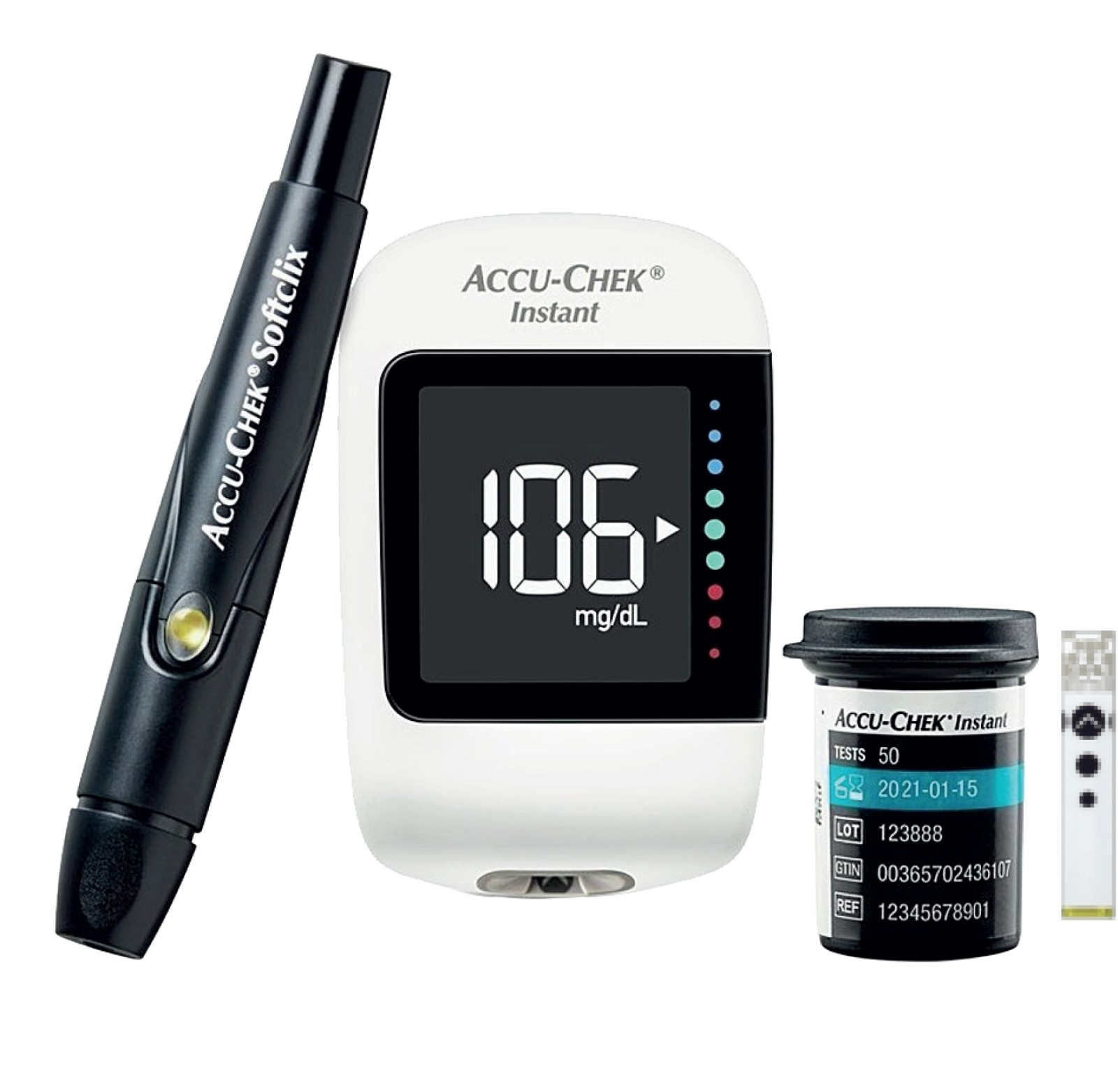
Choosing between an Accu-Chek and a OneTouch blood glucose meter comes down to two different design philosophies for daily diabetes care. If you test multiple times a day and want robust clinical tracking, Accu-Chek provides an ecosystem built around precision dosing and drum-based lancing. If you want high-contrast readability, rapid color-coded range indicators, and minimal setup, OneTouch offers streamlined simplicity that reduces testing friction. Both brands clear international ISO 15197 accuracy standards, meaning the hardware inside both meters delivers reliable clinical data. Yet, they differ significantly in daily usability, lancet mechanics, and long-term supply costs.
Core Feature Comparison: Accu-Chek Guide vs OneTouch Verio Flex
Comparing flagship models like the Accu-Chek Guide Me and the OneTouch Verio Flex reveals distinct operational differences. The Accu-Chek Guide series uses a wide-edge dosing strip and a spill-resistant SmartPack vial designed to prevent strips from spilling out when dropped. Its test strips feature a broad yellow application area that accepts blood samples anywhere along the edge, making it forgiving for users with shaky hands or poor vision.
The OneTouch Verio Flex relies on a slim, pocket-friendly form factor paired with ColorSure technology. Instead of making you interpret raw numbers against abstract target ranges, the Verio Flex uses a simple blue, green, or red indicator light right under the display to show whether your reading falls within, above, or below your preset range.
- Strip Dosing: Accu-Chek strips allow wide-edge blood application, while OneTouch Verio strips use a side-fill channel.
- Vial Design: Accu-Chek features a spill-resistant container; OneTouch uses standard cylindrical flip-top vials.
- Display Feedback: OneTouch integrates immediate color range indicators; Accu-Chek relies on clear numeric screens with optional app integrations.
Lancing Comfort: FastClix vs Delica Plus
The finger-prick experience often dictates whether someone tests consistently or avoids it. Accu-Chek uses the FastClix lancing device, which houses a drum of six pre-loaded lancets. You never see or handle individual needles, which eliminates accidental pricks and speeds up routine testing. Rotating to a fresh needle takes a simple click of a lever.
OneTouch counters with the Delica Plus lancing device, which utilizes ultra-fine 33-gauge lancets and precise vibration-reduction technology. The thinner needle gauge minimizes tissue trauma, making it popular for people with sensitive fingertips. However, changing lancets requires manually loading and removing individual needles from a protective cap, adding minor steps compared to the drum system.
App Connectivity and Data Management
Both ecosystems sync data via Bluetooth to proprietary mobile applications—the Accu-Chek Connect app and the OneTouch Reveal app.
The OneTouch Reveal app excels at pattern recognition. It transforms raw numbers into visual timelines, flagging recurring high or low blood sugar patterns at specific times of day—such as every Tuesday afternoon.
The Accu-Chek system leans into comprehensive logbooks and clinical reporting formats that doctors can easily export and review. If you prefer keeping manual paper records alongside your phone, Accu-Chek also provides structured physical logbooks, whereas OneTouch focuses heavily on digital-first logging.
Total Cost of Ownership: Meters vs Test Strips
The initial price of a glucometer kit is rarely where you spend your money. Meters often sell near manufacturing cost or come bundled with discounts because manufacturers generate revenue through ongoing test strip sales.
Test strips for both brands represent a recurring monthly expense if you test daily. OneTouch strips frequently carry a steady retail price, though local pharmacy insurance formularies often dictate your out-of-pocket costs. Accu-Chek strip pricing varies depending on whether you use the Guide or Active line, but bulk packaging options frequently lower the per-strip cost for high-frequency testers. Always check your local health insurance or Medicare/Medicaid coverage list first, as insurance preferred-brand lists can instantly make one option significantly cheaper than the other.
Common Mistakes to Avoid
Even the most accurate meter will yield erratic results if handled incorrectly. Avoid these frequent missteps during daily testing:
- Using Expired or Improperly Stored Strips: Leaving test strip vials open in humid environments like bathrooms ruins the chemical reagents inside. Always snap the vial lid shut immediately after pulling a strip.
- Squeezing the Finger Too Hard: Milking or aggressively squeezing your finger to force blood out introduces interstitial fluid, which dilutes the sample and artificially lowers the glucose reading.
- Skipping Control Solution Tests: If you drop your meter or open a fresh batch of test strips, run a control solution test to verify that the system reads within the acceptable range printed on the strip vial.
Frequently Asked Questions
Can I use OneTouch test strips in an Accu-Chek meter?
No. Blood glucose meters and test strips are chemically and physically brand-specific. Forcing a OneTouch strip into an Accu-Chek meter will either trigger an error message or provide completely inaccurate data.
Which system is better for elderly users or people with arthritis?
OneTouch meters are frequently praised for high-contrast, uncluttered displays and straightforward operation. However, Accu-Chek's FastClix drum lancing system is often easier for individuals with limited finger dexterity because it removes the need to handle tiny individual lancets.
How often should I check my meter's accuracy?
You should test your meter using manufacturer-approved control solution whenever you open a new box of test strips or if you drop the device on a hard surface.
Do these meters require manual coding?
Modern units from both manufacturers are no-code meters. They automatically calibrate themselves when you insert a new test strip, eliminating coding errors.



