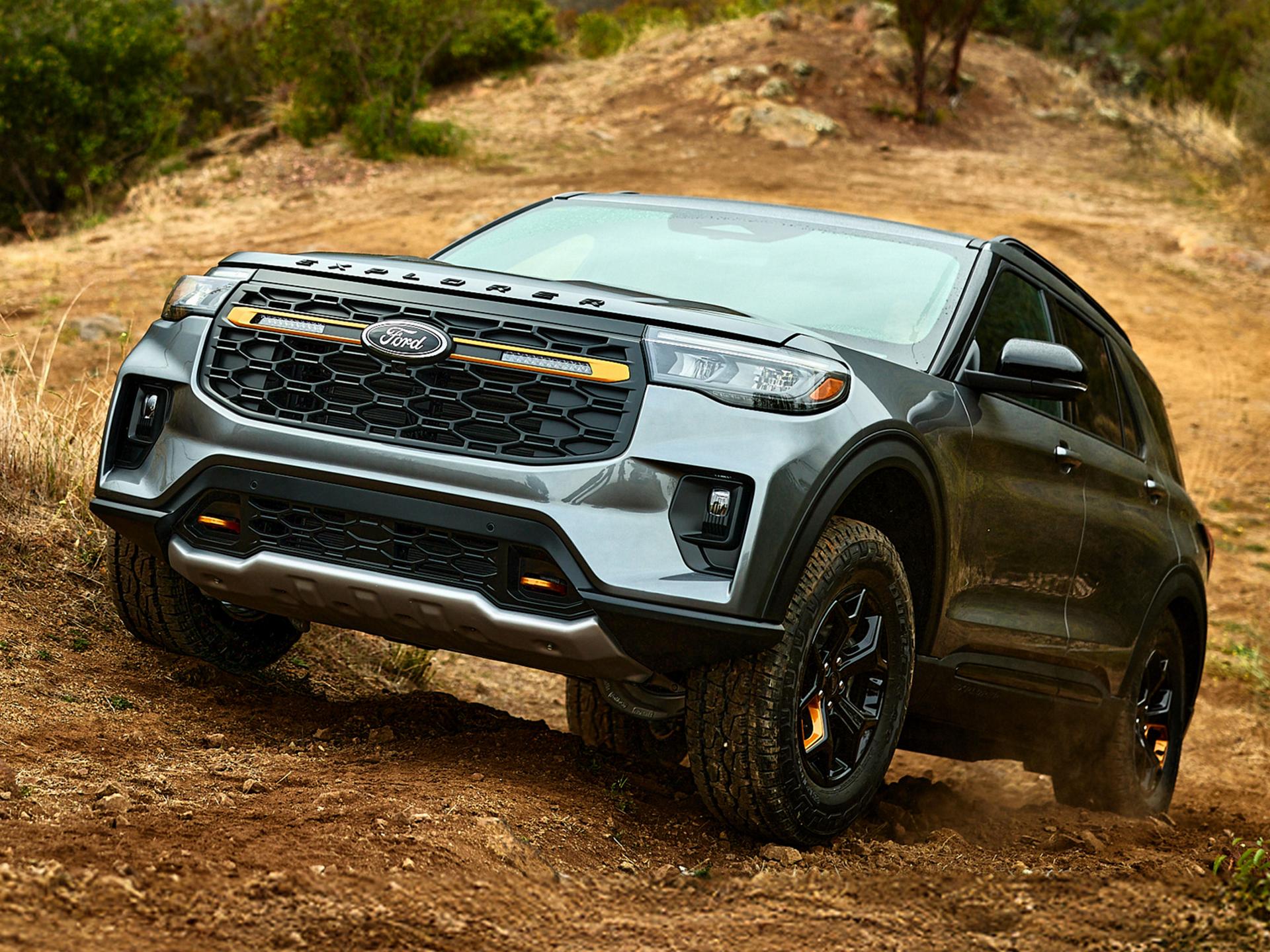
When Ford rolled out the completely redesigned 2002 Ford Explorer, it arrived under the heavy shadow of a corporate crisis. The previous generation had suffered through a massive public safety controversy involving tread separations and vehicle rollovers. To survive, Ford engineers had to completely rethink what a family utility vehicle could be. They dropped the old truck-based rear axle in favor of an independent rear suspension, widened the track, and introduced a smoother, more stable ride designed to win back skeptical parents across North America.
While it reshaped how families traveled by prioritizing comfort and everyday drivability over raw utility, the vehicle left behind a complicated legacy. It modernised the midsize utility segment, yet it also introduced mechanical vulnerabilities that still haunt secondhand buyers today. Looking back at this generation reveals a pivotal chapter in automotive design where passenger comfort finally took center stage in the utility sector.
The Engineering Leap: Moving Beyond Truck Roots
Before the 2002 model year, most utility vehicles drove like pickup trucks because they were built on truck frames. They used rigid rear axles that bounced over bumps and made handling unpredictable on wet pavement. Ford engineers changed the formula for the third generation by implementing a fully independent rear suspension.
This shift dramatically improved ride quality. Instead of the rear wheels reacting in unison to a single road imperfection, each side absorbed bumps independently. The chassis was stiffened significantly, and the overall width expanded by two and a half inches to lower the center of gravity. These mechanical changes allowed the vehicle to hug corners with far more confidence than its predecessor, making long road trips much less fatiguing for drivers.
- Independent rear suspension drastically reduced body roll on sharp curves.
- A wider track footprint improved stability at highway speeds.
- Steering response shifted from loose and vague to precise and rack-and-pinion based.
Powertrain Options and Performance Figures
Buyers could choose between two primary power plants during the initial production run. The base engine was a refined 4.0-liter Single Overhead Cam (SOHC) V6 producing 210 horsepower and 250 pound-feet of torque. For those wanting extra pulling power, an optional 4.6-liter modular V8 generated 239 horsepower, borrowed directly from Ford's truck and full-size sedan lineup.
Both engines paired primarily with a five-speed automatic transmission designed to optimize fuel economy on the highway. While the V6 offered sufficient acceleration for daily commuting and school drop-offs, the V8 became the preferred choice for families who towed camping trailers or small boats. The maximum towing capacity reached up to 7,300 pounds when properly equipped, maintaining the utility aspects that buyers expected despite the softer ride.
Cabin Comfort and Family-Focused Layouts
The interior design directly targeted family practicality. For the first time, this generation offered an optional third-row seat, expanding passenger capacity to seven. While the rearmost seats were cramped for adults, they provided a useful backup option for carpooling kids.
Cargo versatility remained a major selling point. Folding down the second and third rows opened up over 80 cubic feet of flat storage space. Thoughtful touches like multiple power outlets, deep door pockets, and an overhead console storage system made long journeys manageable for large households. Dual-zone climate controls and upgraded sound systems turned the cabin into a comfortable bubble for daily commuting.
- Rear ventilation ducts kept second and third-row passengers comfortable in extreme weather.
- Split-folding rear seatbacks allowed flexible configurations for cargo and passengers.
- Optional adjustable pedals accommodated drivers of varying heights.
The Dark Side: Reliability Struggles and Common Failures
Despite its smooth ride and strong sales success, the third-generation platform earned a notorious reputation for mechanical unreliability later in its lifecycle. The National Highway Traffic Safety Administration logged thousands of complaints regarding this specific model year, primarily centered around powertrain vulnerabilities.
The five-speed automatic transmissions (specifically the 5R55W and 5R55S variants) proved prone to premature internal failure. These gearboxes featured sealed designs without traditional dipsticks, leading many owners to neglect fluid changes. Over time, degraded fluid accelerated wear on internal components, resulting in slipping gears, harsh engagement, and sudden transmission failure at an average mileage under 100,000 miles. Additionally, timing chain guides on the early 4.0-liter V6 engines were prone to premature wear, requiring expensive engine-out repairs.
- Sealed transmissions made routine fluid condition checks difficult for owners.
- Rear differential whining and failure affected units operated heavily in wet conditions.
- Front suspension components, particularly ball joints and wheel bearings, wore out faster due to the added weight of the independent setup.
Frequently Asked Questions
Did the 2002 model year fix the rollover issues of older models?
Yes. The complete redesign widened the track, lowered the suspension geometry, and adopted an independent rear suspension alongside electronic stability options, making it significantly more stable during sudden maneuvers than the first two generations.
What was the towing capacity of the V6 versus the V8 engine?
When properly equipped with the correct axle ratio, the 4.0-liter V6 models could pull up to 5,500 pounds, while the 4.6-liter V8 versions raised that limit up to 7,300 pounds.
Is the 2002 edition considered a good collector car today?
Generally, no. Because of widespread mechanical issues and massive production numbers, clean surviving examples remain affordable project vehicles rather than appreciating classics. Enthusiasts usually look toward simpler body-on-frame alternatives or later generations.
How does the interior space compare to modern midsize utility vehicles?
While it offered impressive cargo room for its era, modern midsize vehicles offer vastly superior second-row legroom, safety structures, and integrated technology while maintaining smaller exterior footprints. You can review vehicle safety data and historical crash reductions through organizations like the Insurance Institute for Highway Safety.



